
Surprising fact: a single noisy scan can raise alarms in 70% of modern endpoint detection deployments, turning a covert exercise into an incident within minutes.
This is a candid, past-leaning account of one engagement where an OPSEC slip exposed our operation. I describe how rushed reconnaissance, noisy tooling, and skipped process steps led to attribution. The goal was never to “win” against defenders but to help the organization learn and improve defenses.
When detection happened, we shifted from trying to keep access to maximizing learning cycles. That pivot protected the business and gave defenders clear, actionable feedback tied to MITRE ATT&CK mappings.
Expect practical, concrete details: recon gaps, EDR triggers, evasion failures, coordination breakdowns, and reporting that missed business context. I share tools, frameworks, and fixes so you can adapt them to your own playbooks and sharpen skills under pressure.
Key Takeaways
- Operational errors are teachable moments: treat attribution slips as data, not blame.
- Follow the process: a solid plan and low-and-slow approach reduce detection risk.
- Test tools in production-like conditions: lab success doesn’t guarantee stealth in the field.
- Align goals with the business: map findings to risk so defenders can act quickly.
- Detach, then act: step back to preserve the team and turn failure into improved skills.
The Moment OPSEC Broke: A Past Engagement That Blew Our Cover
In one concise event, a persona-linked email routed to a controlled phishing domain and that single link exposed attribution. We treated the finding as an observable, not a catastrophe.
Quick synopsis: attribution was tied to the persona, not a systems compromise. Detection-to-attribution cycles often lag, so we paused to weigh training value versus operational risk. The choice to continue focused on defensive learning, not stealth for its own sake.
A hasty infrastructure change created a repeatable pattern. That small signal amplified across a noisy enterprise environment and drew defenders’ attention. This is a clear example of how live tool behavior can diverge from lab results.
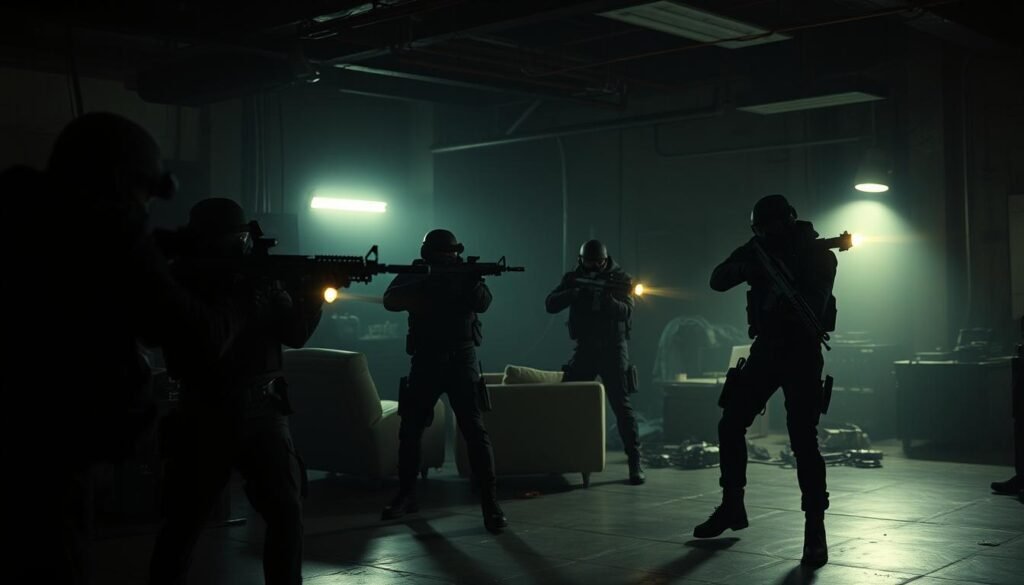
- Inflection point: attribution ≠ control failure; it can generate meaningful response reps for the organization.
- Risk trade-off: stopping can preserve cover; continuing accelerates response maturity against the same threat paths.
- What we preserved: objective chains to test alerting, triage, and escalation end-to-end inside the company.
We protected data and people by throttling actions and avoiding sensitive interactions. Communications were tightened with our internal team and trusted agent. Finally, we documented the exact observables—domain age, beacon jitter, operator timing—so future cases avoid the same signals.
Red team mistakes lessons that actually improve detection and response
Short overview:Five common operational failurescreate obvious observables. Fixing them with focused recon, quieter tooling, and clear reporting turns a failed run into usable detection data for defenders.
Skipping OSINT made our first contact noisy and predictable. We spent too little time on Shodan, FOCA, theHarvester, and SpiderFoot before moving on-net. Devote about 30% of testing time to external surface mapping and validate the environment first.
Aggressive scans and default exploit modules tripped Endpoint Detection and Response (EDR) quickly. Rate-limit Nmap and avoid stock Metasploit payloads in production. Tailor software signatures and prefer manual enumeration to reduce detection.
Weak evasion amplified flags. Use Living-off-the-Land Binaries (LOLBins), custom loaders, AMSI-aware PowerShell, and low-and-slow C2 with jittered sleep intervals. Shape beaconing to match normal network behavior.
Coordination gaps duplicated effort. Adopt a shared playbook, assign clear owners, and hold short syncs so the team moves in step.
Finally, map findings to MITRE ATT&CK, add concise threat intelligence, and tie remediation to business impact. That turns operational errors into measurable defensive gains.

Triage in the heat of an engagement: salvage, reset, or fail fast
When should you press on and when should you stop? Decide fast using a simple rule: can you still meet training goals safely and meaningfully?
A clear triage rule helps choose salvage, rebuild, or cut losses when an engagement goes sideways. Start by asking if attribution is the only observable. If so, you can often continue to generate useful blue team detection and response reps.
If the pretext or key access is burned, rebuild the plan and infrastructure. That reset costs time and schedule, but it prevents larger operational risk.
When the process degrades beyond control, fail fast to protect people and operations. Define a clear “point of no return” for every phase so teams stop debate and act.
Root-cause rigor: treat live tool failures like an engineering case. Capture configs, hashes, logs, and timing to add variables to pre-deploy test matrices.

- Salvage: attribution-only exposure; continue to create defender value for the blue team.
- Reset: burned trust or access; rebuild infra even if it costs time.
- Fail fast: lost momentum or unsafe engagement; end it and report the example impact upward.
Planning and people: building adaptive red teams that don’t repeat mistakes
Build resilience with clear backups, defined roles, and a learning culture. Use PACE planning and role rotation so your team can recover fast and keep training value high.
PACE planning in practice:
- Primary / Alternate / Contingency / Emergency: map comms, C2, and access paths for each phase.
- Test switchovers before live ops so fallback steps are familiar and quick.
Right roles, right time: staff an RTL (rotate by domain), a project manager/analyst/technical writer, a business analyst, technical analysts (net/exploit), a non-technical OSINT analyst, and a physical security specialist.
Rotate leaders to match domain ability—cloud-first work needs different RTL skill than physical-first work. This reduces blind spots and spreads skills across the organization.
Encourage dissent pre-op: run a red teaming-by-committee review of OPORDs. Capture objections, refine mitigations, and set measurable success criteria tied to business outcomes.
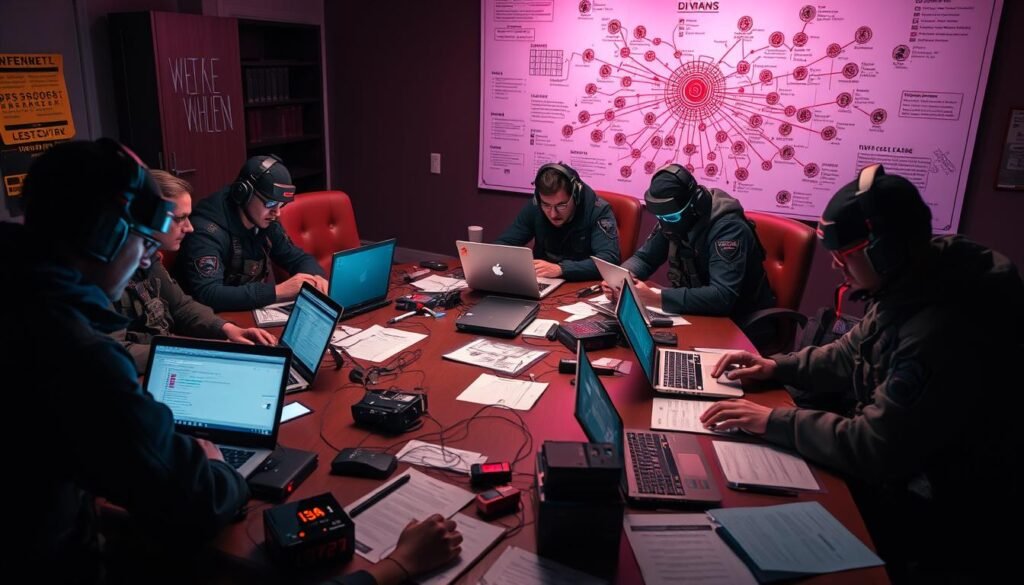
Psychological safety matters: tolerate honest errors, never tolerate blame. Leaders must model that stance, document follow-ups, and feed operational intelligence into the next plan.
For practical examples on how infrastructure errors expose operations, see how misconfigured servers are exploited.
Conclusion
Treat each exposure as a data point you can feed back into process and people improvements.
Run an after-action report (AAR) that captures findings, timing, and artifacts. Map techniques to MITRE ATT&CK so leadership sees coverage gaps and defender priorities. For a practical AAR guide, review this after-action report resource.
Translate technical attack chains into business risk language. Prioritize fixes that cut dwell time and reduce mean time to detection. Update pre-deploy test matrices with variables from live tool failures and add tool testing notes like those in this tools overview.
Protect people by enforcing psychological safety and clear fail-fast triggers so cycles increase without punitive fallout. Codify the process, refine the plan, and measure results: detection, dwell, and remediation rates. Do that, and your offensive practice will strengthen defensive security for the whole organization.
