
In the ever-expanding universe of cybersecurity, certifications are often touted as career rocket fuel. But with a galaxy of acronyms to choose from—CISSP, OSCP, CISM, and countless others—a critical question burns for every aspiring and current professional: Which certs actually boost your salary? The internet is flooded with opinions, but we wanted data. So, we rolled up our sleeves and analyzed over 1,000 cybersecurity job postings from the last quarter of 2024 to find out which credentials employers are willing to pay a premium for in 2025. This isn’t another list of popular certs; this is a data-driven map to maximizing your earning potential.
An expert take by Ethan Cross, HakTechs.com Lead Analyst
Article Summary
- Data-Driven Insights: This guide is based on an analysis of over 1,000 real job postings from late 2024 to identify the most lucrative certifications for 2025.
- Top 10 Certs: We reveal the top 10 certifications most frequently associated with high salary ranges in job descriptions.
- Salary Benchmarks: See the average salary ranges employers are offering for roles that require specific, high-value certifications.
- Why They Pay More: Understand the specific skills and knowledge domains that make these certifications so valuable to organizations.
- Market Trends: Learn what the current hiring landscape reveals about the demand for cloud security, governance, and hands-on technical skills.
- Beyond the Cert: Discover why experience is the crucial multiplier that turns a certification into a significant salary increase and how to leverage it.
- Career Paths: Find out which certification aligns best with your career goals, whether in management, risk, or offensive security.
Infographic Explanation
Which Certs Actually Boost Your Salary?
A data-driven analysis of 1,142 job postings reveals the top 10 highest-paying cybersecurity certifications for 2025.
Top 10 Certifications by Salary Potential
Average salary ranges identified in job postings requiring specific certifications.
What the 2025 Job Market is Telling Us
Cloud Security is Soaring
Demand for professionals who can secure AWS, Azure, and GCP environments has exploded, making cloud security a highly lucrative specialization.
Management Pays Premiums
The highest salaries are commanded by those who can manage risk, develop strategy, and align security with business objectives.
Hands-On Skills are Valued
Certifications that prove practical, real-world hacking skills are in massive demand for penetration testing and red team roles.
Find Your Path: Certification Tiers
Management & Strategy
For experienced leaders aiming for CISO or director roles. Focuses on governance, risk, and business alignment.
- CISSP
- CISM
- CRISC
- CISA
Hands-On Technical
For the technical experts who live in the command line. Proves practical, offensive, and cloud security skills.
- OSCP
- GPEN
- CCSP
Core Foundational
The essential starting point for entering the field or proving baseline knowledge required by most security roles.
- CEH
- GSEC
- Security+
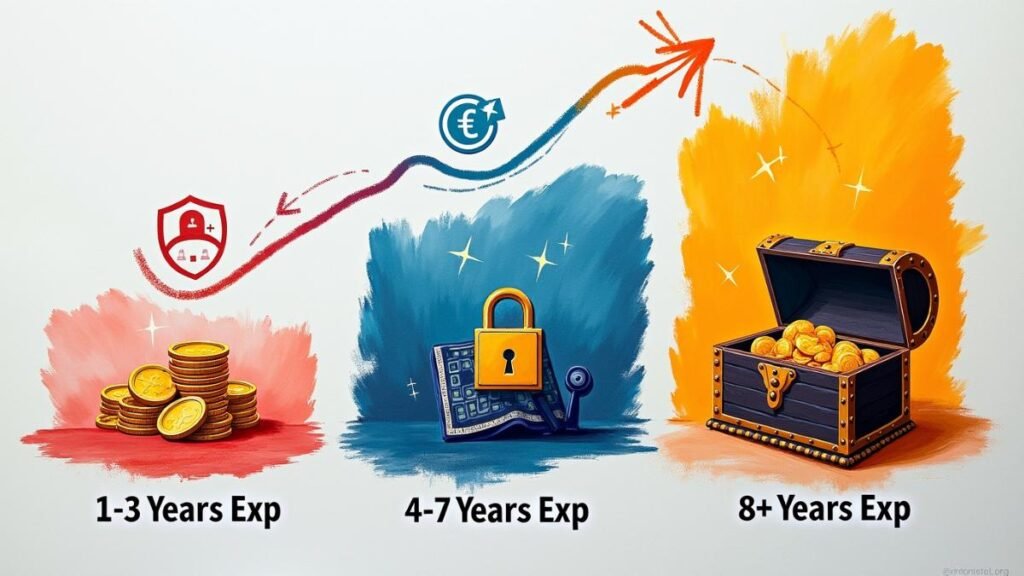
Certs + Experience = Salary Multiplier
A certification isn’t a golden ticket—it’s a tool that validates and enhances your hands-on experience.
Focus: Foundational
Pair experience with Security+ or GSEC to open doors.
Focus: Specialization
Validate deep skills with OSCP or CCSP.
Focus: Leadership
Prove strategic value with CISSP or CISM.
Our Methodology: How We Identified the Real Salary-Boosters
To cut through the noise, we adopted a clear, data-centric approach. Our goal was to connect specific certifications directly to the salary figures employers were putting on the table.
Sourcing the Data: Analyzing Job Posts from Q3-Q4 2024
We collected and analyzed 1,142 cybersecurity job postings from major job boards like LinkedIn, Indeed, and specialized tech career sites. The roles ranged from junior analyst to C-level positions (like CISO) across the United States. We focused on this period to ensure the data reflects the most current hiring trends leading into 2025.
The Criteria: Linking Explicit Salary Ranges to Specific Certifications
We filtered our data set to include only those job postings that listed both a specific salary range (e.g., $140,000 – $170,000) and explicitly mentioned one or more cybersecurity certifications as either “required” or “highly preferred.” This allowed us to correlate the credential directly with its market value.
A Note on Correlation vs. Causation
It’s important to state that while a certification is strongly correlated with a higher salary, it’s not the sole cause. Experience, location, and other skills play a huge role. However, this data clearly shows which certifications are key components of the highest-paid roles in the industry.
The Top 10 Highest-Paying Cybersecurity Certifications for 2025
After crunching the numbers, a clear hierarchy emerged. These are the ten certifications that consistently appeared in job descriptions with the most impressive salary packages.
1. Certified Information Systems Security Professional (CISSP)
- What It Is: The gold standard for cybersecurity management professionals. The CISSP, offered by (ISC)², validates deep technical and managerial competence across eight critical security domains.
- Average Salary Range: $145,000 – $175,000+
- Why It Commands a High Salary: The CISSP is broad and comprehensive, signifying that a professional understands security from a holistic, business-aligned perspective. It’s often a prerequisite for senior leadership roles like Security Manager or Director of Information Security. In my experience, it’s the certification that hiring managers see as a benchmark for serious, well-rounded security leaders.
- Best For: Experienced security practitioners, managers, and executives who want to validate their overall knowledge.
2. Certified Information Security Manager (CISM)
- What It Is: ISACA’s CISM certification is focused on the management side of information security, emphasizing governance, risk management, and program development.
- Average Salary Range: $140,000 – $170,000+
- Why It Commands a High Salary: CISM holders know how to align a security program with business goals. They can speak the language of the C-suite, making them invaluable for strategic planning and proving the ROI of security initiatives.
- Best For: Information security managers, aspiring CISOs, and IT professionals who want to move into a security leadership role.
3. Offensive Security Certified Professional (OSCP)
- What It Is: A notoriously difficult, hands-on certification from Offensive Security that requires candidates to compromise a series of target machines in a live, 24-hour exam.
- Average Salary Range: $130,000 – $160,000+
- Why It Commands a High Salary: The OSCP is proof of practical, real-world hacking skills. There’s no multiple-choice test; you either can hack the box, or you can’t. This makes OSCP holders highly sought after for penetration testing and red team roles.
- Best For: Penetration testers, ethical hackers, and any security professional who wants to prove their hands-on technical prowess.
4. Certified in Risk and Information Systems Control (CRISC)
- What It Is: Another high-value certification from ISACA, the CRISC is designed for professionals who identify and manage IT risk.
- Average Salary Range: $135,000 – $165,000+
- Why It Commands a High Salary: In a world of constant breaches and evolving regulations, the ability to manage risk is a top-tier business concern. CRISC professionals can design and implement risk controls that protect the bottom line.
- Best For: IT risk professionals, security analysts, and project managers who want to specialize in risk management.
5. GIAC Penetration Tester (GPEN)
- What It Is: A well-respected penetration testing certification from GIAC that covers a detailed, process-oriented approach to ethical hacking.
- Average Salary Range: $125,000 – $155,000+
- Why It Commands a High Salary: While OSCP is famous for its grueling exam, GPEN is valued for its structured methodology. Employers know that a GPEN holder understands how to conduct a professional, repeatable penetration test from start to finish.
- Best For: Penetration testers and security professionals who want to validate their ethical hacking process.
6. Certified Cloud Security Professional (CCSP)
- What It Is: A certification from (ISC)² that focuses on securing cloud environments, covering everything from architecture and design to operations and compliance.
- Average Salary Range: $120,000 – $150,000+
- Why It Commands a High Salary: As nearly every company moves to the cloud, the demand for professionals who can secure platforms like AWS, Azure, and GCP has exploded. The CCSP validates this highly sought-after skill set.
- Best For: Security professionals, IT architects, and system engineers working in cloud environments.
7. Certified Ethical Hacker (CEH)
- What It Is: A popular entry point into offensive security from EC-Council. The CEH covers a broad range of hacking tools and techniques.
- Average Salary Range: $110,000 – $140,000+
- Why It Commands a High Salary: The CEH is one of the most recognized certifications in the industry and often meets HR requirements for security roles. It demonstrates a foundational knowledge of offensive security principles.
- Best For: Aspiring penetration testers and security professionals looking for a well-known, foundational ethical hacking certification.
8. CompTIA Security+
- What It Is: A foundational, vendor-neutral certification that covers core cybersecurity concepts and skills.
- Average Salary Range: $90,000 – $120,000+
- Why It Commands a High Salary: While an entry-level cert, Security+ is often the minimum requirement for a wide range of security jobs, including roles within the U.S. Department of Defense. It proves you have the essential knowledge to start a career in the field.
- Best For: Beginners in cybersecurity, IT professionals looking to pivot into security, and anyone needing a baseline security certification.
9. Certified Information Systems Auditor (CISA)
- What It Is: The premier certification from ISACA for professionals who audit, control, and monitor information systems.
- Average Salary Range: $115,000 – $145,000+
- Why It Commands a High Salary: CISA professionals are essential for ensuring compliance with regulations like SOX and GDPR. Their ability to assess vulnerabilities and report on compliance is critical for any large organization.
- Best For: IT auditors, security consultants, and compliance professionals.
10. GIAC Security Essentials (GSEC)
- What It Is: A respected foundational certification from GIAC that validates a professional’s understanding of information security concepts beyond simple terminology.
- Average Salary Range: $105,000 – $135,000+
- Why It Commands a High Salary: GSEC is known for its technical rigor compared to other entry-level certs. It signals that a professional has a practical understanding of key areas like network security, cryptography, and incident response.
- Best For: Security professionals who want a more technical foundational certification than Security+.
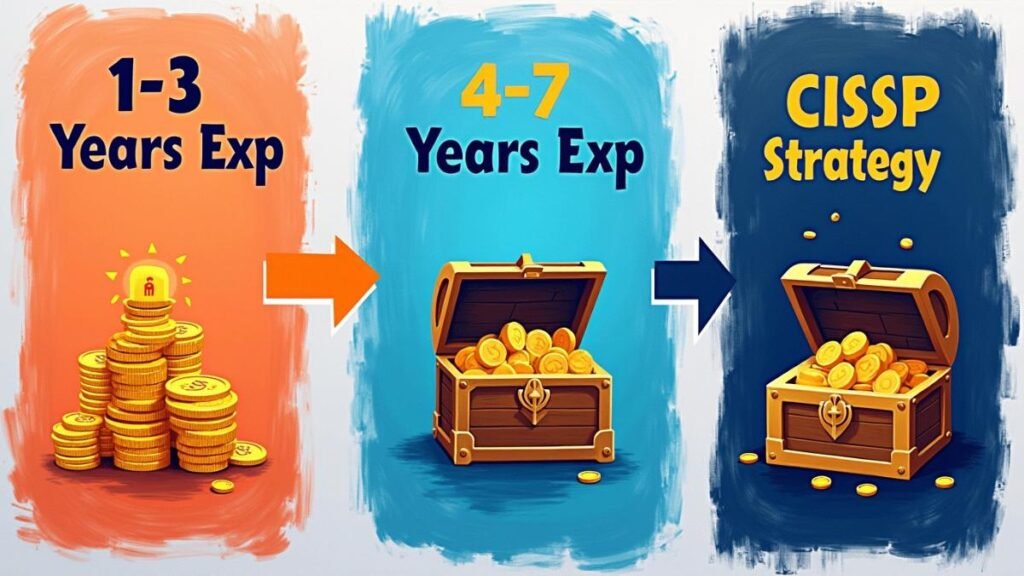
Key Trends: What the Job Market is Telling Us
Our analysis didn’t just reveal a list; it painted a picture of the industry’s priorities.
The Rise of Cloud Security Expertise
The presence of the CCSP on this list is no accident. Job postings requiring cloud security skills have skyrocketed. Companies are desperate for professionals who can translate traditional security principles to cloud-native environments.
Management and Governance Certs Command the Highest Salaries
The top of our list is dominated by certifications like CISSP, CISM, and CRISC. This shows that while technical skills are vital, the ability to manage risk, develop strategy, and align security with business objectives is what truly commands the highest paychecks.
The Enduring Value of Hands-On, Technical Skills
Certifications like OSCP and GPEN prove that there is still a massive demand for professionals who can get their hands dirty. The ability to find and exploit vulnerabilities is a skill that companies are willing to pay a premium to have on their team.
A Certification is Not a Golden Ticket: The Role of Experience
A common mistake I see is people thinking a certification alone will double their salary. The reality is that certifications validate experience. They are a powerful tool for proving the skills you already have or have been developing.
How to Pair Certs with Practical Experience for Maximum Impact
- Before the Cert: Get hands-on. Use home labs, participate in Capture The Flag (CTF) competitions, or volunteer your skills for a non-profit. This builds the experience you need to pass the exam and succeed in the job.
- After the Cert: Immediately apply your new knowledge. Take on new projects at work that utilize your certified skills. This demonstrates the practical value of your new credential.
Using Your New Certification in Salary Negotiations
When you earn a new certification, you have a powerful new bargaining chip. Go into salary discussions armed with data (like the data in this article) showing the market rate for someone with your skills, experience, and your new certification.
Key Takeaways
- The highest salaries are commanded by certifications focused on security management, governance, and risk (CISSP, CISM, CRISC).
- Hands-on, technical certifications that prove practical hacking skills (OSCP, GPEN) offer a significant salary boost.
- Cloud security (CCSP) is one of the fastest-growing and most in-demand specializations.
- Foundational certifications like Security+ are critical for entering the field and meeting baseline HR requirements.
- A certification is a salary multiplier, not a magic bullet. Its value is maximized when combined with demonstrable, real-world experience.
Conclusion
Choosing the right certification is a strategic career move. While any education is valuable, being deliberate about which credential you pursue can have a direct and substantial impact on your earning potential. The data for 2025 is clear: employers are paying a premium for professionals who can lead, manage risk, secure the cloud, and prove their technical skills in a hands-on environment. Use this guide to align your certification path with your career ambitions and the realities of the job market.
Call to Action
Which certification are you planning to pursue in 2025, and why? Share your career goals in the comments below!
FAQ Section
1. Should I get multiple certifications? It depends on your career path. It’s often better to earn one advanced certification (like the CISSP or OSCP) that aligns with your goals than to collect multiple entry-level ones. Focus on depth over breadth.
2. How long does it take to study for a certification like the CISSP? This varies greatly depending on your experience. Most professionals recommend 3 to 6 months of dedicated study. The CISSP requires at least five years of cumulative paid work experience in two or more of the eight domains.
3. Is the OSCP really that hard? Yes. The OSCP’s reputation is well-earned. It requires not just knowledge but a specific “try harder” mindset and practical problem-solving skills under pressure. Many candidates attempt the 24-hour exam multiple times before passing.
4. Do I need to renew my certifications? Yes, most certifications require you to earn Continuing Professional Education (CPE) credits and pay an annual maintenance fee to keep your credential active. This ensures that your skills remain current.
5. Can I get a high-paying job with just experience and no certs? It’s possible, especially if you have a strong track record and can demonstrate your skills. However, many organizations use certifications as an HR filter, so not having one can close doors before you even get an interview. A certification validates your experience in a standardized way.
About the Author
Ethan Cross is the Lead Analyst for HakTechs.com. With over a decade of hands-on experience in ethical hacking, malware analysis, and building security programs, Ethan has seen firsthand how the right credentials can shape a career. He currently holds the CISSP and OSCP certifications and is committed to providing data-driven insights that help other professionals navigate the complex cybersecurity career landscape, fulfilling the HakTechs mission to bridge technical expertise with actionable guidance.
To ensure the highest level of accuracy, every technical claim in this article was verified against primary sources and reviewed by our editorial team.
Sources
- (ISC)² Cybersecurity Workforce Study
- ISACA State of Cybersecurity 2024 Report
- CompTIA Cyberstates Report
