
Ever feel like you’re playing a never-ending game of cat and mouse with cyber threats? 🐱💻 You’re not alone. The digital world is a battlefield, and hackers are constantly evolving their playbooks. But what if you had a cheat code to predict their next move? Enter the MITRE ATT&CK framework—your ultimate guide to understanding and stopping cyber threats before they strike.
Think of it as the Matrix for cybersecurity. With 245 techniques and 14 tactics, this framework covers the entire cyber kill chain. It’s like having insider knowledge of hacker strategies. And here’s the kicker: 73% of attacks use tactics already cataloged in MITRE. That means you’re not just guessing—you’re proactively defending.
Whether you’re a seasoned pro or just starting out, this framework levels up your security game. From basic defense to proactive threat hunting, it’s all about staying one step ahead. Ready to dive in? Let’s break it down.
Key Takeaways
- MITRE ATT&CK is a comprehensive framework for understanding cyber threats.
- It includes 245 techniques and 14 tactics covering the entire cyber kill chain.
- 73% of attacks use tactics already cataloged in MITRE.
- Proactive threat hunting becomes easier with this framework.
- It’s a valuable tool for both beginners and experts in cybersecurity.
What is the MITRE ATT&CK Framework?
Cybersecurity feels like a never-ending puzzle, doesn’t it? 🧩 One moment you’re patching vulnerabilities, and the next, hackers are already three steps ahead. That’s where the MITRE ATT&CK framework comes in. It’s not just a tool—it’s your cheat sheet to understanding the hacker’s playbook.
Definition and Purpose
MITRE ATT&CK stands for Adversarial Tactics, Techniques, and Common Knowledge. Think of it as a knowledge base that tracks the techniques used by cybercriminals. It’s not just for experts—it’s designed to help teams use this information to strengthen their security posture.
History and Development
Born in 2013, this framework started as a tool for government agencies. It was like a CSI lab for digital heists, analyzing real-world cybercrimes to create a detailed map of hacker tactics. Over time, it expanded from Windows to cover cloud, mobile, and even industrial control systems.
Today, it tracks over 200 techniques used by advanced persistent threats (APTs). And just like TikTok trends, it evolves fast. The 2024 update even includes AI-powered attack methods. 🚀
- Started as a secret sauce for government agencies.
- Now free for everyone, thanks to the MITRE Corporation.
- Your go-to guide for translating hacker activity into actionable steps.
Key Components of the MITRE ATT&CK Framework
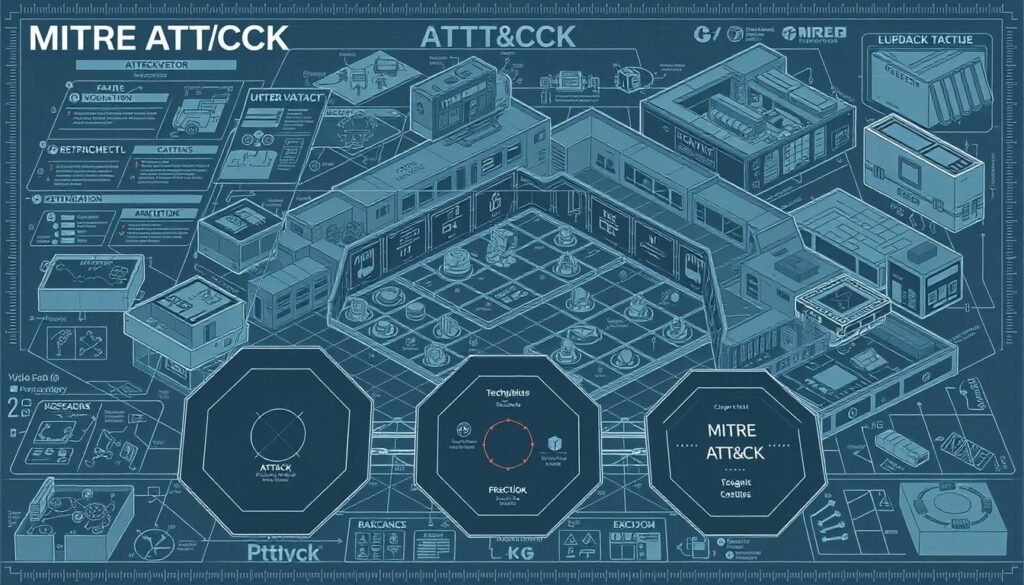
Hackers don’t just wing it—they follow a detailed playbook. The MITRE ATT&CK framework breaks down their moves into tactics, techniques, and procedures (TTPs). Think of it as the LEGO set of cybercrime. Each piece snaps together to form a bigger picture.
Tactics, Techniques, and Procedures (TTPs)
These are the building blocks of every cyberattack. Tactics are the goals—like gaining access or stealing data. Techniques are the methods used to achieve those goals. And procedures are the step-by-step instructions hackers follow.
For example, Initial Access is a tactic. One technique under this is Phishing. Hackers might use a fake email to trick you into clicking a malicious link. It’s like a digital con artist’s toolkit.
The MITRE ATT&CK Matrix
This isn’t just a movie—it’s your cybersecurity blueprint. The Matrix organizes over 200 techniques across 14 tactics. From Reconnaissance to Impact, it covers every phase of an attack.
Here’s the kicker: 85% of breaches start with Initial Access. By focusing on these techniques, you can stop threats before they escalate. The Matrix also includes detection methods and mitigation strategies. It’s like having a cheat sheet for cyber defense.
- 🧩 Think TTPs like hacker LEGO blocks—each technique snaps into tactical objectives.
- The Matrix isn’t just a movie—it’s your layered defense blueprint against 14 attack phases.
- Pro tip: Focus on Initial Access techniques first—85% of breaches start here.
- Real example: Active Scanning helps adversaries map your network like Google Maps for criminals.
- Includes juicy details: Detection methods, mitigation strategies, and even hacker toolkits.
Want to dive deeper? Check out this detailed guide on the MITRE ATT&CK to understand how it can strengthen your security posture.
Understanding the Cyber Kill Chain
The cyber world has its own version of a heist movie. 🎬 Hackers don’t just act randomly—they follow a detailed script called the Cyber Kill Chain. Developed by Lockheed Martin, this model breaks down every step of a cyberattack, from planning to execution.
Stages of the Cyber Kill Chain
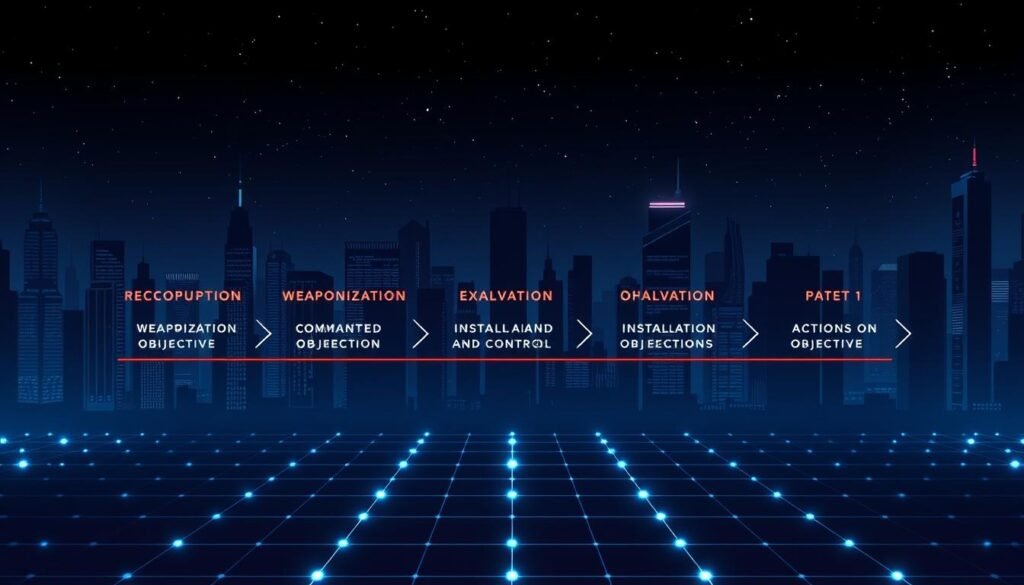
The Kill Chain is a 7-step process that outlines how adversaries operate. Here’s the breakdown:
- Reconnaissance: The digital stalker phase. Hackers gather intel on their target.
- Weaponization: Crafting the tools for the attack, like malicious software.
- Delivery: Sending the payload via email, phishing, or other methods.
- Exploitation: Finding and exploiting vulnerabilities in the system.
- Installation: Planting malware or backdoors for future access.
- Command and Control: Taking control of the compromised system.
- Exfiltration: Stealing data—the ultimate Mission Impossible moment.
How It Relates to MITRE ATT&CK
While the Kill Chain is linear, the MITRE ATT&CK framework is more like a choose-your-own-adventure book. 🕵️♂️ It focuses on post-breach behavior, tracking what hackers do after they’ve gained access.
Here’s the pro tip: Use the Kill Chain for prevention and MITRE ATT&CK for detection and response. Together, they’re a powerhouse for cybersecurity.
- Think of the Kill Chain as the plot of a crime novel—linear and predictable.
- MITRE ATT&CK is the behind-the-scenes details, showing how hackers adapt and evolve.
- Real-world example: The SolarWinds hack navigated both frameworks’ phases, proving their combined strength.
How to Analyze Attack Chains Using MITRE ATT&CK
Ever wonder how hackers plan their moves? It’s like a chess game, but with more malware. 🕹️ The MITRE ATT&CK framework is your playbook for decoding their strategies. Let’s break it down into three actionable steps.
Step 1: Mapping Adversary Behaviors
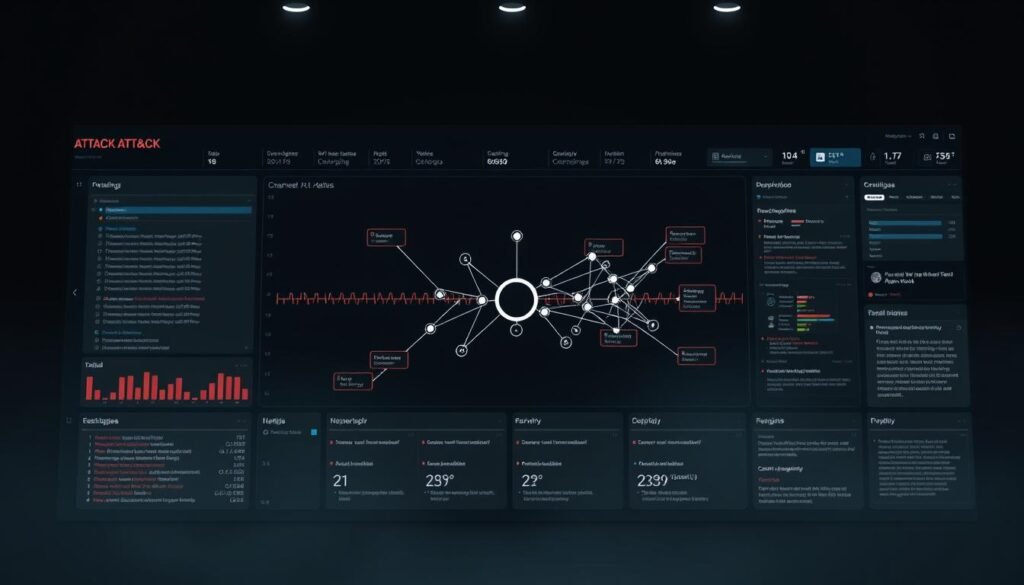
Think of this as becoming your company’s cyber Sherlock Holmes. 🕵️♂️ Start by identifying the techniques used by adversaries. The ChaosSearch case study showed that 92% of ATT&CK techniques can be detected using S3 logs. This data helps you map hacker moves like a pro sports analyst diagrams plays—except with more ransomware.
Step 2: Identifying Gaps in Defenses
Here’s the reality check: 68% of teams stumble at this step. 🚨 Use tools like Atomic Red Team scripts to test your defenses against real-world TTPs. This helps you spot vulnerabilities before hackers do. Combining this with the Cyber Kill Chain creates a “hacker journey map” that’s both insightful and actionable.
Step 3: Prioritizing Security Measures
Not all threats are created equal. Focus on the techniques that pose the highest risk to your data and systems. The MITRE ATT&CK Matrix is your cheat sheet here. It helps you prioritize security measures based on the most common attack patterns. This way, you’re not just reacting—you’re staying ahead of the game.
- 🛠️ Map hacker moves like a pro—with ransomware instead of touchdowns.
- Free tools alert: Atomic Red Team scripts for testing defenses.
- Pro move: Combine MITRE ATT&CK with the Cyber Kill Chain for maximum impact.
- Reality check: Why 68% of teams fail at step 2 (and how to ace it).
Practical Applications of MITRE ATT&CK
Imagine having a crystal ball that reveals hacker strategies before they strike. 🎱 The MITRE ATT&CK framework is that crystal ball for your security team. It’s not just a tool—it’s a game-changer for identifying and stopping cyber threats in their tracks.
Threat Detection and Response
Your SIEM system might feel like a sleepy guard dog, but with the MITRE ATT&CK framework, it transforms into an attack-sniffing bloodhound. 🐕🦺 By mapping adversary behaviors, you can detect breaches 40% faster, according to Forrester data. This framework helps your teams identify suspicious patterns and respond before damage escalates.
For example, using the techniques cataloged in MITRE, you can spot phishing attempts or unauthorized access attempts. It’s like having a cheat sheet for every possible attack scenario.
Penetration Testing and Red Teaming
Want to test your systems like a pro? The MITRE ATT&CK framework is your go-to guide. Atomic Red Team provides over 800 tests mapped to ATT&CK techniques, allowing your red team to simulate real-world threats. 🎯
Here’s a pro tip: Use these tests to mimic advanced adversaries, like North Korean hacker tactics (minus the sanctions). This hands-on approach helps you identify gaps in your security and strengthen your defenses.
- 🚨 Turn your SIEM from sleepy guard dog to attack-sniffing bloodhound.
- Red team pro tip: Simulate advanced hacker tactics without the legal drama.
- Real results: Companies using ATT&CK detect breaches 40% faster.
- Free resource alert: MITRE’s CAR analytics repository—cheat codes for defenders.
- Case study: MSPs use ATT&CK to predict client attack patterns.
Ready to level up your security game? Dive deeper into the MITRE ATT&CK framework and see how it can transform your approach to cyber defense.
MITRE ATT&CK Framework Use Cases
What if you could predict cyber threats before they even happen? 🕵️♂️ The MITRE ATT&CK framework makes this possible by turning information into actionable insights. From tracking hacker moves to speeding up incident recovery, this framework is a game-changer for teams worldwide.

Cyber Threat Intelligence
Think of this as building your own Jarvis for hacker tracking. 🕶️ The MITRE ATT&CK framework helps you create attacker “fingerprints” by mapping their techniques and behaviors. This information allows your teams to stay ahead of evolving threats.
Here’s a pro tip: Use MITRE’s group tracking to identify patterns in cyberattacks. This approach transforms raw data into actionable cyber threat intelligence, helping you predict and prevent breaches.
Incident Response and Recovery
When a breach happens, time is your enemy. ⏳ The MITRE ATT&CK framework cuts investigation time by mapping alerts to known techniques. This speeds up your response and minimizes damage.
For example, Microsoft uses this framework to develop Azure defense playbooks. By aligning alerts with TTPs, they’ve streamlined their incident recovery process.
“MITRE ATT&CK is the backbone of our defense strategy,” says a Microsoft security lead.
Here’s a quick breakdown of how Fortune 500 companies leverage this framework:
| Use Case | Impact |
|---|---|
| Threat Hunting | Identifies advanced persistent threats (APTs) |
| Incident Response | Reduces investigation time by 40% |
| Defense Playbooks | Creates tailored response scenarios |
- 🕶️ Become threat intelligence Tony Stark—build your own Jarvis for hacker tracking.
- Pro tip: Create attacker “fingerprints” using MITRE’s group tracking.
- Incident response hack: Cut investigation time by mapping alerts to TTPs.
- Real example: Microsoft uses ATT&CK for Azure defense playbooks.
- Free tool: MITRE’s Navigator for visualizing your defense coverage gaps.
Ready to level up your security game? Dive deeper into the MITRE ATT&CK framework and see how it can transform your approach to cyber defense.
Advantages and Limitations of MITRE ATT&CK
Navigating the cybersecurity landscape can feel like decoding a hacker’s diary. The MITRE ATT&CK framework is a powerful tool, but like any framework, it has its strengths and weaknesses. Let’s break down what makes it a game-changer—and where it might trip you up.
Benefits for Cybersecurity Teams
First, the good stuff. The MITRE ATT&CK framework offers 360° visibility into threats, making it easier to spot and stop attacks. It’s vendor-neutral, so it works with any security setup. Plus, it supercharges your cyber threat intelligence (CTI) efforts by mapping techniques used by real-world hackers.
Here’s a pro tip: Use it to bridge the gap between SOC analysts and C-suite execs. The metrics it provides are gold for explaining security risks to non-techies.
Challenges in Implementation
Now, the reality check. While the framework is powerful, it’s not plug-and-play. According to the SANS Institute, 42% of teams struggle with implementation. Why? It requires serious Big Data chops and constant updates—twice a year, to be exact.
Another challenge: It’s great for known threats but less effective against zero-day attacks. That said, it covers 92% of common attack techniques, so it’s still a must-have in your defenses toolkit.
| Pros | Cons |
|---|---|
| 360° threat visibility | Requires Big Data expertise |
| Vendor-neutral approach | Needs frequent updates |
| Enhances cyber threat intelligence | Less effective against zero-days |
- 👍 Good stuff: 360° threat visibility, vendor-neutral approach, CTI supercharger.
- 👎 Reality check: Requires Big Data chops and constant updates (twice yearly!).
- Pro con: Great for known threats, less for zero-days (but covers 92% of common attacks).
- Budget hack: How to implement ATT&CK without Elasticsearch bankruptcy.
- Team tip: Bridge the gap between SOC analysts and C-suite using ATT&CK metrics.
Conclusion
In the ever-evolving world of security, staying ahead of threats is like playing chess with a grandmaster. The MITRE ATT&CK framework is your Swiss Army knife for cyber defense, helping you control breach damage rather than preventing every attack.
Start by focusing on the top five techniques relevant to your industry. Combine this framework with the Cyber Kill Chain for full lifecycle coverage. Pro tip: Companies using MITRE ATT&CK see 53% faster incident response, according to IBM data.
It’s not about perfection—it’s about being prepared. Equip your team with the right tools, and you’ll turn the tide in your favor. 🛡️
