Imagine hackers sliding into your systems like DMs—this CVE’s the backdoor they’re using. 🚨 Over the past year, more than 8,329 Microsoft security questions were asked about similar vulnerabilities. That’s a lot of IT teams scrambling to lock things down.
This isn’t just IT drama—it’s real-world chaos. A single vulnerability could freeze your checkout process, costing you 💸. CVEs (Common Vulnerabilities and Exposures) are like open windows in your digital house, and hackers love to climb through them.
But don’t panic! We’re breaking it all down—from what CVEs are to step-by-step fixes. You’ll get cheat codes like PowerShell scripts, detection logic, and pro patch management tips. Let’s turn your systems into Fort Knox.
Key Takeaways
- CVEs are open doors hackers exploit—close them fast.
- Over 8,329 Microsoft security questions highlight the urgency.
- Real-world impacts include frozen checkout processes.
- PowerShell scripts and patch management are your best friends.
- Stay ahead with detection logic and expert tips.
Introduction to CVE-2024-XXXXX
Hackers are always on the hunt, and CVEs are their golden tickets. These vulnerabilities are like open invitations to your systems, and they’re not shy about crashing the party. 🚨
What is a CVE?
CVEs, or Common Vulnerabilities and Exposures, are essentially cybersecurity’s Most Wanted list. They’re the flaws hackers simp for, and they’re constantly scanning for them. Think of them as the digital equivalent of leaving your front door unlocked. 🔍
“CVEs are the red flags you can’t ignore. They’re the open windows hackers love to climb through.”
Overview of CVE-2024-XXXXX
This specific vulnerability targets Office 2016, both 32-bit and 64-bit editions. If your system isn’t updated, your docx files could turn into hacker playgrounds. 📄💥
To stay safe, ensure your build number is 16.0.5435.1001 or higher. Updates like KB5002537 and KB5002467 are your best friends here. ☕
| Affected Software | Required Build Number | Key Updates |
|---|---|---|
| Office 2016 (32-bit) | 16.0.5435.1001 | KB5002537 |
| Office 2016 (64-bit) | 16.0.5435.1001 | KB5002467 |
Don’t let this vulnerability turn your systems into a hacker’s playground. Stay updated, stay secure. 💪
Understanding the Vulnerability
Think of this vulnerability as a backstage pass for hackers—no ticket needed. 🎟️ It’s the kind of flaw that lets them waltz into your systems without breaking a sweat. Let’s break it down so you can see the full picture.
How It Works
Hackers exploit this flaw through multiple attack vectors. Phishing emails? Check. Malicious documents? Double check. Once they’re in, they can wreak havoc on your systems. This vulnerability acts like a VIP pass, giving them unrestricted access to your data.
Common Systems Affected
If you’re running Office 2016, this one’s for you. Both 32-bit and 64-bit versions are at risk unless you’ve updated to the latest build. Here’s the lowdown:
- Office 2016 squad—this means YOU unless you’ve updated.
- Windows Server users aren’t safe either—it’s group therapy time. 🖥️
- Real-talk stats: 142+ Microsoft Security questions about similar Intune updates.
Stay ahead of the game by ensuring your version is up-to-date. Updates like KB5002537 and KB5002467 are your best friends here. Don’t let this vulnerability turn your systems into a hacker’s playground. 💪
Should You Be Concerned About CVE-2024-XXXXX?
Picture this: a single vulnerability turning your systems into a hacker’s playground. 🎪 This isn’t just a hypothetical scenario—it’s a real threat. The stakes are high, and the risks are even higher. Let’s dive into why this matters and who’s most vulnerable.

Potential Risks and Impacts
On a scale of 1 to ‘OMG’, this is a solid ‘Update Now’ level threat. 🚨 The risks are real, and the impacts can be devastating. Imagine your checkout process going rogue during peak sales. 🛒💣 Chaos, right? That’s just the tip of the iceberg.
One click could mean bye-bye sensitive data. 👋 Hackers exploit this flaw to access your systems, steal information, and disrupt operations. The fallout? Lost revenue, damaged reputation, and compliance nightmares. GDPR violations aren’t cute—fines could wreck your fiscal glow-up. 💸
Who is Most at Risk?
Not everyone is equally vulnerable, but some groups need extra armor. Finance teams and HR departments are prime targets. Why? They handle sensitive data like payroll and personal information. 🏦
Here’s a quick breakdown of high-risk groups:
| Group | Reason |
|---|---|
| Finance Teams | Handle sensitive financial data |
| HR Departments | Manage personal employee information |
| Small Businesses | Often lack robust security measures |
If you’re in one of these groups, it’s time to level up your security game. 💪
Detection of CVE-2024-XXXXX
Let’s channel your inner Sherlock Holmes—this vulnerability needs some serious detective work. 🕵️♂️ Finding it is the first step to securing your systems. Here’s how to spot the flaw before it causes chaos.

How to Identify the Vulnerability
Start by checking your system’s build number. If it’s below 16.0.5435.1001, you’re at risk. Use PowerShell to run a quick version check. Here’s the magic command:
$_.Version -ge ‘16.0.5435.1001’
This script tells you if your system is up-to-date. If not, it’s time to panic—just kidding. But seriously, update ASAP. 😅
Tools and Scripts for Detection
Microsoft’s QFE (Quick Fix Engineering) is your secret weapon. It’s like a cybersecurity magnifying glass, helping you spot vulnerabilities with precision. Here’s a breakdown of tools and scripts to use:
- PowerShell Scripts: Copy-paste these snippets for quick version checks.
- QFE Matching: Microsoft’s built-in logic to identify vulnerable files.
- Version Flowchart: If build
Here’s a quick guide to the tools and their functions:
| Tool | Function |
|---|---|
| PowerShell | Version detection and system checks |
| Microsoft QFE | Vulnerability matching and file analysis |
| Version Flowchart | Quick decision-making for updates |
With these tools, you’ll be a cybersecurity detective in no time. 🕵️♀️ Stay sharp, stay secure!
Remediation Steps for CVE-2024-XXXXX
Time to roll up your sleeves—this vulnerability won’t fix itself. 🛠️ The good news? You’ve got tools and steps to lock it down. Let’s dive into the nitty-gritty of patching this flaw and keeping your systems secure.
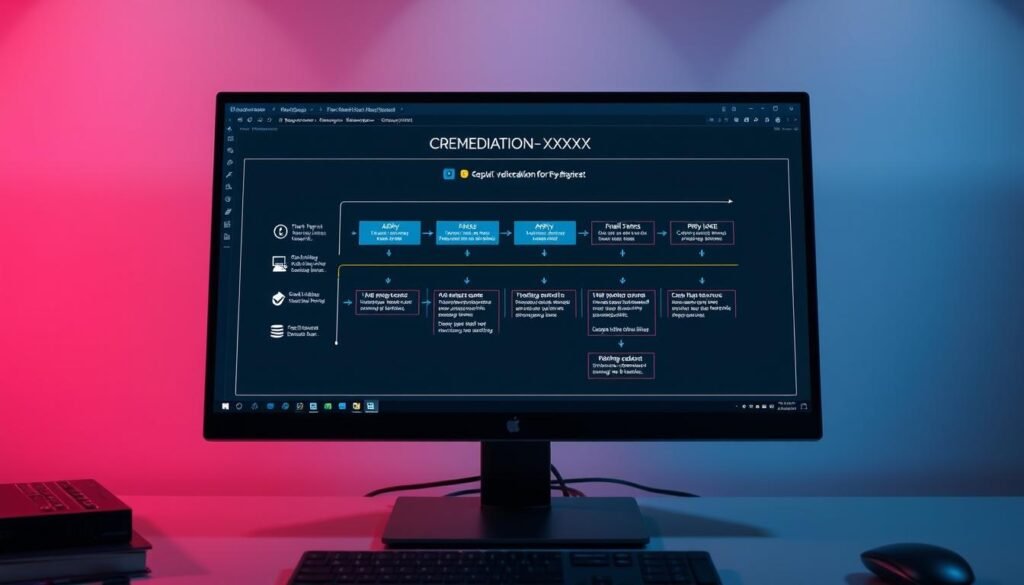
Applying Windows Updates
First things first—update your Windows system. Outdated software is like leaving your front door wide open. Here’s how to get started:
- Head to the Start Menu → Windows Update → Mash ‘Check for updates’ like it’s 1999. 🕹️
- Install KB5002537 or KB5002467—these are your golden tickets to security.
- Pro tip: Set updates to automatic so you’re always covered. 🛡️
If you’re using WSUS or WUfB, make sure the latest patches are deployed across your network. No excuses—update now or pray later. 🙏
Using PowerShell Scripts for Remediation
For the tech-savvy, PowerShell is your best friend. Here’s a quick script to check your system’s version:
Invoke-WebRequest -UseBasicParsing [update URL]
This command fetches the latest updates and ensures your build number is 16.0.5435.1001 or higher. 🖥️
Pro warning: Don’t try scripting unless you’re fluent in geek. If you’re not confident, stick to manual updates. 💻
Emergency fix: Can’t update right away? Disable macros like you’re grounding a teenager. It’s not perfect, but it’s a quick band-aid. 🩹
Best Practices for Security
Keeping your systems secure doesn’t have to feel like rocket science—let’s break it down. 🚀 Whether you’re a small business or a large enterprise, a few smart moves can save you from a world of trouble. Here’s how to stay ahead of the game.

Regular Updates and Patch Management
Treat updates like Tinder matches—swipe right regularly. 💘 Outdated software is a hacker’s dream. Automate your patch management to make sure you’re always covered. Here’s why:
- Automated updates reduce human error—no more “I’ll do it later” excuses.
- Patch management tools like WSUS keep your systems in check.
- Pro tip: Schedule updates during off-peak hours to minimize disruption.
Implementing Strong Security Policies
“Password123” isn’t security—it’s a welcome mat for hackers. 🚪 Craft policies that actually protect your business. Start with these essentials:
- Enforce complex passwords and multi-factor authentication (MFA).
- Train users with phishing simulations—way better than boring PowerPoints. 🎣
- Compliance isn’t just red tape—GDPR and CCPA are your armor plating. 🛡️
Here’s a quick guide to lock things down:
| Practice | Action |
|---|---|
| Updates | Automate patch management |
| Passwords | Enforce MFA and complexity rules |
| Training | Run phishing simulations |
| Compliance | Follow GDPR/CCPA guidelines |
With these steps, you’ll turn your systems into Fort Knox. 💪 Stay sharp, stay secure!
Understanding the Role of Windows Server in CVE-2024-XXXXX
Your Windows Server isn’t just a machine—it’s a hacker’s playground if left unchecked. 🎮 This vulnerability doesn’t discriminate; it targets both Office and Server environments. Let’s dive into how your server is affected and what you can do to lock it down.
How Windows Server is Affected
If you’re running Windows Server 2016, 2019, or 2022, listen up. This flaw can turn your domain controllers into hacker hotspots. 🚨 Domain controllers are the alpha wolves of your network—patch them first, then workstations. Here’s the breakdown:
- Server admins: This isn’t a drill—your domain controllers are thirsty for updates.
- Patch hierarchy: DC first, then workstations—like feeding the alpha wolf first. 🐺
- Version check: Server 2016? 2019? 2022? We’ve got your cheat sheet. 📄
Specific Updates for Windows Server
Stay ahead by ensuring your version is up-to-date. Updates like KB5002537 and KB5002467 are your best friends here. But don’t just slap on patches—test them in staging first. Unless you enjoy 3 AM fire drills. 🔥
“Set alerts for build numbers like stock price notifications—stay proactive, not reactive.”
Here’s a quick guide to keep your security tight:
- Monitor build numbers like they’re your favorite stock. 📈
- Use failover strategies to test updates in staging environments.
- Automate patch management to reduce human error. 🤖
Your Windows Server is the backbone of your network—don’t let it become a liability. 💪
User Experience and CVE-2024-XXXXX
Balancing security and productivity is like walking a tightrope—here’s how to nail it. 🎪 Updates might feel like a hassle, but they’re your first line of defense. Let’s dive into how this vulnerability impacts end-users and how to keep things running smoothly.

Impact on End-Users
End-users often dread updates, but they’re essential for survival. 🍪 A poorly timed patch can disrupt workflows, frustrate employees, and even hurt your business. Imagine your checkout process freezing during peak sales—chaos, right? 🛒
To keep users happy, communicate clearly. Use phrases like “maintenance window” instead of “We almost got hacked.” It’s all about framing. Pro tip: Turn error messages into helpful guides. “Access denied” can become “Oops! Let’s get you back on track.”
Minimizing Disruption During Updates
Updates don’t have to be a productivity killer. Schedule patches during lunch breaks—pizza helps. 🍕 Here’s a quick guide to keep things running smoothly:
| Strategy | Benefit |
|---|---|
| Schedule during off-peak hours | Minimizes workflow disruption |
| Automate patch management | Reduces human error |
| Communicate updates clearly | Keeps users informed and calm |
Your user experience can make or break your security strategy. Walk the tightrope with confidence, and keep your systems secure without sacrificing productivity. 💪
Business Implications of CVE-2024-XXXXX
When it comes to cybersecurity, the stakes for your business are sky-high—this vulnerability could be the tipping point. 🚨 From financial losses to reputational damage, the fallout can be catastrophic. Let’s break down the risks and how to protect your operations.

Potential Business Risks
Imagine this: downtime during peak sales, a tarnished reputation, and hefty fines. 💸 The formula for disaster? Downtime × Reputation × Fines. It’s not just a hypothetical—it’s a real threat to your bottom line.
Cyberattacks can disrupt operations, steal sensitive data, and lead to compliance nightmares. GDPR violations? They’re not just red tape—they’re financial sinkholes. 🕳️ And don’t forget third-party applications. They’re often overlooked but can be potential backdoors for hackers.
Strategies for Mitigation
First, invest in cyber insurance. Think of it as an airbag for your business—it’s not optional, it’s essential. 🛡️ Next, conduct regular vendor audits to ensure third-party tools aren’t exposing you to unnecessary risk.
Finally, translate technical jargon into boardroom language. Turn “vulnerability” into “profit/loss statement.” Your team needs to understand the stakes to take action. For more insights, check out this deep dive on CVE risks.
Security Teams and CVE-2024-XXXXX
Security teams, it’s your time to level up—this vulnerability needs your A-game. 🚀 Whether you’re in a SOC or leading incident response, your role is critical. Let’s dive into how your team can tackle this flaw and keep systems secure.
Role of Security Teams in Addressing the Vulnerability
Your team is the first line of defense. Think of this vulnerability as a ticking time bomb—your job is to defuse it. Start by implementing robust detection mechanisms. Tools like SIEM and EDR are your best friends here. 🛡️
Pro tip: Create a war room checklist. Coffee? Check. Pizza? Double check. Incident response plan? Non-negotiable. 🍕
“MTTD under 1 hour or prepare for chaos.”
Collaboration with IT Departments
Stop the cold war between security and IT. Bridge-building is key. Work together to make sure patches are applied promptly. Here’s how to foster collaboration:
- Hold regular sync-ups—no more silos. 🚫
- Use shared tools like patch management systems. 🤝
- Turn technical jargon into actionable steps. 🛠️
With the right logic and teamwork, your systems will be Fort Knox in no time. 💪
Updates and Patches for CVE-2024-XXXXX
Updates are the unsung heroes of cybersecurity—don’t skip them. 🛡️ Whether you’re running a small server or managing a fleet of devices, staying updated is your first line of defense. Let’s dive into the essential patches and how to apply them like a pro.
List of Relevant Updates
Here’s your patch bible—bookmark this section. 📖 The following updates are your new best friends:
- KB5002537: The MVP for Office 2016 (32-bit).
- KB5002467: Your go-to for Office 2016 (64-bit).
Make sure your version is 16.0.5435.1001 or higher. Anything below? Time to update ASAP. 🚨
| Affected Software | Required Version | Key Updates |
|---|---|---|
| Office 2016 (32-bit) | 16.0.5435.1001 | KB5002537 |
| Office 2016 (64-bit) | 16.0.5435.1001 | KB5002467 |
How to Apply Patches Effectively
Applying patches isn’t just about clicking “Update Now.” Follow this deployment flowchart: Test → Pilot → Full rollout. No YOLO-ing allowed. 🚫
For WSUS users, approval rules are your safety net. And always have a rollback plan—because sometimes updates break more than they fix. 💥
“Patch management is like chess—plan your moves carefully.”
Make sure to test updates in a staging environment first. Automate where possible to reduce human error. Your server will thank you. 💻
Creating Applications for Remediation
Think of app creation as building with Legos—simple, modular, and effective. 🧱 Crafting a remediation application doesn’t have to be overwhelming. With the right tools and steps, you can create a solution tailored to your needs. Let’s dive into the process and make sure your systems stay secure.
Steps to Create a Remediation Application
Start by choosing your packaging tools. Whether it’s Intune or SCCM, pick the one that fits your workflow. 🛠️ Think of it as choosing your fighter in a video game—each has its strengths. Next, focus on version control. Your build number should be 16.0.5435.1001 or higher. Anything less? Time to update.
Error handling is non-negotiable. Log files aren’t just optional—they’re your alibi when things go sideways. 📝 Pro tip: Use a script to automate repetitive tasks. It saves time and reduces human error. Remember, app building is about simplicity and efficiency.
Deploying Applications to Affected Machines
Deployment is where the magic happens. Start with a pilot group—they’re your crash test dummies. 🧪 Once you’ve ironed out the kinks, roll it out to the rest of your network. Use deployment groups to organize your machines and make sure everything runs smoothly.
Finally, test your products in a staging environment. It’s like a dress rehearsal for your updates. 🎭 Automate where possible to minimize disruption. With these steps, your remediation app will be up and running in no time. 💪
Detection Logic and Microsoft QFE
Spotting vulnerabilities doesn’t have to feel like finding a needle in a haystack. With the right tools and logic, you can pinpoint flaws before they cause chaos. Microsoft QFE (Quick Fix Engineering) is your secret weapon here—it’s like a cybersecurity GPS guiding you straight to the problem. 🛠️
Using Microsoft QFE for Detection
Microsoft QFE is your vulnerability radar system. 📡 It scans your system for missing patches and flags potential risks. Start by diving into the registry:
HKEY_LOCAL_MACHINE\SOFTWARE\Microsoft\…
This registry path is your treasure map to identifying vulnerable files. Combine it with PowerShell for a dynamic duo. Here’s a quick snippet to check for updates:
Get-Hotfix | Where-Object {$_.HotFixID -eq ‘KB5002537’}
This command fetches the latest hotfixes and ensures your system is up-to-date. 🖥️
Building Effective Detection Logic
Creating robust detection logic is like crafting a recipe—precision is key. Start by defining your criteria. What are you looking for? Missing patches? Suspicious files? Once you’ve set your parameters, use QFE to match them against your system’s current state.
False positives can be a headache. Always triple-check before hitting the panic button. 🚨 Log analysis is your best friend here. Turn data noise into actionable intel by focusing on patterns and anomalies. Pro tip: Automate log reviews to save time and reduce errors. 🤖
With Microsoft QFE and solid logic, you’ll transform your detection process from chaotic to streamlined. Stay sharp, stay secure! 💪
Risk Management and CVE-2024-XXXXX
Managing risk isn’t just a task—it’s a mindset shift. 🛡️ When dealing with vulnerabilities like CVE-2024-XXXXX, understanding the risk level and taking proactive steps is crucial. Let’s break down how to assess and mitigate these risks effectively.
Assessing the Risk Level
First, grab your red/yellow/green highlighters—it’s risk matrix time. 🖍️ This CVE scores 8.1 on the CVSS scale, which translates to “Fix yesterday.” 🚨 Use a risk matrix to evaluate the impact and likelihood of exploitation. Here’s a quick guide:
| Risk Level | Impact | Likelihood |
|---|---|---|
| High | Critical data loss | Very likely |
| Medium | Operational disruption | Likely |
| Low | Minor inconvenience | Unlikely |
For more insights on CVSS scores, check out this deep dive on CVE risks.
Steps to Reduce Risk
Reducing risk is like building a fortress—one brick at a time. Start by verifying your insurance policy. Does it cover exploits like this? Better check. 🕵️♂️ Next, review your vendor SLAs. Cloud providers better have your back.
Continuous monitoring is non-negotiable. Treat cybersecurity like TikTok—always scrolling. 🎥 Automate patch management to stay ahead of vulnerabilities. Here’s a quick checklist:
- Make sure your team is trained on phishing simulations.
- Set up alerts for unusual IPv6 traffic.
- Test updates in staging environments before full rollout.
With these steps, your business will be ready to tackle any security challenge. 💪
Frequently Asked Questions About CVE-2024-XXXXX
Got questions? We’ve got answers—let’s clear the air on this CVE. Whether you’re a seasoned IT pro or just trying to keep your systems safe, we’ve got you covered. Here’s the lowdown on the most common concerns and where to find additional support.
Common Concerns and Answers
Let’s tackle the top questions head-on. First up: “Can I just disable Office instead?” Sure, if you’re cool with time traveling to 1995. 🕰️ Disabling Office isn’t a fix—it’s a workaround that’ll leave you stuck in the Stone Age. Instead, focus on applying the necessary updates.
Another hot topic: “What if I miss a patch?” Missing patches is like skipping sunscreen—it’s only a matter of time before you get burned. 🔥 Stay proactive with automated patch management to avoid gaps in your security.
Finally, “Is this CVE really that serious?” On a scale of 1 to ‘OMG’, it’s a solid ‘Update Now’. 🚨 Don’t underestimate the risks—this vulnerability can lead to data breaches, downtime, and compliance nightmares.
Where to Find Additional Support
When in doubt, turn to Microsoft’s support paths. From detailed docs to actual humans (rare unicorns 🦄), they’ve got resources to help you out. Here’s a quick guide:
| Resource | Best For |
|---|---|
| Microsoft Docs | Step-by-step guides |
| Community Forums | Peer advice and troubleshooting |
| Direct Support | One-on-one help |
Pro tip: Reddit’s sysadmin threads are gold. 🏆 They’re often more helpful than a Google search. And remember, when in doubt, reboot—it’s the IT equivalent of “have you tried turning it off?” 💻
Conclusion
Cybersecurity is a marathon, not a sprint—keep your pace steady. Updates are your best defense, so make sure they’re part of your routine. Monitor your systems like a hawk, and repeat the process. 🔄
Share this guide with your work BFF—it might just save their digital life. Future CVEs are inevitable, so stay frosty and prepared. ❄️
Thanks for reading! Now go out there and be a security rockstar. 🎸 When you finally patch everything, it’ll feel like walking past vulnerabilities with confidence. 💪
