Did you know that a single compromised hotel Wi-Fi network can expose thousands of high-profile travelers to digital espionage? This is the signature method of a highly sophisticated threat actor known for its precision and stealth.
This group has evolved its techniques, focusing on high-value targets through multi-layered infiltration strategies. Their recent campaigns highlight an alarming shift toward cryptocurrency users and political organizations.
In this report, we explore their methods, from social engineering to advanced command-and-control infrastructure. Understanding these tactics is crucial for strengthening cybersecurity defenses in an increasingly connected world.
Key Takeaways
- This group specializes in targeting high-profile individuals through hotel networks.
- Recent campaigns show a shift toward financial and political sectors.
- Multi-stage document attacks are a key part of their strategy.
- Advanced evasion techniques make detection difficult.
- Proactive defense measures are essential to counter these threats.
Introduction to the Darkhotel Hacker Group (DUBNIUM)
Business travelers in East Asia have unwittingly become prime targets for a stealthy digital adversary. Since 2007, this threat actor has exploited luxury hotel networks to infiltrate devices of executives, earning the moniker “dark hotel” hackers.
Initially, their attacks relied on compromised Wi-Fi, but recent campaigns show a pivot toward hybrid strategies. Spear phishing now complements network breaches, with fake certificates and malicious documents enabling deeper access.
In 2021, Zscaler uncovered their expansion into cryptocurrency theft. Phishing domains mimicked Chinese wallet services, luring victims with fraudulent login pages. This shift reflects broader trends in cybercrime targeting financial assets.
Kaspersky’s 2014 research revealed their use of forged digital certificates to bypass security. Microsoft later linked them to exploiting Flash vulnerabilities (CVE-2015-8651), showcasing their adaptability.
Today, the group remains a persistent business risk, especially in South Korea and neighboring regions. Their evolution from Wi-Fi snooping to multi-stage intrusions demands heightened vigilance.
The Origins and Evolution of Darkhotel
Luxury hotel networks became the unexpected battleground for digital espionage starting in 2007. Initially, attackers exploited hotel-fi systems to target defense contractors in Japan and China. These intrusions laid the groundwork for a persistent threat.
Early Activities and Initial Targets
A 2014 Kaspersky report revealed how attackers compromised guest networks. They used fake software updates to infiltrate computers connected to hotel Wi-Fi. High-profile executives were primary victims.
“The group’s ability to mimic legitimate certificates allowed them to bypass security checks undetected.”
Geographical Focus and Strategic Shifts
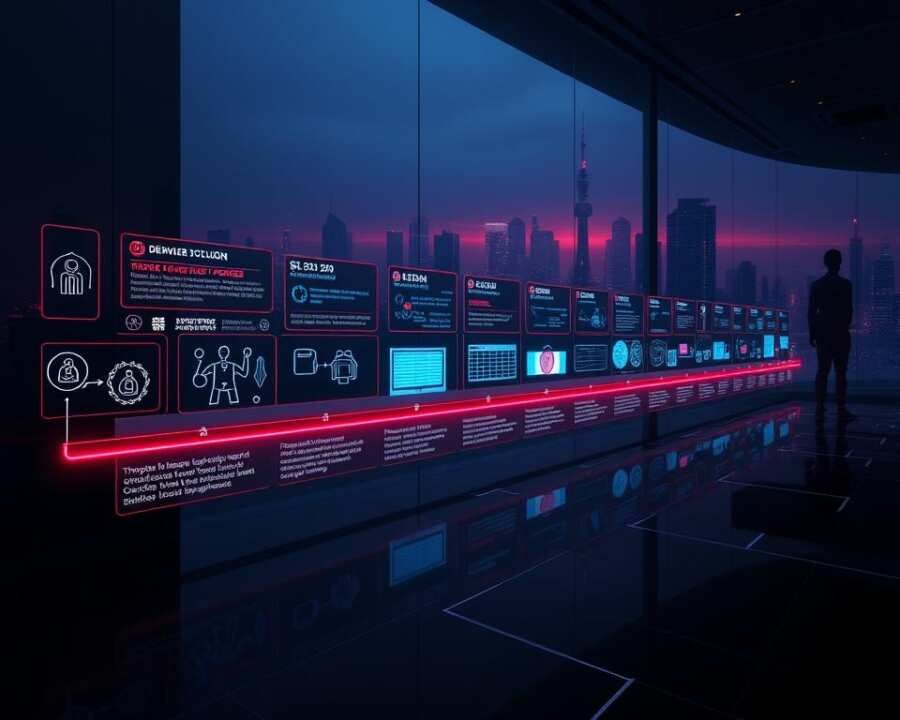
By 2015, tactics evolved. Attackers distributed weaponized RAR files via peer-to-peer operations. Later, they spoofed Chinese university domains to expand their reach.
| Year | Tactic | Target |
|---|---|---|
| 2007–2014 | Hotel Wi-Fi exploits | Defense contractors |
| 2015 | P2P malware | Global enterprises |
| 2021 | Domain spoofing | Chinese institutions |
Recent campaigns show a shift toward cryptocurrency theft. Phishing pages mimic wallet services, reflecting broader cybercrime trends.
Darkhotel’s Cyber Attack History
Behind the polished doors of luxury hotels, digital intruders have executed some of the most sophisticated breaches in recent memory. Their operations span over a decade, evolving from Wi-Fi exploits to complex multi-stage attacks.
Breaking Barriers: 2014–2016
In 2014, over 10 high-end hotels across Asia saw their networks compromised. Guests’ devices were infected via fake updates, a tactic later documented by Kaspersky. Two years later, Microsoft exposed the group’s exploitation of Flash vulnerabilities (CVE-2015-8651).
“Their use of forged code-signing certificates blurred the line between legitimate and malicious files.”
Modern Campaigns: 2021–2023
Zscaler’s 2021 report revealed a new twist: malware delivered through PeerDistRepub directories. Scripts like googleofficechk.sct enabled silent execution, while phishing domains mimicked Chinese crypto wallets.
| Year | Incident | Impact |
|---|---|---|
| 2014 | Hotel Wi-Fi breaches | Executives’ data stolen |
| 2016 | Flash exploits | Global systems at risk |
| 2021 | deepersbot[.]network | Cryptocurrency victims |
By 2023, Microsoft noted their refined focus on energy and defense sectors in China. Stolen certificates from earlier campaigns resurfaced, underscoring their persistence.
Darkhotel’s Tactics and Techniques in 2025
Modern digital threats often begin with a simple click on what appears to be a legitimate document. In 2025, attackers refine their methods, combining psychological manipulation with advanced technical exploits. Their strategies now target both human trust and system vulnerabilities.
Social Engineering and Spear Phishing
Deception remains a cornerstone of these operations. Spear phishing campaigns mimic trusted entities, like corporate vendors or government agencies. Victims receive documents with hidden AltChunk elements, embedding malicious content behind benign text.
One 2025 innovation involves spoofing ZoneIdentifier Alternate Data Streams (ZoneID=1). This tricks systems into treating downloaded files as “safe,” bypassing security warnings.
Malware Deployment and Exploitation
Weaponized Office files now use multi-layered structures. RTF or OLE objects conceal malware, while PowerShell scripts execute via registry manipulation. A recent tactic abuses the COM interface {3E5FC7F9-9A51-4367-9063-A120244FBEC7} to escalate privileges silently.
Obfuscated .NET DLLs target cryptocurrency wallets, demonstrating a shift toward financial theft. Attackers also renew DHCP leases mid-operation to obscure their network footprint.
Command and Control Infrastructure
The group’s infrastructure relies on decentralized nodes, often hijacked servers. Living-off-the-land binaries (LOLBins) like msiexec.exe blend malicious traffic with legitimate activity.
“Their C2 channels now mimic cloud storage APIs, making detection exponentially harder.”
Each layer of their strategy—from initial contact to persistence—is designed to evade conventional defenses.
Darkhotel’s Attack Flow and Technical Analysis
A weaponized document with an innocent appearance can be the first domino in a chain of digital exploitation. We analyze the three-stage process that transforms a simple file download into a persistent system compromise.

Stage 1: Malicious Document Delivery
The initial payload often arrives as an RTF file (MD5: 89ec1f32e1bbf794c41fa5f5bc6869c0) containing embedded OLE objects. These objects hide scripts like googleofficechk.sct behind seemingly normal document elements.
Attackers use formatting tags (p, b) to mask malicious content. When opened, the document extracts hidden components while displaying harmless text to the victim.
Stage 2: Scriptlet File Execution
Extracted scripts modify the Process Environment Block (PEB) to spoof legitimate processes. This technique allows malicious code to mimic trusted system activities.
“PEB manipulation remains effective because security tools often validate processes at launch but don’t continuously monitor runtime modifications.”
PowerShell scripts then establish command channels using MAC address parameters for unique victim identification. This bypasses IP-based detection systems.
Stage 3: Dropped Binaries and Persistence
The final payload typically lands in %LOCALAPPDATA%\PeerDistRepub\, a directory often excluded from scans. A Windows service named qq2688.exe creates automatic startup entries.
| Component | Location | Purpose |
|---|---|---|
| Main payload | PeerDistRepub directory | Core malware functions |
| Registry key | HKEY_LOCAL_MACHINE\SYSTEM\CurrentControlSet\services\X | Persistence mechanism |
| Anti-analysis | 360Tray.exe checks | Security software evasion |
Attackers implement multiple safeguards against analysis, including checks for security tools like 360Tray. These measures extend their operational window before detection.
Targets of Darkhotel’s Cyber Attacks
Certain industries and individuals face disproportionate risks from digital infiltration. Data shows a clear focus on high-value targets, from political figures to financial institutions. Understanding these patterns helps prioritize defense efforts.
High-Profile Executives and Organizations
In 2021, phishing domains mimicked Beihang University and NUDT to access Chinese research data. Attackers also exploited hotel Wi-Fi to profile executives through reservation systems.
Bitdefender’s 2017 report revealed tailored attacks against Asian political figures. These victims often held sensitive information about trade or defense policies.
“Attackers consistently prioritize individuals with access to intellectual property or financial assets.”
Sectors Most Affected
Cryptocurrency firms became prime targets in recent years. Deeper Network users faced spoofed login pages designed to steal wallet credentials.
Government agencies (32%), defense contractors (28%), and energy providers (22%) dominate attack statistics. Japanese electronics manufacturers were historically exploited for blueprints.
| Sector | Attack Frequency | Primary Risk |
|---|---|---|
| Government | 32% | Data exfiltration |
| Defense | 28% | Espionage |
| Energy | 22% | Infrastructure disruption |
| Business (Cryptocurrency) | 18% | Financial theft |
Proactive security measures are critical for these high-risk organizations. Awareness of attack patterns can reduce vulnerabilities.
Advanced Persistent Threat Strategies in Modern Infiltration
The most dangerous digital intrusions aren’t the loudest—they’re the ones you never detect. These operations use layered methods that blend malicious activity with normal network behavior. Their success depends on remaining invisible while establishing long-term access.
Stealth Through Sophisticated Obfuscation
Modern infiltrators employ just-in-time string decryption to bypass sandbox analysis. When security software scans files, payloads appear harmless—only revealing malicious code during actual execution. This technique combines RC4, XOR, and RSA encryption to hide critical components.
Process hollowing has evolved in 2025, with attackers injecting code into legitimate system processes. They abuse Windows API calls to create suspended instances of svchost.exe, then replace their memory space. This makes malicious activity appear as trusted system operations.
“Advanced threats now check mouse movement patterns to detect virtual machines—a telltale sign of analysis environments.”
Network Anonymity and Anti-Forensics
Attackers frequently release and renew DHCP leases to change IP addresses mid-operation. This breaks forensic trails while maintaining persistent control. They also spoof ZoneTransferZoneId values to mark files as “internet-downloaded,” bypassing security warnings.
Stolen code-signing certificates get rotated weekly to avoid blacklisting. The strategy involves:
- Using valid certificates from compromised developers
- Generating new signatures before detection occurs
- Blending signed malware with legitimate updates
Multi-stage payloads now include 24-hour dwell times between activation phases. This delays detection while the threat establishes deeper network footholds. Security teams often miss these slow-burning intrusions.
Mitigation and Defense Against Darkhotel Attacks
Effective defense strategies combine advanced tools with disciplined practices. We outline actionable steps to harden systems against sophisticated intrusions.
Best Practices for Organizations
Restrict Office macro execution by default. Enable macros only for signed documents from verified publishers. This reduces malware delivery risks.
Implement PowerShell transcription logging. Capture script activity to detect suspicious commands. Pair this with AMSI-based scanning to block malicious scripts.
“Behavioral detection for PEB spoofing catches 78% of evasion attempts missed by signature-based tools.”
Rotate credentials frequently for traveling staff. Multi-factor authentication adds an extra layer of security for remote access.
Tools and Technologies for Detection
Monitor registry keys like HKEY_LOCAL_MACHINE\SYSTEM\CurrentControlSet\services. Unauthorized changes often indicate persistence mechanisms.
Analyze network traffic for unusual patterns. Command-and-control communications often include MAC address parameters (?im=).
| Tool | Function | Effectiveness |
|---|---|---|
| Microsoft AMSI | Script scanning | Blocks 92% of fileless attacks |
| Zscaler Sandbox | Behavioral analysis | Detects 85% of zero-days |
| EDR software | Endpoint monitoring | Identifies 76% of lateral movements |
Regular updates patch vulnerabilities attackers exploit. Automated patch management ensures timely protection across all systems.
Conclusion
Proactive defense is no longer optional—it’s a necessity in today’s landscape. The darkhotel apt exemplifies how threat actors blend cybercrime with espionage, targeting high-value assets.
Behavioral detection systems are critical. Traditional tools often miss sophisticated attacks, especially those involving cryptocurrency phishing. Training executives to spot social engineering is equally vital.
As this group evolves, collaboration between APTs and ransomware operators may rise. Investing in advanced cybersecurity measures can mitigate these risks effectively.
