
Can a single overlooked policy line invite a breach that costs millions? That question drives this guide. Recent 2025 data shows many incidents start with simple, avoidable errors.
This short introduction explains why audits matter right now. Over 60% of costly breaches involved misconfigurations, and default credentials still appear in many mid-size environments.
Expect clear, repeatable steps you can run on a quarterly cadence. We focus on plain fixes: remove broad allows, patch firmware, tidy stagnant policies, and enable logging tied to SIEM.
By the end of this guide you will spot drift, prioritize fixes, and present concise remediation plans to stakeholders. That saves time, protects data, and reduces attack paths across hybrid environments.
Key Takeaways
- Simple operational shortcuts often create the biggest security gaps.
- Quarterly audits and automation cut exposure quickly.
- Remove default credentials and unnecessary open ports first.
- Use SIEM-driven alerts and focused penetration tests to validate fixes.
- Translate technical findings into business risks for better buy-in.
Why do firewall rule misconfigurations still drive breaches in the present landscape?
Many 2025 intrusions trace back to routine admin shortcuts rather than exotic exploits. Operational friction, hybrid sprawl, and poor visibility let basic errors grow into business risk.
Admins leave default credentials, skip firmware patches, or forget temporary “allow all” entries. These simple slips create gaps that automated scanners and opportunistic attackers find quickly.
Short timelines and fragmented ownership make this an operational headache for organizations. Companies that balance speed and small staff often deprioritize policy cleanup and review, so stale entries linger.
Visibility matters. Without centralized logging and consistent analysis, drift in behavior goes unnoticed until data is exfiltrated or access is abused.
- Operational fixes beat panic: scheduled reviews, clear change ownership, and baseline templates reduce repeat exposure.
- Practical validation: run focused tests and simulated breaches to prove controls work; see a real example at simulated breaches.

What are the most dangerous firewall rule misconfigurations today?
A single broad allowance or unchanged admin credential can turn an appliance into a beachhead for attackers. This section lists the practical exposures to watch for and quick fixes you can apply during an audit.
Key exposures to prioritize:
- Overly permissive any-to-any allowances: Teams often open wide access to troubleshoot and forget to tighten scope. When any source reaches any destination, least privilege is gone and lateral movement becomes trivial.
- Default or weak admin credentials: A 2024 pentest found 37% of mid-size firms had at least one device with unchanged defaults. That lets attackers alter policies and install covert accounts.
- Unpatched firmware and known vulnerabilities: Vendors publish fixes regularly. On-prem appliances often lag and present public CVEs for reuse by attackers.
- Flat segmentation: No zones means ransomware and lateral threats spread quickly. Use VLANs and microsegmentation to limit blast radius.
- VPN misconfiguration: Require MFA, modern protocols, and narrow IP scopes so remote sessions do not inherit broad internal access.
- Disabled logging: Turn on inbound and outbound logs and forward to SIEM. Without logs you lose early detection of scans and brute force.
- Open ports and legacy services: Close SSH (22), RDP (3389), SMB (445) where unnecessary and retire unsupported interfaces to shrink attack surface.
Triage tip: Treat each temporary entry as expired by default. Record intent and scope for every configuration change so one loose setting cannot undo broader defenses.
Which hidden rule hygiene issues quietly undermine control?
When teams move fast, forgotten entries silently erode control across networks. Unchecked policy drift, duplicate entries, and unused lines create gaps that outlast hardware and staff changes.
When hardware is retired without cleaning access lists, stagnant permissions can reactivate if addresses are reused. This creates an easy path for attackers and raises operational risk.
Stagnant access after decommission
Stagnant paths survive system disposal. Remove associated entries when resources leave service and log expirations so old access cannot resurface.
Duplicate entries that hide intent
Cloned entries add complexity. Duplicates mask real intent and slow reviews, so detect and consolidate copies in centralized management.
Shadowed entries that mislead reviewers
Prior position wins. A deny lower in sequence may be nullified by an earlier allow. Test effective behavior, not apparent text.
Policy bloat and wasted resources
Unused lines add cost. With 20–40% of lines idle, performance and visibility suffer. Treat policies like code: document, peer-review, expire, and remove.

Which remote access, identity, and VPN configurations do attackers exploit most?
Remote access weaknesses and identity gaps give attackers fast paths into networks. Focus on short, enforceable controls that stop common intrusions without blocking work.
Missing multi‑factor authentication and weak encryption are simple failures with big impact. Several 2025 breaches began with brute‑forced VPN credentials, then used permissive firewall entries to reach internal assets.
Missing MFA, weak crypto, and broad IP ranges on gateways
Enforce MFA on every VPN login and require strong cryptography like IKEv2/IPsec. Disallow legacy protocols and set short session lifetimes with re‑auth on risk triggers.
Lock gateway scopes to known device groups and narrow IP ranges. Default‑allow split tunneling should be avoided; it leaks traffic and raises risk for sensitive apps.

Identity‑blind, IP‑only controls that fail against modern tactics
IP‑only controls are brittle. Attackers rotate addresses and pivot from compromised hosts, so map rules to authenticated users and trusted endpoints instead.
- Treat VPN access as privileged: limit routes and segment remote sessions.
- Pair policies with NAC and endpoint signals to reduce reliance on static IPs.
- Maintain strict change control so growth in remote use does not expand internal control planes across your organization.
For further reading on evolving exposures, see network vulnerabilities 2025 to align controls with current attacker techniques.
How should you turn firewall logging and SIEM alerting into real defenses?
Good logs and tuned alerts close visibility gaps fast. Capture both inbound and outbound events, and feed them into a SIEM so teams can act on signals, not noise.
Enable comprehensive logging across flows. Without inbound and outbound logs you miss port scans, repeated failed logins, and suspicious egress. Forward those logs to a SIEM for real‑time analysis and retention tracking.
Prioritize high‑fidelity alerts and review them weekly. Tune alert thresholds so analysts see active threat behavior first. Weekly reviews validate automation and keep detections aligned to changing infrastructure and attacker tradecraft.

- Capture auth failures to VPN and management interfaces and correlate across IPs and user IDs.
- Baseline egress by destination and volume; investigate spikes or new geolocations.
- Enrich alerts with threat intel and asset context so responses are actionable.
| Control | Why it matters | Quick action |
|---|---|---|
| Logging | Shows scans, brute force, and data flows | Enable inbound/outbound capture and forward to SIEM |
| SIEM alerts | Turns raw events into prioritized incidents | Define high‑fidelity alerts and tune weekly |
| Response integration | Enforces ownership and measures MTTR | Integrate ticketing and document retention/access |
How do you close configuration gaps across cloud, hybrid, and outbound control?
Cloud and on‑prem defaults often differ, which leaves silent gaps that attackers test. Fixing that gap means one baseline, tight egress, and layered segmentation across environments.
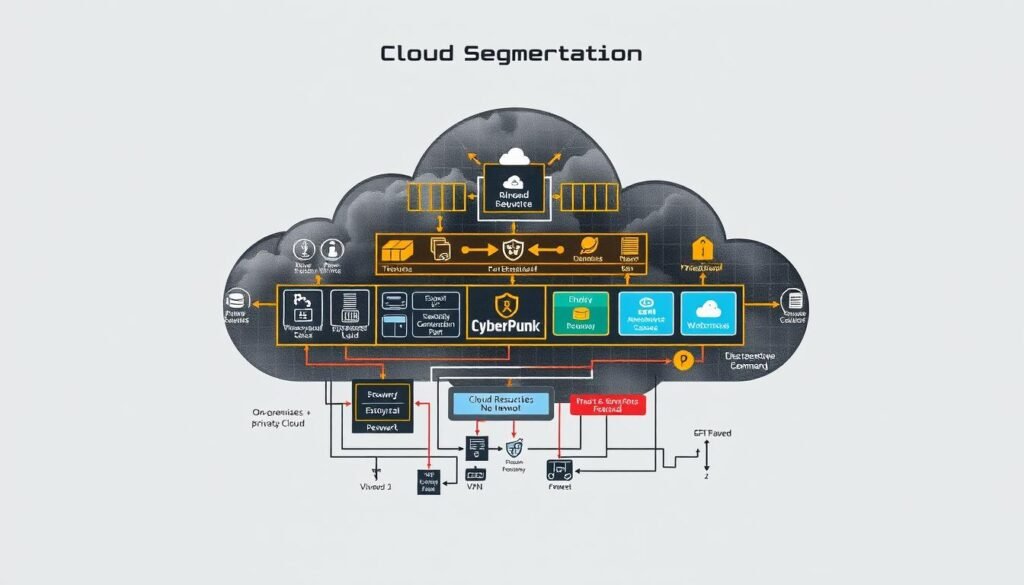
Start by normalizing policy baselines. Use cloud native constructs like security groups and NACLs to mirror on‑prem intents. Keep a single source of truth for firewall rules and publish templates so new workloads inherit secure defaults.
- Enforce deny-by-default for outbound and apply least privilege egress to stop data exfil.
- Layer segmentation: VLANs for tiers, microsegmentation for sensitive workloads, and clear inter‑zone policies.
- Automate continuous reconciliation so gaps are caught when teams ship updates.
“Treat outbound as a first‑class control; allow‑list destinations and log DNS/HTTPS to detect anomalies.”
| Control area | Why it matters | Quick action |
|---|---|---|
| Policy baseline | Prevents drift across cloud and on‑prem | Publish templates; use single source of truth |
| Outbound egress | Stops exfil and command‑and‑control | Enforce deny-by-default; allow-list protocols |
| Segmentation | Limits lateral movement and reduces risk | Combine VLANs, microsegmentation, and audited inter‑zone policies |
What practical steps move you from audits to safe automation?
Move audit findings into scripted actions so gaps close without waiting for manual fixes. Make each review output an executable task: owner, intent, and expiry for every entry.
Start with quarterly audits that force recertification. Every rule needs a business owner, a clear use case, and an expiration date. Remove entries that lack documentation.
Automate backups, configuration checks, and firmware patching to cut human error and close known vulnerabilities faster than adversaries can exploit them.

- Adopt policy management platforms that label changes, show diffs, and score risk so reviewers answer if a change harmed security.
- Standardize pre-change checklists and validate post-change with connectivity tests, log checks, and rollback plans.
- Use targeted penetration tests against open ports, exposed services, and application flows, then update firewall rules precisely.
- Train staff to avoid temporary allowances without expirations and to follow documented best practices.
- Build a small toolchain for linting, conflict detection, and mapping rules to applications to speed safe operations.
| Control | Why it matters | Quick action |
|---|---|---|
| Quarterly audits | Ensure intent, owner, and expiry for each entry | Recertify or remove stale entries |
| Automation | Reduces manual drift and closes known vulnerabilities | Enable backups, config checks, and patch jobs |
| Policy platforms | Label changes and score risk for fast review | Deploy tools that show diffs and impact |
| Pentest & training | Validates defenses and fixes human gaps | Run focused tests and recurring staff training |
What is the business impact—costs, compliance, and brand risk?
A breach that starts small can end with multi‑million dollar damage and long audits. IBM Security reports an average breach cost of $4.5M in 2025, with over 60% tracing back to misconfigured controls.
Losses stretch beyond direct remediation. Downtime, legal exposure, and extended incident response add millions more. Customers notice; procurement teams flag weak posture during vendor checks.
Compliance demands proof. Regulators expect documented policies, mapped controls, and reliable audit trails. Organizations that show consistent enforcement and logs face fewer penalties and quicker third‑party reviews.
- Financial impact: multi‑million breach costs plus recovery hours and lost productivity.
- Operational value: restrict ports and sensitive applications to reduce attack surface.
- Market trust: disciplined governance speeds vendor approval and protects brand equity.
| Area | Why it matters | Quick action |
|---|---|---|
| Cost | Direct breach spend and extended recovery | Prioritize fixes tied to high‑value data |
| Compliance | Regulatory scrutiny of controls and docs | Keep auditable logs and policy mappings |
| Trust | Customer and partner confidence | Show layered defenses and regular audits |
| Governance | Decision clarity during deals and certifications | Produce executive summaries with metrics |
Translate technical debt into dollars and timelines to win remediation budgets. Keep evidence of approvals, expirations, and exception handling ready for audits and vendor questionnaires.
Conclusion
Keep governance active: short cycles, clear owners, and automated checks prevent simple slips from becoming breaches. Small, repeatable steps make security improvements stick.
Fix core issues such as weak credentials, excessive allowances, unpatched firmware, and misconfigured VPNs. Review configurations often and remove stale entries before they invite attacks.
Adopt clear best practices: deny‑by‑default, least privilege, labeled changes with expirations, and verified logging to SIEM. Make each audit output an executable set of steps with an owner and a test plan.
Use fit‑for‑purpose tools and automation to scale safe changes. Validate solutions with targeted tests and measure progress: unused rule reduction, patch times, alert fidelity, and review success.
