
What caused a massive wipe that knocked out tens of thousands of endpoints, and why should U.S. readers care about ripple effects across energy and supply chains?
This article promises clear facts over hype, tracing incidents across time and pointing to practical security steps. It summarizes the 2012 Shamoon wipe, the 2017 safety‑system disruption linked to Triton, and a 2021 sale of third‑party data. Readers get verified information and direct takeaways that matter for any company, big or small.
Scope is precise: what happened, what information surfaced, why the world noticed, and which defenses make a difference. Each section answers one practical question so you can skim or read deeply.
Expect clear definitions on first use, plain language, and action you can apply immediately. This content links common attack tactics — phishing, supply‑chain risk — with strategic defenses like zero trust. No hype, just verified facts and usable advice on cybersecurity.
Key Takeaways
- Three incidents span 2012, 2017, and 2021; each taught different lessons about risk and resilience.
- Mass wipes, safety‑system attacks, and third‑party leaks can disrupt global markets.
- Focus on fundamentals: inventory, segmentation, and vendor controls.
- Definitions appear on first use so readers at all levels follow technical points.
- Actions scale: low‑cost fixes help small firms; strategic design helps large operators.
Why This Guide Matters: What You’ll Learn in a Few Minutes
Quickly understand the stakes, the common failure points, and practical steps any team can take. This section summarizes what you should watch for and what action matters most.
Fast-moving cybersecurity risks can cascade from IT into safety, operations, and brand loss. Saudi authorities logged roughly 7 million incidents in the first two months of 2021. RDP brute-force campaigns topped 22.5 million attempts in 2020.
We highlight which categories of data were exposed in the 2021 leak and why third-party access magnified risk. You will also see how destructive attacks differ from extortion and safety-system intrusions.
- Recognize common threat vectors: email, social engineering, third‑party access.
- Get a crisp step-by-step playbook you can adapt for your program.
- Practical tips from frontline experts that any team can start now.
We place these incidents within a wider surge in cyber attacks and supply‑chain exposure. Expect clear points for power users and beginners, and a short list of top things that move the needle: vendor governance, data minimization, containment.
“Focus on inventory, segmentation, and vendor controls — those areas deliver the fastest risk reduction.”

For hands-on analysis, see our recommended log practices at log analysis practices.
A Simple Guide to the Saudi Aramco Computer Hack: The Core Facts
Below is a compact summary of the incidents: mass wipes, safety-system probes, and vendor-held leaks. This section lists key outcomes, contrasts intent, and points out why third-party exposure changed risk calculations.

At a glance: what was wiped, what was leaked, and what was targeted
2012: Shamoon used wiper malware that disabled up to 30,000 endpoints and disrupted operations for weeks.
2017: Malware targeted Triconex safety controllers; shutdowns revealed the intrusion and prevented physical harm.
2021: ZeroX listed about 1 TB of files for $50M. Aramco said contractors held much of that information, including PII for 14,254 employees and technical assets.
Past incidents vs. later data extortion: understanding the difference
Intent matters: Shamoon destroyed corporate assets; Triton aimed at safety systems; the 2021 event was a post-compromise extortion play that used leaked files to build credibility.
Analysis of these events shows shifting priorities for defenders: inventory and vendor controls matter as much as endpoint hardening.
| Year | Primary impact | Systems affected | Claim / sale |
|---|---|---|---|
| 2012 | Mass wipe, operational downtime | Corporate endpoints | No clear public seller claim |
| 2017 | Safety-controller targeting | Industrial safety systems | Attribution uncertain |
| 2021 | Data exposure and extortion listing | Vendor-held files, PII, network maps | ZeroX listed for $50M; 28-day timer image reported |
- Quick details: public report noted the $50M listing and a countdown screenshot tied to ZeroX.
- Key point: third-party oversharing amplified consequences in 2021.
- Neutral analysis: each incident pushed defenders toward segmentation, vendor governance, and tighter control over sensitive information.
“Containment and vendor controls reduce blast radius more than hope.”
What Happened in 2012: The Day 30,000 Systems Went Dark
On a single morning in 2012, tens of thousands of endpoints went offline and staff scrambled to restore normal operations. This event showed how destructive malware can erase productivity, forcing mass reimaging and long recovery cycles.
Shamoon used a wiper that overwrote files and boot records, not an extortion scheme. The destructive code spread fast, removed recovery options, and left no decryption path—an outcome very different from ransomware.

How the attack flowed and what systems were hit
The initial vector moved from compromised credentials into corporate networks. A destructive payload then propagated across workstations and servers. Up to 30,000 systems required reimaging, interrupting email, desktop services, and some business apps.
Operational impact on an oil giant and timeline
For this oil company, outages lasted weeks for some groups while critical services were prioritized. Teams rebuilt images, restored backups, and rerouted operations to maintain business continuity.
Attribution and contested evidence
Public reporting suggested links with Iran, but forensic evidence remained contested. Analysts flagged similarities with other intrusions, yet conclusive proof did not appear in open reports. That uncertainty shaped diplomatic and security responses.
Key lessons: harden endpoints, segment networks, and treat vendor access as a flare point. This incident set a precedent followed by later cyber attacks that probed both IT and operational domains.
Inside the 2017 Triton Incident: Targeting Industrial Safety Systems
A targeted attempt to alter Triconex controller logic triggered an emergency stop and drew forensic attention. That shutdown was the event that exposed malicious code aimed at industrial safety systems.

How malware went after Triconex safety controllers
FireEye and Dragos documented code that sought to manipulate Schneider Electric Triconex controllers. These controllers are built to stop dangerous process conditions and keep people safe.
Code injection attempts changed controller memory and caused an automated safety trip. The trip forced operators to investigate, which is how defenders found the intrusion.
What shutdowns revealed and why large-scale replication is hard
The shutdown acted as a kill switch that prevented physical harm. It also revealed that copying this attack across sites is difficult.
Industrial systems use bespoke engineering and site-specific logic. That makes worldwide replication costly and error-prone for any group pursuing such an exploit.
Russia-Iran speculation and the limits of artifact clues
Area 1 Security flagged possible Iranian ties while a Russian-language artifact raised false‑flag concerns. Analysts cautioned that such clues are not definitive evidence.
Attribution remains ambiguous; investigators stress careful analysis over quick conclusions.
| Aspect | What happened | Operational impact |
|---|---|---|
| Controller type | Schneider Electric Triconex | Safety trips, halted process lines |
| Detection trigger | Unplanned emergency shutdown | Forensic and manual inspection |
| Replication difficulty | High—site logic varies | Limits large-scale reuse |
| Attribution | Conflicting artifacts | Uncertain; response must be evidence-led |
Monitoring focus: controllers, engineering workstations, and change-management logs. For deeper technical process checks, see this operational analysis.
“A safety shutdown saved lives and revealed intent — detection that favors safety over secrecy.”
The 2021 ZeroX Data Leak and $50M Extortion Attempt
ZeroX listed about 1 TB of files for $50 million and used a 28‑day countdown to force urgency. This public post claimed multiple interested buyers and showcased sensitive technical and personal information tied to vendors, not a direct breach of corporate systems.
ZeroX, an online group attracting attention, advertised one terabyte of data and a high price. The listing included a screenshot with a 28‑day timer — a clear pressure tactic meant to prod negotiations and media attention.

Third‑party exposure: 1 TB of files and the company response
Aramco stated exposed files came from third‑party contractors rather than an intrusion of core systems. That distinction matters for legal and incident workflows, but it does not erase operational risk.
Countdown timers, “interested buyers,” and pressure tactics
Claimed buyer counts and countdowns are credibility maneuvers. They push victims toward rapid decisions and raise resale odds in a crowded cyber marketplace.
- What appeared for sale: PII for 14,254 employees, network maps, IP ranges, Wi‑Fi and camera details, IoT inventories, and client contracts with coordinates.
- Why it matters: exposed diagrams let threat actors plan follow‑on attacks and escalate access quickly.
For vendor due diligence, ask: Do you log remote access? How is sensitive data classified and stored? Who has privileged credentials? Demand proof of controls and recent audit summaries.
“Rapid containment and prompt notification shrink downstream harm and limit resale value.”
Key takeaway: even hardened companies remain attractive because vendor ecosystems expand the attack surface. Fast containment, clear vendor rules, and timely alerts reduce risk and slow marketplace momentum.
What Data Was Exposed: From Employee PII to Network Maps
Files on people, infrastructure, and projects circulated online, changing risk in plain sight. These items did not sit in isolation; together they let attackers plan targeted follow‑ups and real‑world operations.
Employee personal information
Exposed PII covered 14,254 employees: names, emails, phone numbers, job titles, residence permits, photos, and passport copies. Passport images amplify fraud risk because they supply validated identity details for account takeover and synthetic identity schemes.
Technical documents and network details
Project specs, engineering drawings, and internal reports were included alongside network maps showing IP addresses, Wi‑Fi access points, IP cameras, and IoT inventories. Those details make credential harvesting and lateral access far easier.
Operational files and location data
Client contracts, invoices, pricing sheets, memos, and precise geo‑coordinates appeared in the collection. Geo points raise both physical security and safety concerns across sites in saudi arabia.
- Why this matters: information on people, systems, and operations creates layered attack paths—spear‑phishing, vendor impersonation, and supply‑chain probing.
- Probable first probes: remote access portals, engineering workstations, and vendor accounts tied to sensitive systems.
- Immediate steps: rotate credentials, revoke exposed tokens, rekey wireless networks, and force multifactor enrollment for privileged users.
Even without an active attack, exposure alone shifts the risk equation—threat actors gain time and certainty; responders must act fast.
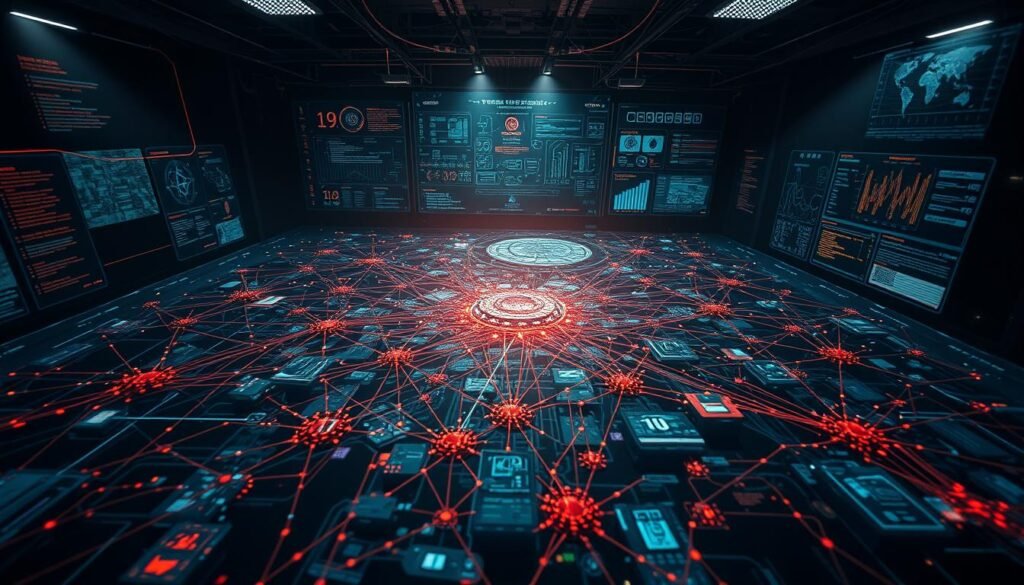
For related attack patterns and entry vectors, see this overview of common cyber attacks.
How the Attacks Worked: From Phishing and Access to Destructive Outcomes
Attack chains usually start with low‑profile entry points and escalate quickly when defenders miss early signals. This section walks through common entry points and the stepwise process that turns a foothold into widespread damage.
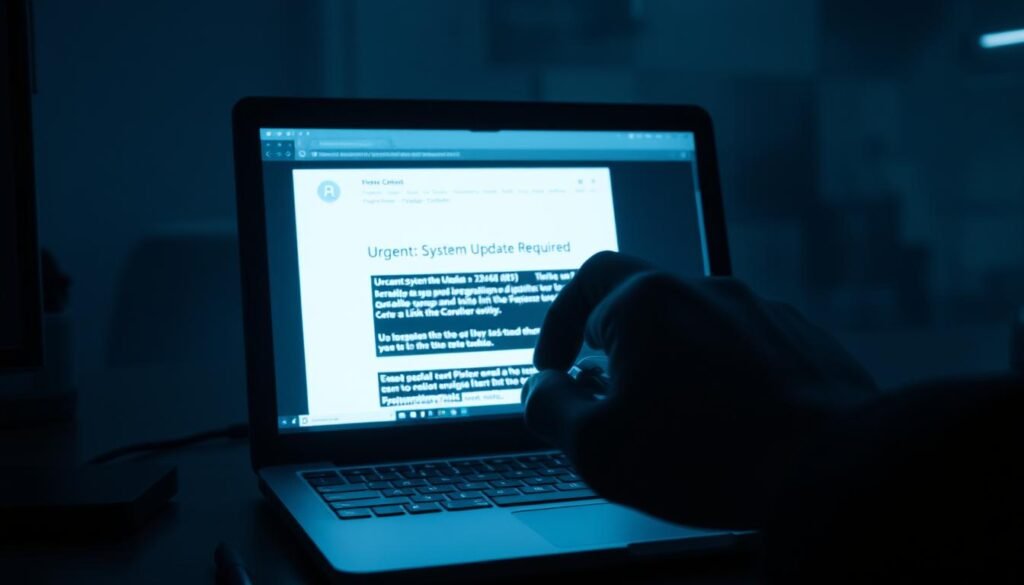
Common entry points: email, social engineering, and third‑party vectors
First point of compromise often involves email phishing, malicious attachments, or OAuth consent abuse that grants persistent tokens.
Vendors and unmanaged assets create blind spots; stolen credentials or misconfigurations give external parties lateral access into core systems.
From foothold to impact: lateral movement and “splash damage”
The typical process moves from initial foothold to privilege escalation, discovery, and pivoting across systems. Attackers map networks, harvest credentials, and escalate until they can deploy destructive tools.
Actors use leaked inventories and network maps to craft precise follow‑on attacks. That precision raises the odds of high‑impact outcomes.
- Limit blast radius: apply segmentation, identity controls, and conditional access.
- Detect and respond: phishing detection, strong reporting culture, and rapid takedown reduce dwell time.
- Prepare: cyber insurance and incident retainers help with recovery and legal steps when incidents escalate.
“Containment depends less on perfect prevention and more on rapid identity hygiene and segmentation.”
Practical essentials: enforce multifactor authentication (MFA), revoke exposed credentials fast, and treat OT systems differently where system communications follow distinct protocols.
For spotting fraud and early signs of vendor misuse see our recommended checklist at vendor and phishing detection practices.
Who Was Behind It? Threat Actors, Motives, and Credibility Signals
Public sales posts act like resumes for threat crews seeking paid operations. Listings with screenshots and timers sell reputation as much as data, and that shapes how buyers and defenders react.
ZeroX claimed responsibility for the 2021 listing and used a countdown image; independent verification of buyers was not found.
ZeroX and underground market dynamics
ZeroX used a public post with a 28‑day timer. That post promoted one terabyte for sale and implied buyer interest.
Analysts note that such posts build credibility. They help a group win bidding for bespoke operations or ongoing contracts.
How crews showcase capability to win paid work
Actors demonstrate access and tools in public or semi‑private channels. That showmanship helps land work for espionage, disruption, or monetization programs.
Buyers vet listings for proof of access, operational security, and resale risk. Reputation often trumps raw claims.
| Factor | What it signals | Defender action |
|---|---|---|
| Countdown image | Urgency, marketing tactic | Monitor listings and verify claims |
| Sample files posted | Proof of access, credibility | Rotate exposed credentials; notify vendors |
| Public forum chatter | Reputation building | Share intelligence with partners; pursue takedown |
- Motives: financial gain, reputation, or geopolitical signaling.
- Why high‑value targets: big infrastructure yields higher resale value and prestige.
- Defender priority: monitor leak sites, share intelligence, and use legal takedowns.
“Listings often tell you more about a group’s marketing plan than about full operational reach.”
Keep facts separate from rumor. Verify claims before attributing an attack and focus on blocking escalation paths used by verified actors.
Business Impact and Global Implications for Critical Infrastructure
Major outages in oil networks show how quickly an IT breach can become an operations crisis. When safety systems or vendor data are exposed, the business result is tangible: downtime, regulatory review, and steep recovery costs.
How operations risk hits oil and energy systems
Outages cause production delays, lost revenue, and costly remediation. Even short downtime forces reroutes in supply chains and higher logistics costs.
Exposed data increases fraud and tailored email compromises that speed attacker access into control networks.
Why safety-system attacks raise worldwide concerns
Targeting industrial safety systems elevates threats from local incidents into world-scale risk. A single manipulated controller can force shutdowns that ripple across markets.
That risk pushes regulators and shareholders to demand faster reporting, vendor audits, and stronger security governance.
| Impact area | What can happen | Business action |
|---|---|---|
| Operations | Delays, outages, recovery costs | Segment networks; test backups |
| Data exposure | Fraud, impersonation, email compromise | Rotate credentials; enforce MFA |
| Vendor trust | Broken access controls, supply risk | Contract controls; continuous monitoring |
Experts recommend segmentation, frequent backups, and rehearsed recovery playbooks to reduce blast radius. Time pressure during incidents makes practice and clear roles invaluable.
Given the strategic role of saudi arabia and saudi aramco in global energy, these events remind companies and regulators that resilience must include ISPs, cloud providers, and integrators as critical parts of defense.
For historical context on SCADA risks and vendor exposure, see this SCADA security history.
Prevention Playbook: Practical Steps to Strengthen Cybersecurity
Prioritize steps that cut attacker options within minutes, not months. Build layered security and a cybersecurity program grounded in real risk, not checklists.
Third‑party risk assessments should require SOC 2 or ISO mappings, clear breach‑notification SLAs, and least‑access designs. Ask vendors for recent penetration results, logging proof, and a plan for rapid revocation of credentials.
Data inventory and segregation
Run a data inventory, label sensitivity, and segment networks so stolen files lose context. Tokenize or encrypt where possible and limit privileged access by system role. These steps reduce what attackers can exfiltrate.
Defense in depth and zero trust
Adopt a zero trust approach: verify explicitly, enforce least privilege, and microsegment by role. Deploy EDR/XDR, identity protection, and secrets management tools that detect lateral movement early.
MFA, email hardening, and response
Enforce multi‑factor authentication, publish DMARC/SPF/DKIM for outbound email, and use phishing incident response tools. Make reporting easy for users and run simulated campaigns.
Training, drills, and continuous measurement
Train with role‑based exercises, purple teaming, and quarterly steps that deliver visible wins. Practice backups, tabletop recovery, and measure controls in production environments. Tune controls for ecosystems with many contractors, including operations in saudi arabia and partners tied to saudi aramco.
“Start small, test often, and measure impact — one step per quarter scales into resilience.”
Step-by-Step Response If You Suspect a Similar Attack
When systems show unusual traffic or mass failures, swift isolation preserves evidence and limits damage. Move fast, but keep clear roles. This reduces risk for operations and preserves material for analysis.
Isolate, investigate, and report: immediate actions
First step: isolate affected segments and preserve volatile data.
- Pull impacted hosts off network and snapshot memory where possible.
- Trigger incident reporting: legal, compliance, regulators, and customers if required.
- Maintain chain of custody for forensic analysis and log collection.
“Preserve evidence first; remediation can follow once you confirm scope.”
Containment, eradication, and recovery: a structured process
Follow a clear process: contain, eradicate, recover. Validate integrity before returning systems to service.
- Apply temporary security controls—password resets, token revocation, and limited access.
- Use email takedowns and tighten DMARC to blunt phishing fallout.
- Track time to detect, respond, and recover; log metrics for improvement.
Protect company operations and customer trust while aligning with insurers and law enforcement. Post‑incident, run lessons learned and targeted control uplift. For a formal incident framework, consult an incident response process that maps steps and roles.
Note: past events show vendor notification matters; saudi aramco’s experiences highlight coordination when third‑party data is involved.
Conclusion
What began as destructive code evolved into targeted safety probes and marketable data dumps. That arc shows how risk moved from pure destruction into supply‑chain leverage and reputational harm.
saudi aramco‘s timeline reminds readers that practical security saves time and money.
Prioritize vendor governance, segmentation, and rapid response. Equip your company with tested tools, tabletop exercises, and clear email playbooks for incident posts and alerts.
Focus on least privilege, continuous monitoring, and training for users and employees. What happens in oil operations echoes across the world; small fixes compound into real resilience.
Read trusted blog post‑mortems, tighten third‑party controls, and reduce exposed data now. Start where you can, iterate fast, and make cyber security routine, not reactive.
