Can a campus prank become a lesson in engineering, ethics, and community pride? That question sits at the heart of MIT’s long-running culture of creative stunts. These carefully staged hacks blend technical aptitude, cleverness, and respect for safety to make bold public statements without causing harm.
Over many years, MIT students placed showpiece installations on the Great Dome and Green Building that read like a lab course in invention. Alumni from physics and astronomy have ties to this tradition, and even President Barack Obama once noted its cultural weight during a 2009 visit. This introduction maps the history and ethics behind those acts and previews iconic scenes—from a gutted campus cruiser on the Dome to playable Tetris across a façade.
For a documented, year-by-year view, consult the year-by-year gallery, which preserves records and details for researchers and curious readers.
Key Takeaways
- Hacks at MIT are creative, anonymous installations that showcase engineering skill and cleverness.
- Tradition spans many years and links students with notable alumni and campus history.
- Safety and ethics guide how stunts get planned and executed.
- Iconic sites include the Great Dome and Green Building as key stages.
- Documentation like the year-by-year gallery keeps the record accurate and verifiable.
Why “hacks” at MIT became legendary in the history of pranks
MIT’s hacks turned engineering into public performance. They mixed skill, showmanship, and respect for safety.
MIT’s campus became a stage where practical engineering met playful civic theater. Over time, small groups of mit students refined methods and passed them along in guides like HowToGAMIT. That shared knowledge built a living history of clever work on the Great Dome and other landmarks.
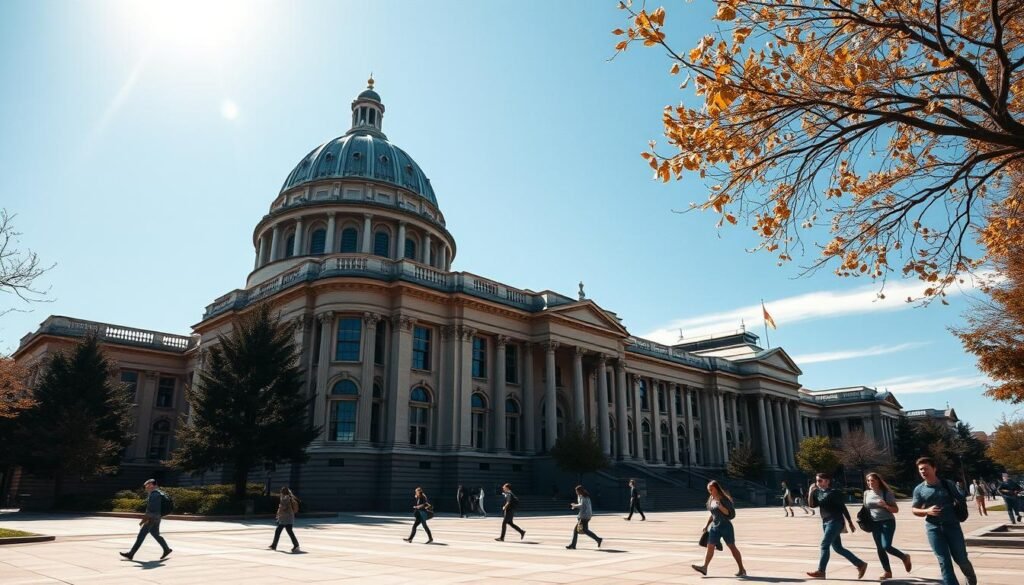
From clever engineering to culture-making
Bold: MIT’s “hack” is a cultural term, not a synonym for computer crime. Bold: It means a clever, technically elegant prank that showcases creativity while respecting safety and property. Those norms kept events aimed at delight and learning, not damage.
How “hack” and “hacker” broadened meaning
At Massachusetts Institute Technology, a hacker implies skill and playful wit more than a break-in. Student blogs and the mit alumni association archived stunts. The MIT Museum’s Hall of Hacks moved pieces into the Stata Center after the mit 150 exhibition, preserving institutional memory.
- Admissions even highlights hacks during campus preview weekend for admitted prospective freshman.
- Public mentions—like president barack obama’s nod—raised awareness without official endorsement.
The hacker code of ethics that shaped the most audacious stunts
Ethics kept spectacle safe and reversible, letting mit students craft bold visions without lasting harm. These rules protected people, property, and community trust.
Be subtle, leave no damage, never work alone. That simple guidance underpins a longer list of practical behaviors recorded in HowToGAMIT and campus lore.
- Leave no trace: return surfaces to their prior state so Facilities need not repair harm. This promotes goodwill and long-term access to places like the Great Dome.
- No theft or brute force: physical force raises safety and legal risks and contradicts the elegance of a true hack.
- Never solo: teamwork improves safety, planning, and de-installation notes that help CSRT or staff remove displays.
- Security-by-consideration: plan for safe access, secure wiring, and clear removal steps to avoid accidents.
Roof and tunnel exploration share curiosity but differ from public-facing hacks. Clear ethics keep history hacks admired, not banned.
What are the most famous hacking pranks
Two lines: this list highlights marquee, documented stunts that shaped campus lore. Expect Great Dome set pieces, Harvard–Yale showstoppers, Green Building light art, and cross-campus heists.
Key documented classics include the campus police cruiser staged on the Great Dome with “pi” and “IHTFP” plates—an exercise in timing and theatrical precision. The 1982 Harvard–Yale weather balloon that popped up at midfield still ranks among rivalry showpieces.
Great Dome makeovers form a cluster: R2‑D2 (1999), the spinning propeller beanie (1996), and movie-ring tributes. Lobby and corridor illusions fooled passersby too—think the 1994 inscription swap and the 1992 Cathedral of Our Lady of the All‑Night Tool.
The Green Building hosted large-scale display work: the 1993 world’s‑largest VU meter and later a playable Tetris array. Other headline acts include a disappearing President’s office (1990) and the logistics-heavy 2006 Caltech cannon relocation.
| Year | Installation | Site | Notable feature |
|---|---|---|---|
| 1996 | Great Beanie | Great Dome | Spinning propeller |
| 1999 | R2‑D2 | Great Dome | Pop culture scale model |
| 1993 | VU meter | Green Building | Large-scale light array |
| 1982 | “MIT” balloon | Harvard–Yale field | Rivalry spectacle |
Next sections will unpack these clusters with dates, context, and ethical framing, and offer examples that show how mit students balanced creativity and responsibility.
Great Dome transformations that defined an era
The Great Dome became an unmistakable stage: visible, symbolic, and technically demanding. From a staged campus police cruiser to sci‑fi and historical tributes, each installation balanced spectacle with safety.
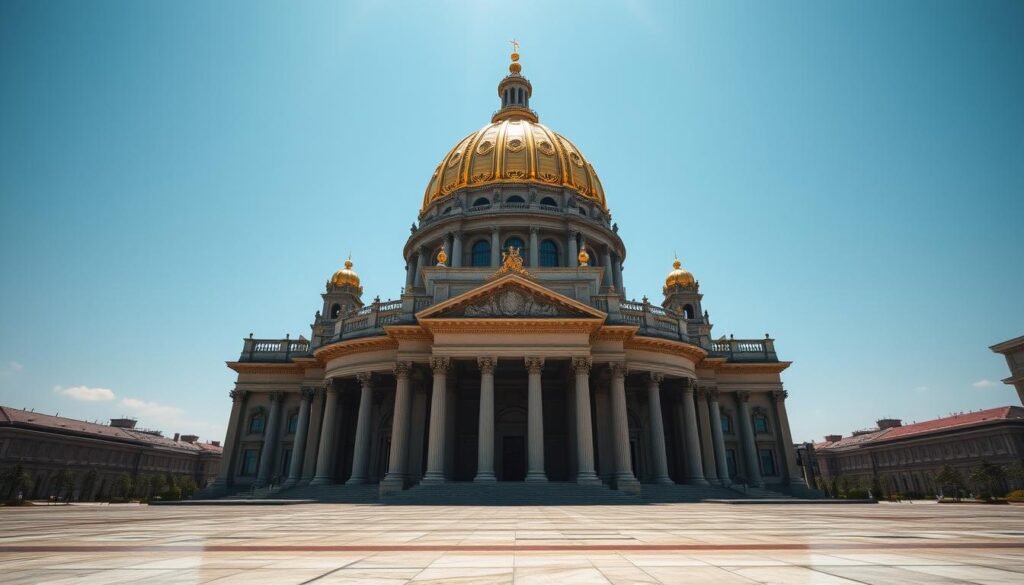
The campus police cruiser with “pi” and “IHTFP”
The 1994 replica police car was a gutted Chevy with flashing lights, unit number “pi,” and a plate reading “IHTFP.”
A donut‑holding dummy sat inside. Engineers rigged it without damage, and the piece now lives in the Stata Center as an archive example pulled mit students left for campus memory.
R2‑D2, the Great Beanie, and moving parts
In 1999 the Dome turned into a to‑scale R2‑D2 timed for a summer premiere. Weather‑aware planning and tight scheduling made that possible.
The 1996 Great Beanie added a spinning propeller that required careful mounting and balance to withstand wind loads over years.
Rings, Wright Flyer, and fire truck tributes
Large yellow rings, a Wright Flyer mockup, and a full fire truck replicated anniversaries with precise anchoring and removal plans.
These examples show technical aptitude cleverness and honor a long history of responsible building work at the Massachusetts Institute of Technology.
Harvard-Yale showstoppers: when MIT stole the spotlight
Rivalry game days became curated stages for clever, visible stunts executed by coordinated student teams. These acts mixed tight timing, careful planning, and an eye for striking imagery.
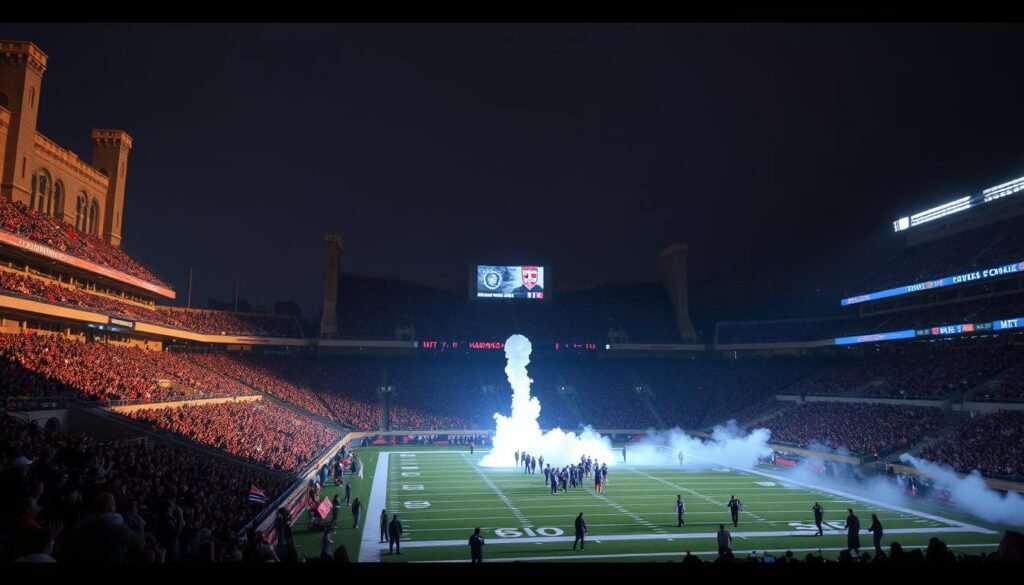
The 1982 midfield weather balloon
In 1982 a balloon marked “MIT” rose at the 50‑yard line and grabbed national headlines the next day. Coverage included alumni praise and nods from the mit alumni association during later celebrations.
Primer cord lore, rockets, and scoreboard edits
Older campus lore recalls a 1948 primer cord plan to scorch letters in turf; groundskeepers stopped it, leaving a cautionary myth in the record. In 1990 a model rocket lofted a banner from an end zone during play. Timing and range estimation mattered; safety drove the design.
In 1996 a quick scoreboard re‑render turned VERITAS into HU‑GE‑EGO, a concise visual gag that read well on broadcast feeds.
Statue accessories with care
John Harvard has worn removable items—Brass Rat jewelry, a Halo helmet, even a mock rifle—mounted non‑destructively and removed fast to avoid harm. These touches kept respect for heritage while adding wit.
| Year | Action | Site | Risk | Notes |
|---|---|---|---|---|
| 1948 | Primer cord plan (blocked) | Field | High | Myth vs verified record; stopped by grounds staff |
| 1982 | Inflated “MIT” balloon | Harvard football stadium | Medium | 50‑yard line; earned press attention including New York Times coverage |
| 1990 | Rocket‑launched banner | End zone | Medium | Required timing, range checks, and coordination |
| 1996 | Scoreboard edit | Harvard football stadium | Low | VERITAS → HU‑GE‑EGO; visual, quick, reversible |
Bold: Rivalry venues offered prime time for showmanship. Bold: Pulled mit students prioritized cleverness over disruption and worked as a group to protect fans and staff.
Note: These stunts attracted wide interest and helped shape a living history of campus hacks, often noted by alumni and in national outlets. Football season logistics—stadium access, crowd safety, and brief windows—made coordination essential. A little food and loud reactions rounded out the scene.
The Green Building as a colossal canvas
Rows of windows became pixels in a large-scale experiment in public-facing software and design. From a 1993 analog VU meter to a 2012 playable Tetris, the facade evolved into a programmable stage that demonstrated technical aptitude at scale.
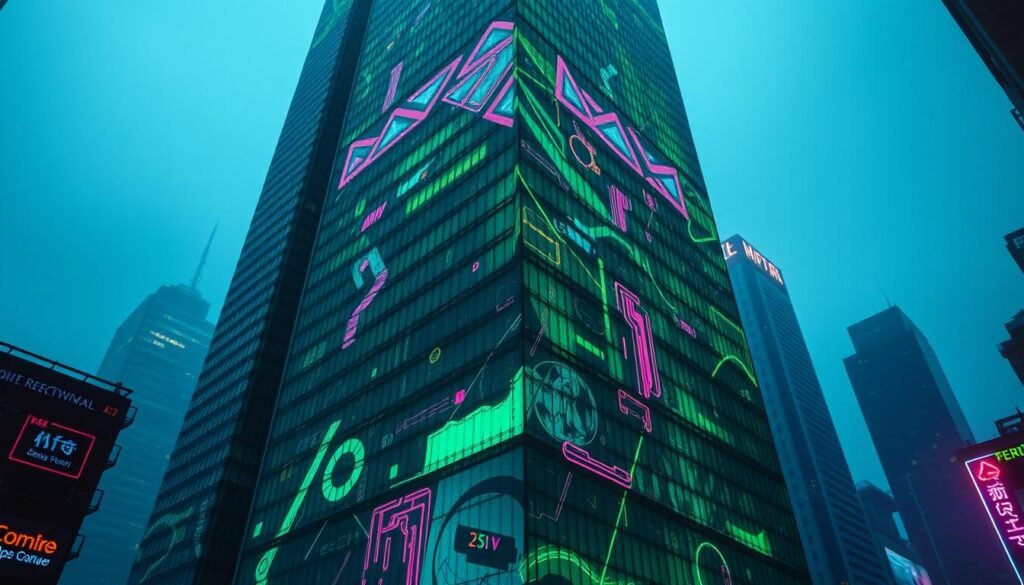
World’s largest VU meter over the Charles
In 1993, hackers rigged the top of the building as a giant VU meter timed to the Boston Pops July 4 concert. Sight lines across the Charles made the display visible to thousands and gave the building a civic role.
From pixel art to playable Tetris
By 2011 a 153-fixture, wireless LED array provided window-by-window pixels. The team added opt-out buttons for occupants, refined RF reliability, and tuned power and thermal budgets.
Open-source software and released tools let others build new patterns. In April 2012 a playable Tetris ran during Campus Preview Weekend, with control pods on the ground so admitted prospective freshman could interact safely.
- Visibility: Charles River sight lines boosted public impact.
- Planning: power, RF, heat, and occupant consent guided every phase.
- Media: national outlets like the New York Times often covered these moments.
| Year | Project | Key tech | Public impact |
|---|---|---|---|
| 1993 | VU meter | Analog lights | Boston Pops visibility |
| 2011 | LED array | 153 wireless fixtures | 9/11 flag display |
| 2012 | Playable Tetris | Window pixels + open software | Campus Preview Weekend interaction |
Subtle rewrites and lobby illusions that fooled the public
Not every memorable stunt relied on scaffolding or rigging—some worked by changing what people read and felt inside campus buildings. Precision typography, staging, and full reversibility turned daily paths into brief public theater while leaving no damage behind.
Lobby 7 inscription swap
In August 1994 Lobby 7 briefly read, “Established for advancement and development of science and its application to industry arts entertainment and hacking.”
The team matched materials and fonts so the line passed casual inspection. Mounting used non‑adhesive fasteners and panels that lifted away cleanly.
Cathedral of Our Lady of the All-Night Tool
For Halloween 1992 Lobby 7 became a multi‑day cathedral. Install, public hours, and safe de‑install fit campus schedules and custodial routines.
Organizers left courtesy notes for Facilities and used protective covers on floors and surfaces. Social engineering—timing foot traffic and working with custodial windows—helped the illusion succeed.
- Bold: Small interior edits relied on craft more than scale.
- Bold: These acts joined MIT’s living history of clever, low‑impact stunts.
Legend versus documentation: myths, media, and a snowstorm that wasn’t
Tall tales about staged stunts travel fast across reunions and social feeds, gaining detail with each retelling. Some stories stay vivid despite thin evidence; others grew from clever media setups rather than on‑site action.
Birdseed and whistles: the striped-shirt conditioning tale
Bold: Great stories travel fast; not all are true. Bold: The white striped shirt birdseed tale persists without documentation, while a Baker House indoor snowstorm proved to be staged media theater.
The striped-shirt rumor claims someone seeded Harvard’s field in an off‑season and trained birds to return on an opening whistle. It reads well and fits campus prank lore. Researchers, archives, and eyewitness logs show no verified record.
Media can amplify both fact and fiction. Press-ready spectacle—real or suggested—sometimes becomes a reported event. That makes cross-referencing the IHTFP Gallery, the mit alumni association notes, and original archives essential for accurate history.
- Check primary sources: look for photos, logs, or custodial notes.
- Accept spectacle, verify sources: preserve credible records for future students.
Bold: We prioritize verified records to honor the tradition’s true spirit and protect its legacy of creative, careful hacks.
Protest hacks: when social commentary met technical aptitude
Protest installations at MIT turned campus landmarks into stages for pointed, engineered messages. These acts married craft and critique while keeping safety and reversibility central.
Groups of mit students used hacks to spotlight housing, corporate ties, and global events.
From banner wit to a mock dorm
In 1996 a banner read “MIT doesn’t do Windows” alongside a tiny “Housing 2000” mock dorm that mocked cramped living. Both used clear visuals and careful mounting so campus property stayed unharmed.
Climate, corporate portraits, and turf messages
Later efforts altered a portrait to imply fossil fuel harm and wrapped buildings with “CLIMATE CHANGE FLOOD LEVEL” tape. In 2024 letters near the great dome read “Free Gaza” in turf, a vivid, reversible statement.
“Protest hacks aim at ideas, not vandalism,”—teams planned removal, avoided damage, and coordinated roles to keep risk low.
- Bold: Ethics guide message craft and logistics.
- Bold: A group balances design, safety, and reach.
Cross-campus capers: the Caltech cannon heist
Transporting a ceremonial cannon takes planning equal parts engineering and diplomacy. The 2006 “Howe & Ser Moving Company” episode proved that a careful, well‑timed transfer can draw attention while keeping risk low.
In April 2006 a team moved Caltech’s Fleming Cannon to MIT during Campus Preview Weekend. The move echoed a prior intercollegiate tradition and marked an anniversary in that history.
Howe & Ser Moving Company and the art of logistics
Bold: Moving a cannon across states is logistics, not luck. Bold: The operation showed vehicle selection, lifting rigging, route timing, and clear signage matter.
- Security planning reduced public risk and ensured safe transport.
- Documentation and visible IDs helped staff and police assess intent.
- Cross‑institution respect meant the artifact left intact and was available for retrieval.
End‑to‑end planning—from pickup through display to handback—kept this caper in the realm of clever hacks and upheld a code of reversible, group‑led action.
Light, color, and control: reprogramming the Great Dome’s LEDs
When mercury‑vapor lights were swapped for high‑efficiency LEDs, the Great Dome gained a new vocabulary of color. That change let small software edits create visible, city‑scale signals while preserving safety and reversibility.
After the retrofit, mit students and operations teams could recolor the dome for Earth Day, July 4, and other milestones. Color control came from networked drivers and simple control scripts rather than hardware swaps.
Security and access rules stayed central. Work required approved access, scheduled windows to avoid interference with building systems, and coordination with Facilities.
Bold: LED upgrades turned the Great Dome into a subtle signal beacon. Bold: Recoloring for holidays showed restraint, coordination, and respect for operations.
- Technical shift: mercury‑vapor → programmable LED fixtures for precise color mixing.
- Operational rules: timed changes, approvals, and rollback plans to keep impact minimal.
- Community focus: software control favored celebratory themes and low‑risk displays.
| Legacy | LED control | Considerations |
|---|---|---|
| Mercury‑vapor lamps | RGB drivers, networked software | Access approval, rollback plan |
| Fixed color, limited schedules | Dynamic color profiles, timed scenes | Occupant consent, avoid system interference |
| High energy use | Lower power, higher fidelity | Visibility from Charles; coordinate with city events |
For a compact record of similar installations and their history, see hacks at MIT.
Campus Preview Weekend and the public stage of hacking
Campus Preview Weekend is a predictable spotlight where student-built displays meet an audience of admitted visitors and families. These moments mix hospitality with engineering theater and aim to leave a clear, safe impression.
Campus Preview Weekend gives mit students a set time and space to plan visible, visitor-focused work. The mit admissions office documents many installations in blogs and tour notes, so teams craft pieces that photograph and tell a story.
Why CPW became prime time for student-built spectacle
Bold: CPW is a showcase—students build for an audience. Bold: Hacks during CPW blend hospitality with engineering theater.
Foot traffic and scheduled tours create reliable viewing windows. Teams design displays for quick setup, clear sight lines, and easy removal. Safety briefings, crowd flow planning, and rapid de-install plans are standard parts of the checklist.
Two examples highlight the approach. In 2012 a playable Tetris on the Green Building invited prospective freshman students to interact. The 2006 cannon appearance coincided with CPW and delivered a photogenic, story-driven moment for visitors and blogs.
“Admissions blogs helped spread these stories to admitted students and families, turning a weekend into living history.”
- Timed for visibility: pieces run during peak tour hours.
- Documented: photos and posts extend reach beyond campus.
- Reversible: removal plans preserve facilities and safety.
| Feature | Why CPW fits | Example |
|---|---|---|
| Reliable audience | High foot traffic and scheduled tours | Playable Tetris (2012) |
| Media reach | Admissions blogs and social sharing | Caltech cannon display (2006) |
| Operational planning | Safety briefings, crowd flow, rapid de-install | Green Building displays with occupant opt-outs |
From failure to refinement: engineering iteration behind the scenes
Failure often taught teams more than immediate success did. Iteration—sometimes across years—sharpened safety, design, and execution.
Teams learned quickly that bold plans rarely survive first contact with wind, wiring, or weight limits. Early prototypes exposed weak fasteners, poor weatherproofing, and awkward lift angles. Each misstep forced a careful rewrite of drawings and methods.
Testing and rehearsal became routine. Small test rigs, bench trials, and dry runs on lower structures let crews tune anchors and cable paths. Designers swapped brittle bolts for rated stainless hardware, improved sealants, and simplified control systems to cut field risk.
Documented retries showed learning in action. Hack logs recorded failed lifts, revised load calculations, and new emergency cut procedures. Those notes helped future teams avoid the same traps and sped up approvals when ops staff reviewed plans.
One Great Dome attempt succeeded only on the fourth try after reworking the artifact and the install plan. That success traced directly to rehearsal data, improved fasteners, and a pared‑down hoisting method—proof that careful iteration makes bold public displays repeatable and safe.
Preserving hacker artifacts: Stata Center displays and the IHTFP Gallery
Bold: The tradition is curated, not just remembered. Bold: Visit the Stata Center to see preserved artifacts with context.
The MIT Museum moved pieces through several exhibitions: its Hall of Hacks closed in 2001, briefly returned in 2003, and in 2011 some material migrated into the MIT 150 exhibition. Today, larger items and explanatory plaques sit near the Stata Center cafeteria at the southeastern end.
Where to find semi-permanent displays: the Stata Center houses physical artifacts like the staged police car from the Great Dome alongside plaques that explain safety, ethics, and install methods. Labels place each item in time and link back to documentation so context stays clear.
Where to track records and documentation
Bold: Online, the IHTFP Gallery offers dates, photos, and writeups for deep dives. The gallery and museum stewardship protect facts so myths do not replace records.
“Museum labels and gallery writeups keep method, date, and intent tied to each artifact.”
How artifacts and archives work together: plaques frame ethics and safety, while IHTFP entries let researchers cross-reference Great Dome shows, Green Building arrays, and lobby edits. HowToGAMIT sits alongside these records to codify conduct for future generations of mit students.
| Resource | What it shows | How it helps |
|---|---|---|
| Stata Center displays | Large artifacts, plaques, contextual captions | On‑site interpretation and date context |
| IHTFP Gallery (online) | Photos, writeups, timelines | Cross-reference dates and verify claims |
| MIT Museum / MIT 150 | Curated selections, rotating exhibits | Longer stewardship and public access |
Bold: Museum stewardship and IHTFP documentation safeguard records. Visitors who want to get around MIT’s history should check plaques and gallery entries before repeating a story. That habit keeps the archive accurate and the tradition respected.
Conclusion
Bold: The best hacks live at the crossroads of craft, care, and crowd delight. Bold: They honor public spaces, protect people, and leave no lasting harm.
Craft, reversibility, teamwork, and clear documentation formed the pillars that kept this culture alive.
For primary sources and photos, visit the IHTFP Gallery and the Stata Center displays. Those archives tie artifacts to dates, methods, and ethics so fact stays clear and myths fade.
Bold: Culture, not chaos, makes a great hack—and that steady ethic explains why these pranks mit endure in memory and museum alike.
