
A single misconfigured endpoint can leak millions of user records; studies show many breaches start with an exposed /openapi.json or swagger page. That unexpected scale makes API security a top priority for modern applications.
This guide shows developers how to find and fix flaws before attackers do. You will learn a clear workflow that moves from reconnaissance to validation using Postman as your cockpit.
APIs enable systems to exchange data and power web and mobile features. But that same connectivity creates an attack surface where weak access control, injections, SSRF, and mass assignment can expose sensitive information.
We map actions to the OWASP API Security Top 10 2023 and explain why accurate documentation and inventory matter. You’ll see how black, gray, and white box approaches change coverage and why recon—enumerating subdomains, docs, and endpoints—is always the first move.
Key Takeaways
- Start with recon: enumerate docs and endpoints like /api, /swagger/index.html, and /openapi.json.
- Use Postman: send authenticated requests, chain variables, and validate responses safely in non-production.
- Prioritize fixes: map findings to OWASP API Security Top 10 to reduce highest risks first.
- Test modes matter: black, gray, and white box methods change depth and coverage.
- Fix systemically: address weak authorization, schema validation, and insecure defaults—not just single endpoints.
Why this How-To guide matters now: strengthening APIs in the present threat landscape
Modern attacks increasingly target APIs because they directly handle sensitive data and business flows. This guide helps you quickly spot and validate issues that map to OWASP API Security Top 10 2023, then apply concrete fixes that harden real systems.
Modern service endpoints often carry critical business logic and raw user data, making them high-value targets. Exposed surfaces across microservices, mobile backends, and third-party integrations expand the attack surface for web and application threats.
Expect to learn a practical workflow—recon, build a Postman test rig, probe methods and content types, then validate authorization, mass assignment, injection, and SSRF safely on non-production endpoints.
Common field failures include BOLA (IDOR), broken authentication, mass assignment, and misconfiguration. Mitigations such as RBAC/ABAC, MFA, secure token management, rate limits, schema validation, and allowlists reduce visible vulnerabilities and limit blast radius.
After this guide you’ll be able to inventory endpoints, assess documentation, enumerate hidden parameters, and validate access controls end to end. Offensive checks complement SDLC controls by confirming that live configurations match intended design.

- Plan secure defaults: TLS everywhere, minimal error disclosure, hardened CORS.
- Report with impact: evidence-driven findings tied to business risk for prioritized fixes.
API penetration testing
API penetration testing evaluates REST, GraphQL, and SOAP endpoints under realistic attack conditions to expose key weaknesses and validate mitigations. It measures impact, maps exploit paths, and produces prioritized fixes.
Principles and scope: Define objectives up front. Confirm object- and function-level authorization. Validate authentication and token handling. Probe for mass assignment and common injections across content types.
Test modes and workflow: Choose a mode based on access. Black box gives you no docs or creds; recon is critical (subdomains, ports, service analysis). Gray box uses swagger.json or test accounts to speed coverage; replay and fuzz with tools like Burp. White box adds source review to surface guard and middleware gaps and dangerous sinks such as eval or shell execution.
“Scope tests to business risk: prioritize endpoints that handle sensitive data, financial flows, or tenant boundaries, then expand coverage to the rest of the surface area.”

| Mode | Access | Primary Focus | Speed |
|---|---|---|---|
| Black box | No docs/creds | Recon, surface mapping | Slow |
| Gray box | Docs/test accounts | Parameter fuzzing, replay | Medium |
| White box | Source code | Auth logic, dangerous sinks | Fast (deeper) |
Deliverables must tie findings to impact: data exfiltration, cross-tenant access, or privilege escalation. Always test on non-production and document requests, responses, and steps for remediation.
Recon first: discovering API attack surface and documentation
Start by locating documentation and enumerating routes. Probe common paths like /swagger/index.html and /openapi.json, then pivot to base paths to uncover versions and nested resources.
Begin with a sweep for known doc endpoints such as /api, /swagger/index.html, /openapi.json, and /api-docs. These files often list routes and parameters.
Use Burp Scanner to crawl the site and extract endpoints from traffic. Parse JavaScript bundles with JS Link Finder to reveal fetch/XHR calls the browser never shows.
- Combine tools: automated crawling, JS parsing, and content discovery to find hidden routes.
- Import machine-readable docs: load OpenAPI/Swagger JSON or YAML into Postman or Burp to seed a collection of requests.
- Validate manually: confirm methods, content types, and parameters with controlled HTTP requests.

“Treat documentation as a starting point, not the final word. Always verify routes and methods by sending real requests.”
| Technique | What to look for | Quick action |
|---|---|---|
| Doc endpoints | /openapi.json, /swagger, /api-docs | Import into Postman; list routes |
| JS parsing | fetch/XHR URLs in bundles | Extract paths with JS Link Finder |
| Content discovery | Siblings, versioned bases | Run Intruder or wordlists |
Building a Postman workflow for testing APIs end-to-end
Stand up a reusable Postman collection and environments to automate safe, repeatable checks that mirror real clients and surface authorization gaps quickly.
Start by importing machine-readable docs: import an OpenAPI/Swagger JSON into Postman to auto-populate routes, parameters, and example bodies. Then create environment variables for host, tokens, and resource IDs so requests stay portable across stages.
Collections, environments, and auth
- Stand up a reusable Postman collection backed by environments and variables for hosts, tokens, and IDs. Import OpenAPI to auto-populate paths, parameters, and example bodies.
- Configure authentication for API keys, OAuth 2.0, and JWT. Store secrets in environment variables and avoid leaking tokens in URLs or logs.
Automating requests and validating responses
- Chain requests with scripts and tests to fetch tokens, store IDs, and validate responses—turning manual probing into reliable, repeatable checks.
- Use pre-request scripts to compute HMAC signatures or refresh tokens. Capture values from one response and inject them into the next request.
- Write tests to assert status codes, content types, schema fragments, and authorization effects (for example, forbidden on cross-tenant IDs).

Integrate with other tools
- Proxy Postman through Burp Suite to inspect and modify traffic, send interesting requests to Repeater or Intruder, and let Scanner audit insertion points.
- Leverage JWT toolkits to decode tokens, check algorithms, and test rotation and expiration behavior safely.
- Export and share collections; version them with the application to prevent drift and keep documentation current inside Postman.
“Keep risky methods parameterized to low-impact records and mirror real client workflows to reduce unintended state changes.”
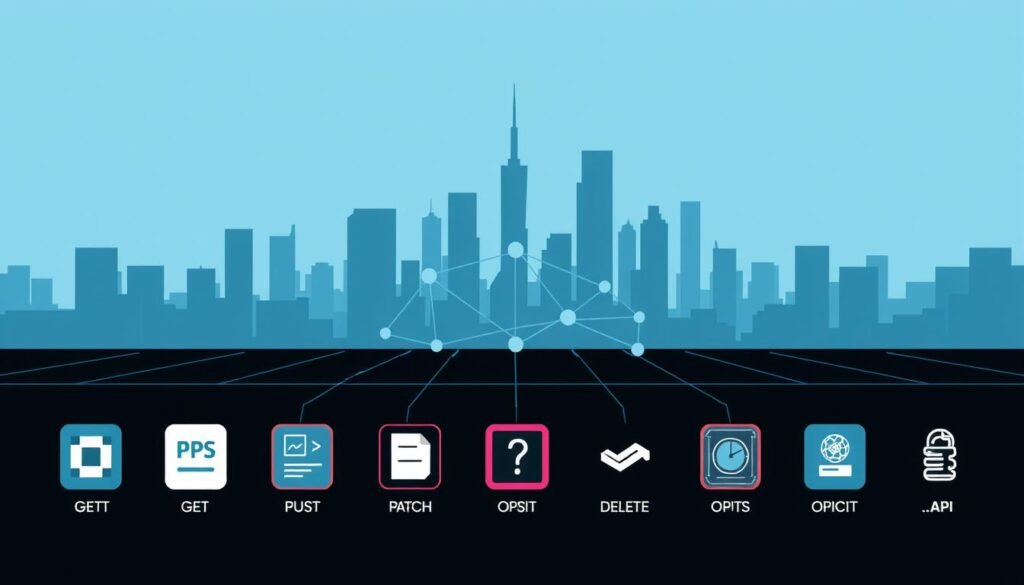
Enumerating endpoints and methods: GET, POST, PUT, PATCH, DELETE, OPTIONS
Check which HTTP methods an endpoint accepts with low-risk probes and document allowed verbs. Use OPTIONS and controlled trials against noncritical records to avoid harmful state changes.
Check every route with controlled method probes to reveal which HTTP verbs the backend accepts. Start with an OPTIONS request to list allowed methods, then confirm with safe GET and HEAD calls.
How do I detect methods without causing harm?
Identify supported methods per endpoint using OPTIONS and controlled trial requests. Always target low-priority records to avoid destructive side effects.
How should I probe content types and bodies?
Probe content types—JSON, XML, multipart/form-data—to surface parsing differences, validation gaps, or injection opportunities. Vary the Content-Type header and body format. Use a content converter to swap XML and JSON where available.
- Map each endpoint to accepted methods and flag read-only routes that accept PUT, PATCH, or DELETE.
- Use Burp Intruder’s HTTP verb list to cycle methods and compare responses for functional differences.
- Toggle Content-Type, try empty bodies, and test multipart boundaries to reveal hidden schema handling or error messages.
- Record status codes and error text to refine safe follow-ups and build Postman tests for regression checks.
“A route that rejects JSON but accepts form-data often exposes different parsing logic — record those deltas and capture evidence for remediation.”
Finding hidden stuff: endpoints, parameters, and undocumented behavior
Discover hidden endpoints and parameters quickly and safely by combining focused wordlists with controlled fuzzing and parameter discovery tools. This section explains practical steps to find siblings, secret params, and undocumented behavior while protecting service availability.

Discover hidden endpoints and parameters with Intruder, wfuzz, Arjun, and Param Miner. Drive wordlists from domain language and common verbs to improve hit rates. Start from known routes and fuzz path components to reveal function siblings like /add, /remove, or versioned bases.
Use Arjun to enumerate server-side parameter names and pair it with Param Miner to guess broad name spaces (Param Miner can try up to 65,536 names per request). Apply wfuzz filters for HTTP codes and content length to surface promising responses quickly.
- Throttle requests and respect rate limits to avoid denial of service; prioritize safety over speed during enumeration.
- Inspect response deltas—status codes, sizes, and error messages—to distinguish valid parameters from noise.
- For GraphQL, watch for suggestion leaks and disable suggestions in production to reduce information disclosure.
Keep wordlists tailored with business terms and internal nomenclature. Monitor server health, reduce fuzzing threads, and add delays to prevent throttling or instability.
“Log discoveries with exact requests and minimal repro steps to speed follow-on validation and remediation.”
Exploiting mass assignment vulnerability like a pro
Mass assignment happens when frameworks bind request fields straight onto internal models, allowing unintended properties to change. Learn to spot auto-binding, craft safe probes, and harden endpoints so clients can only modify allowed fields.
How do I detect auto-binding via object models and response fields?
Inspect response JSON for extra fields on an object—id, role, or isAdmin are prime suspects. If those appear but aren’t listed as writable, try adding them to a PATCH or POST body and watch for changes.
Crafting payloads to toggle roles and hidden properties
Build minimal payload examples that add or overwrite sensitive attributes. Try setting isAdmin to true or changing id to another record. Test both valid and invalid values to see how the server parses input and applies updates.
“If toggling isAdmin grants elevated rights, you found a mass assignment vulnerability that can lead to broader access issues.”
How can I prevent this vulnerability?
Spot mass assignment by comparing response objects to documented writable fields. If outputs include flags or IDs not meant to be changed, treat them as risky.
- Mitigate: enforce allowlists of updatable properties at the model or controller layer.
- Validate request bodies against strict schemas and blocklist sensitive fields like id and role.
- Centralize validation across microservices and include schema checks in CI so changes fail builds.
- Monitor logs for unexpected property updates as an early warning of exploitation attempts.
Example: chaining a bound id change with an update can pivot into another user’s record, combining mass assignment with BOLA/IDOR.
Broken access control and IDOR: verifying object- and function-level authorization
A missing guard or weak policy can let one user read or modify another user’s data with a simple ID change. Verify access control across routes and roles, and tie failures to sensitive data exposure.
How do you check object-level access safely?
Exercise object-level access by swapping numeric IDs, GUIDs, and indirect references in URLs and request bodies. Change /users/123 to /users/456 and observe responses. Use multiple accounts to confirm whether reads or writes succeed for unauthorized users.
- Exercise object-level access by swapping IDs and indirect references, then verify function-level checks for sensitive operations. Use multiple roles to confirm enforcement across endpoints.
- Build BOLA tests by editing resource IDs in URLs and bodies; confirm unauthorized users cannot read or modify others’ objects.
- Check function-level authorization so only permitted roles can call admin-only routes and dangerous operations.
Validate both RBAC (role-based) and ABAC (attribute-based) policies. Confirm organizational scoping and dynamic attributes like department or tenant_id are enforced at every endpoint. Review code for missing guards or inconsistent middleware that skip checks on some controllers.
What about GraphQL and multi-tenant APIs?
In GraphQL, introspection or suggestion features may reveal schema or field names. Disable those in production and enforce tenant scoping. Suggestions can leak valid field names even when introspection is off.
“Disable introspection and suggestions in production and rigorously enforce tenant scoping to prevent cross-tenant leaks.”
Reuse Postman environments to switch tokens and roles quickly. Capture allowed and denied outcomes for each endpoint. Tie failures to sensitive data: confirm whether PII or secrets are retrievable across tenant boundaries. Recommend centralized policy enforcement and defense-in-depth checks at controllers and service layers.
| Check | Action | Evidence to capture |
|---|---|---|
| Object-level (BOLA/IDOR) | Swap numeric IDs, GUIDs, indirect refs in URLs/bodies | Request/response pairs showing access or 403/404 differences |
| Function-level (admin operations) | Call admin endpoints with low-privilege token | Status codes, response bodies, logs showing role enforcement |
| GraphQL | Test introspection, suggestions, tenant scoping | Schema leaks, suggestion outputs, cross-tenant data examples |
| Code/config | Review for missing guards, inconsistent middleware | Code snippets, route configs, missing annotations |
High-impact flaws: SSRF, injection, and security misconfigurations
Server-side fetches and misconfigured handlers turn ordinary endpoints into gateways for internal discovery. These issues let attackers pivot from a public surface into private services and sensitive data.
How can SSRF and path traversal expose internal files and services?
Probe parameters that trigger server-side fetches to uncover SSRF and pivot into internal services. Confirm impact by enumerating internal endpoints safely, watching for banners or version strings in the response.
What injection classes should you test?
Test injection types—SQL, NoSQL, server-side template injection (SSTI), and command injection—with controlled payloads. Test injection classes (SQL, NoSQL, SSTI, command) with controlled payloads; fix root causes—not just filters—by sanitizing input and hardening sinks.
Which misconfigurations leak secrets?
Look for overly permissive CORS, verbose error output, debug bars, and cached sensitive responses. Normalize TLS, disable debug modes, and patch frameworks to reduce exposure.
- Turn path traversal tests into SSRF probes where parameters influence backend requests; validate by observing internal banners or version strings.
- For NoSQL services like CouchDB, test read endpoints such as _all_docs?include_docs=true without overloading the system.
- Capture the triggering request and resulting response to document exploit paths clearly.
“Layer defenses: network egress allowlists, SSRF-safe HTTP clients, strict template engines, and least-privilege service accounts.”
Mapping findings to OWASP API Security Top 10 and mitigations
Map each finding to an OWASP API Security category to clarify risk and speed remediation. This step makes priorities clear for engineers and leaders.
Institutionalize mitigations—RBAC/ABAC, MFA, token hygiene, rate limits, and schema validation—then verify with tests across all API versions.
Key mappings and actions:
- BOLA: enforce object-level checks, use indirect references, log abnormal access.
- Broken Authentication: adopt MFA for sensitive flows and short-lived tokens stored in HTTP-only secure cookies.
- Object Property Level Authorization: apply allowlists and strict schema validation to stop mass assignment.
- Unrestricted Resource Consumption: apply rate limiting, quotas per user/IP/key, and gateway throttles.
“Map each finding to an OWASP category to align severity and remediation across teams.”
| Finding | Mitigation | Verification |
|---|---|---|
| BOLA / IDOR | Indirect refs, RBAC, access logs | Role-swapped requests, audit logs |
| Broken Auth | MFA, short JWTs, secure cookies | Token rotation checks, expired token tests |
| Mass Assignment | Allowlists, schema validation | Payload fuzzing and contract tests |
| Resource Abuse | Rate limits, quotas, anomaly detection | Load and throttle simulations |
Maintain a living inventory, harden defaults (CORS, errors, TLS), vet third-party integrations, and add automated Postman tests plus periodic Burp/ZAP audits.
Tools of the trade: Postman plus Burp Suite and friends
Pick tools that let you orchestrate requests, inspect traffic, and automate safe fuzzing. Use a small set of reliable utilities and keep them tuned to your environment.
Combine Postman for orchestration with Burp Suite for interception, fuzzing, and scanning. Add Arjun, wfuzz, ZAP, and Akto to round out recon and automation.
Which utilities should be in your kit?
Burp Suite gives you Repeater to iterate on requests, Intruder for controlled fuzzing, and Scanner to spot common flaws. Use Repeater to refine payloads and send promising candidates to Intruder.
Postman remains central for manual workflows and shared documentation. Import OpenAPI files to seed collections and keep team-ready requests in one place.
- Arjun finds hidden parameters; wfuzz brute-forces paths and query keys with tuned threads.
- Param Miner and JS Link Finder reveal dynamic params from files and scripts captured in the browser.
- OWASP ZAP and Akto automate scans; run ZAP in CI for scheduled checks.
- FeroxBuster enumerates directories—limit concurrency to avoid service impact.
- JWT toolkits and content-type utilities speed token inspection and format swaps during checks.
“Keep a curated toolkit and wordlists aligned to your stack and business language; good tooling amplifies skill without adding risk.”
| Task | Recommended Tool | Primary Use | Safety Tip |
|---|---|---|---|
| Orchestrate manual checks | Postman | Collections, environments, import OpenAPI | Use test hosts and env vars |
| Intercept & iterate | Burp Suite | Repeater, Intruder, Scanner | Throttle Intruder threads |
| Parameter discovery | Arjun, Param Miner | Hidden parameters, payload candidates | Target small sample sets first |
| Automation & CI scans | OWASP ZAP, Akto | Scheduled scans, reporting | Exclude high-risk endpoints |
Conclusion
You now have a practical workflow to discover, test, and secure APIs with Postman and a small toolkit.
Prioritize fixes based on OWASP categories and business impact; validate changes with automated Postman tests and periodic Burp/ZAP reviews.
Reuse the recon checklist to find docs and routes, then import OpenAPI to accelerate coverage. Systematically map methods and content types and capture mismatches that hint at hidden behavior.
Validate object and function level access with multiple roles. Probe mass assignment by matching payload fields to response models. Safely check SSRF and injection in controlled environments and log exact requests and responses as evidence.
Treat this playbook as a living process: integrate checks into CI, update wordlists, retire old versions, and measure reductions in vulnerabilities over time.
FAQ
What is the quickest way to start testing an API with Postman?
Begin by importing any available OpenAPI/Swagger JSON into Postman, set up an environment with base URL and auth variables (API keys, OAuth tokens, or JWT), then create a collection and run simple GET/POST requests to confirm endpoints and responses before moving to targeted checks.
How do I safely discover undocumented endpoints without harming production?
Use non-destructive methods first: request common paths like /swagger, /openapi.json, and /api-docs, enable read-only accounts, perform discovery in staging when possible, and throttle requests. Employ tools such as Burp Suite in safe mode and use wordlists against a test environment to avoid unintentional changes.
What are the key signs of mass assignment vulnerabilities?
Look for unexpected changes to object fields after sending extra parameters in POST/PATCH requests. If adding properties like “isAdmin” or “role” in the payload alters account privileges or reveals new response fields, the API likely binds input directly to models without filtering.
How can I test for broken access control and IDOR efficiently?
Enumerate object identifiers (numeric IDs, GUIDs) and attempt horizontal and vertical access by swapping IDs in requests. Verify role-based boundaries by using accounts with different privilege levels and confirm whether function-level checks are enforced, especially on DELETE/PUT endpoints.
Which tools complement Postman for deeper security checks?
Pair Postman with Burp Suite (Repeater, Intruder, Scanner) for active fuzzing and interception, OWASP ZAP for automated scans, wfuzz or Arjun for parameter discovery, and JWT toolkits for token manipulation. Use these in controlled environments and with permission.
What precautions should I take when fuzzing parameters and payloads?
Respect rate limits and API quotas, avoid destructive HTTP methods on production, use small batch sizes, monitor application logs, and obtain explicit authorization. Configure timeouts and retries to reduce accidental denial-of-service risk.
How do I detect server-side injection vulnerabilities with Postman?
Craft payloads that target SQL, NoSQL, OS command, and template engines in controlled inputs. Observe error messages, timing differences, and response anomalies. Combine this with Burp Scanner or manual Repeater checks to iterate and validate injection behavior.
What is the role of machine-readable docs like OpenAPI in a security review?
OpenAPI and Swagger files reveal endpoints, parameter schemas, response models, and auth schemes. They speed up test-case generation, expose allowed fields for mass assignment checks, and let you import collections into Postman to automate end-to-end checks.
How should I validate authentication and token handling?
Test token expiry, reuse, and revocation. Try token tampering, reuse of revoked tokens, and missing-scoped tokens against protected endpoints. Confirm that refresh flows are secure and that short-lived tokens and proper audience/issuer checks are enforced.
What are practical mitigations for mass assignment and object-level authorization issues?
Implement allowlists (whitelists) for writable fields, enforce schema validation on the server, perform server-side authorization checks per object and action (object-level authorization), and avoid exposing internal model names or debug details in responses.
How do I test GraphQL endpoints differently from REST ones?
Use introspection to map available types and queries, then test for excessive data exposure, nested object over-fetching, and improper argument validation. Try query depth and complexity limits, and validate authorization at the field level, not just at the root query.
Which misconfigurations commonly lead to high-impact flaws like SSRF?
Common culprits include unrestricted URL fetchers, poor input validation on URL parameters, permissive CORS settings, verbose error details, and exposed internal endpoints. Test URL-based inputs and monitor for requests that reach internal-only services.
When should I map findings to the OWASP API Security Top 10?
Immediately after triage. Mapping each finding to categories such as Broken Object Level Authorization (BOLA), Broken Authentication, or Mass Assignment helps prioritize fixes, communicate risk to stakeholders, and align remediation with industry best practices.
How can I automate validation of fixes after a security issue is remediated?
Add regression tests to your Postman collection asserting negative cases (unauthorized access, blocked fields). Integrate collections into CI/CD pipelines and use security scanners like Burp Suite or OWASP ZAP in staging to catch regressions before release.
Is it safe to export OpenAPI from production for testing purposes?
Only if you sanitize sensitive fields and remove live secrets. Prefer exporting definitions from non-production environments or generating them from source code. If you must use production docs, ensure access is limited and handled under strict change control.
What practical steps should developers take to harden endpoints immediately?
Enforce authenticated access, implement field allowlists, validate schemas, add rate limits and quotas, remove verbose errors in responses, and enable robust logging and monitoring. Prioritize fixes for endpoints exposing sensitive data or allowing privilege changes.
