
Can a real-world playbook stop chaos and cut recovery time in half?
We faced a live security breach and turned it into a teachable, repeatable workflow. This short introduction shares the promise: we will break down how our organization executed an incident response plan during a real event, so your business can adopt the same clear steps without fluff.
We aligned actions to NIST and SANS frameworks to give teams and management a shared language across phases: preparation, detection and analysis, containment through recovery, and post-event review. That structure kept decision rights and governance clear, and it limited downtime and reputational risk.
Below you’ll find a minute-level view from alert to containment and recovery, mapped to tools, owners, and measurable outcomes. For a deeper guide on building your own playbook, see this incident response plan resource.
Key Takeaways
- Preparation matters: defined roles, tools like EDR and SIEM, and training make effective incident response repeatable.
- Clear governance: assign decision rights to speed actions and reduce confusion.
- Framework alignment: using NIST and SANS creates consistent steps across teams.
- Minute-level mapping: tie each action to a team, tool, and measurable outcome.
- Post-event review: lessons learned updates policies and closes process gaps.
What “minute-by-minute” means in a major security incident
Precise, time-stamped actions let teams turn noisy alerts into auditable chains.This cadence makes detection, analysis, and notification repeatable and reviewable across the organization.
“Tracking every action to the second lets operators correlate signals, decisions, and outcomes with clarity,” and that is the operational goal.
NIST’s Detection and Analysis phase asks us to pinpoint precursors and indicators, validate signals to avoid false positives, document facts and actions, and prioritize by impact, confidentiality, and recoverability.
Operational granularity means logging each detection and response entry with a timestamp, owner, systems affected, and observations. That log elevates security incident response quality by aligning detection, analysis, and notification sequences during a computer security incident.
- First 60 minutes: rapid triage, classify severity, and make containment decisions with owners recorded.
- Good minutes: timestamp, responsible owner, action taken, systems, and preserved data.
- Outcome: fewer false positives, focused use of team resources, and clearer escalation paths.
Predefined checkpoints tell the organization who to inform and what to say at each phase, so teams avoid improvisation under pressure and connect observed threats to real operational risk.

“Clear timestamps and owners make follow-on analysis faster and management audits simple.”
Preparation that makes speed possible before a computer security incident
Preparation builds the runway for fast, decisive action. Define roles, test tools, and document clear thresholds so teams can move without waiting on approvals.
Define the incident response team with cross-functional members: an IR lead, forensic analyst, legal counsel, communications lead, and a management delegate. Give each role explicit responsibilities and a decision matrix that names alternates for after-hours coverage.
Tools and visibility matter. Deploy EDR (endpoint detection and response), a SIEM (security information and event management), and centralized logging. Baseline normal system behavior so alerts include process lineage and file activity, which speeds triage and preserves evidence.
- Severity and timing: set objective severity tiers (impact, confidentiality, recoverability) and link each to target response times and notification rules.
- Documentation standards: require timestamps, who/what/why, and immutable storage for logs and screenshots.
- Prestage resources: forensics kits, approved scripts, clean-room infrastructure, and runbooks that document emergency change-control exceptions.
Train with regular tabletops and simulations so management and teams trust the processes and can execute under pressure.
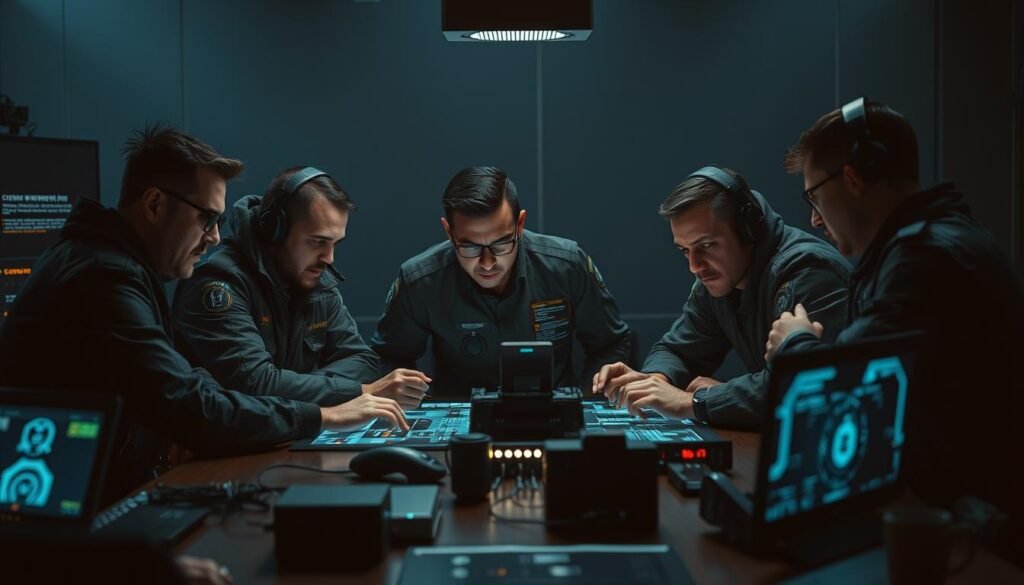
From detection to analysis: activating an effective incident response
Begin by separating precursors from confirmed indicators so your team focuses on real threats, not background noise. This step sets the tone for fast, evidence-led work and limits wasted effort.
Define triage inputs quickly: SIEM alerts, EDR detections, user reports, and third-party advisories. Triage should classify each signal as a precursor or confirmed indicator, then move validated items into analysis.
- Validate signals with hash reputation, process lineage, and network egress checks to reduce false positives.
- Prioritize by severity using a matrix that scores business impact, data confidentiality, and recoverability—this is the critical decision step for the response team.
- Document immediately: timestamps, commands, system state, and who acted to preserve chain of custody.
Preserve evidence safely: capture memory, disk images, and logs. Take screenshots but avoid changes that overwrite volatile data unless containment risk is higher than potential lost evidence.
| Input | Validation | Owner | Next Step |
|---|---|---|---|
| SIEM Alert | Process lineage | Tier 1 analyst | Escalate to forensic |
| EDR Detection | Hash check | EDR lead | Isolate host |
| User Report | Reproduce | Helpdesk | Log & notify owners |

Notify only verified facts to security leadership, legal, communications, and affected owners. Set the next update time and assign clear owners so no step is missed.
Our minute-by-minute incident response plan for a major breach
A labeled event and an open, immutable log are the first step to disciplined recovery. Clear, time-boxed actions let the team move fast while preserving evidence and protecting services.
Minute zero: initiate IRP, name the incident, open the log
Declare the event, assign the lead and alternates, and open one immutable log. This single source of truth keeps decisions auditable and reduces duplicated work.
Minutes five to fifteen: validate indicators, classify severity, notify leads
Use EDR and SIEM context to validate signals and reject false positives. Score impact by confidentiality and recoverability.
Notify legal, communications, and IR leads with only verified facts and a set next update time.
Minutes fifteen to thirty: scope affected systems and contain blast radius
Map affected systems and identities. Segment or isolate assets to limit damage while logging each action to preserve evidence.
Minutes thirty to sixty: collect forensic images and stabilize critical services
Capture volatile memory and targeted disk images from priority hosts. Preserve logs and apply the smallest safe changes to keep key services available.
The first hours: refine hypotheses, hunt for persistence, update stakeholders
Develop and test hypotheses about the entry vector and persistence mechanisms. Hunt for lateral movement and tune containment as new data appears.
Communicate facts periodically: what is known, what remains unknown, data potentially exposed, and the next steps toward recovery.
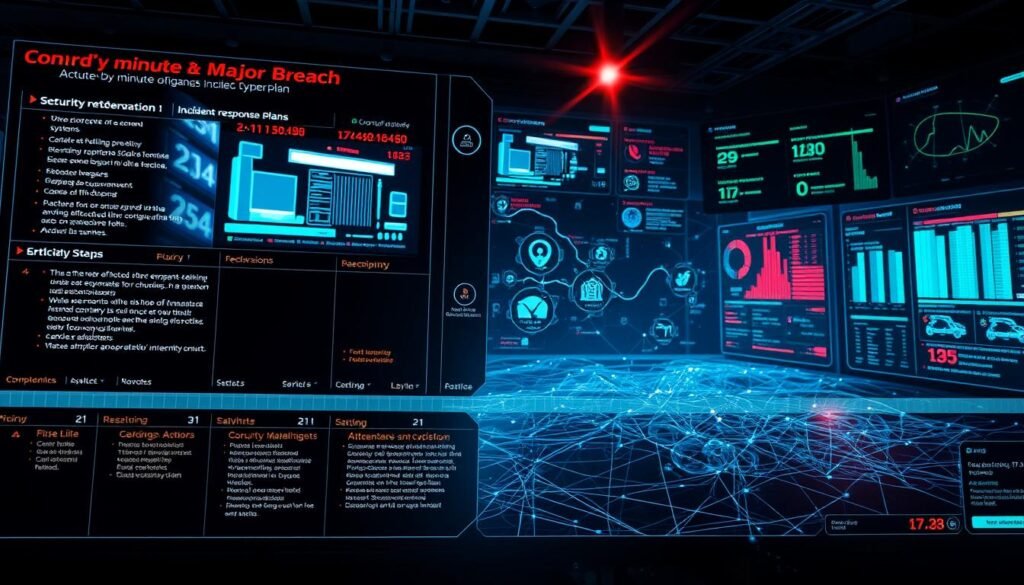
Track damage indicators—service impact, data at risk, and recovery objectives—and document any decisions that trade security risk for business continuity.
Containment, eradication, and recovery without losing evidence
Stopping active harm quickly while preserving proof is the core challenge of this phase. Teams must balance fast containment with careful evidence capture so recovery restores trust, not just service.
Containment strategies must be layered. Short-term actions like isolation, segmentation, and credential resets stop visible damage fast. Long-term measures—network hardening, architecture changes, and policy updates—prevent re-entry.
Short-term containment versus long-term containment strategies
Short-term containment limits damage immediately. Long-term containment reduces recurrence and buys time for eradication and recovery.
Eradication steps: remove malware, close exploited paths, patch vulnerabilities
Execute eradication methodically: remove malware, terminate malicious processes, rotate keys, and close exploited paths. Capture before-and-after evidence to preserve admissible artifacts.
Recovery sequencing: restore services, validate integrity, monitor closely
Restore critical services first. Validate integrity against known-good baselines. Increase monitoring to detect residual activity during the recovery phase.
Balancing business continuity, evidence needs, and resources
Choose actions that reduce the most damage with available resources. Document each procedure change and justify trade-offs to support later audits or litigation.
- Exit criteria: defined checkpoints to shift from containment to eradication and then to recovery.
- Playbooks: standardized procedures reduce human error and speed repeatable steps across systems.
- Metrics: track MTTD/MTTR, hosts reimaged, and services restored to measure damage and recovery progress.
| Phase | Key Actions | Evidence Capture | Success Metric |
|---|---|---|---|
| Short-term containment | Isolate hosts, reset creds, segment network | Network captures, process lists | Blast radius reduced |
| Eradication | Remove malware, close paths, rotate keys | Before/after disk images, hash logs | No persistence indicators |
| Recovery | Restore services, validate integrity, ramp monitoring | Integrity reports, audit trails | Services restored; anomaly rates fall |
| Governance | Document procedures, justify trade-offs | Change logs, approvals | Clear handoff and legal readiness |

Document everything: every step, time, owner, and justification strengthens institutional knowledge and legal posture during this overlapping phase.
Communication and notification during a security incident
Clear, factual updates keep teams aligned and protect legal standing during a live security event. Use preset templates and one authoritative status feed so technical work and management communications do not collide.
Internal communications, escalation paths, and cadence
Set channels up front: an IR war room, an encrypted chat, and standard email templates that state verified facts, next steps, and the update schedule.
Map escalation by severity so executives, legal, and business owners get tailored detail without overload.
- Trigger levels tied to severity and systems affected.
- Named alternates and after-hours contacts in every chain.
- Single source of truth (status tracker) that the entire team references.
External notifications: legal, regulatory, customers, and partners
Follow NIST guidance: notify only after analysis and prioritization, per the defined reporting rules in your plan.
Coordinate with legal on regulatory timelines, contractual duties, and customer notices to ensure accuracy and compliance.
Media and executive briefings: consistent, factual, and timely
Prepare time-stamped briefing templates. Keep messages factual, avoid speculation, and commit to the next update time.
Train spokespeople and technical leads together so complex details are translated clearly for non-technical audiences.
| Audience | Channel | Content | Cadence |
|---|---|---|---|
| Response team | Encrypted war room / chat | Technical facts, actions, owners | Continuous updates; log every entry |
| Executives & management | Secure email brief & executive call | Impact summary, risks, decisions needed | Hourly or as severity dictates |
| Legal & compliance | Direct briefing, documented notes | Regulatory triggers, evidence posture | Per regulatory timelines |
| Customers & partners | Customer notice templates / portal | What happened, data at risk, remediation steps | When required by contract or law |
Capture every notification: who was told, what was said, when, and by whom to support reviews and legal defensibility.
Playbooks that accelerate incident response and SOAR automation
Playbooks turn judgment calls into repeatable checklists that teams can run under pressure. They codify initiating conditions, steps, and clear end states so people and tools act the same way each time.
Playbooks define an initiating condition, the step sequence, decision points, and the final verification that systems are clean and services restored. They map each action to owners, evidence requirements, and any regulatory notices that may apply.

How playbooks codify work and enable SOAR
SOAR (security orchestration, automation, and response) ties playbooks to automation. It runs routine tasks—log collection, ticket updates, metric exports, email alerts—while pausing for human approvals at defined checkpoints.
- Initiating conditions: specific alerts or user reports that trigger the workflow.
- Prescribed steps: triage, containment action, evidence capture, remediation, validation.
- End states: verified eradication, services restored, enhanced monitoring active.
Tailored outlines for common threats
Ransomware playbooks prioritize isolation, forensic capture, and recovery from clean backups. Phishing workflows revoke credentials, scan mailboxes, and notify affected users.
Malware playbooks remove binaries and validate hashes. DDoS playbooks shift traffic and apply filtering rules. Insider threat playbooks combine logs, access reviews, and legal coordination.
Governance, evidence, and continuous improvement
Tie each step to policy, regulatory checkpoints, and evidence standards. That linkage makes audits smoother and keeps management aware of trade-offs when operations must stay online.
- Benefits: faster cross-team handoffs, lower dwell times, and consistent documentation.
- Automation-safe tasks: log gathering, ticketing, alerts, metric updates, and routine remediation.
- End-state checks: integrity verification, monitoring windows, and formal closure criteria.
Measure playbook performance with metrics and review them with management. Update steps as threats evolve and as automation proves safe across business-critical systems.
Post-incident activity and continuous improvement
Once services are restored, the real work begins: translate facts into policy, training, and measurable fixes. This transition makes sure lessons stick and the organization reduces future risk.
Run a mandatory lessons learned workshop with all stakeholders. Reconstruct the timeline, confirm what worked, and call out steps that slowed recovery.
What to review and who should attend
Include technical leads, legal, communications, and business management. Review missing or late information, decisions that added risk, and gaps in procedures.
Turn findings into concrete updates
- Update templates and the incident response plan with clear owners and deadlines.
- Revise communication playbooks so messages and cadence match real-world needs.
- Assign training tasks and refresh tabletop exercises to practice the revised steps.
Record all insights in a searchable knowledge base so future incidents benefit from institutional memory rather than ad hoc recollection.
Measure gains: track before/after MTTD and MTTR, false positive rates, and evidence completeness. Share outcomes with leadership and align changes with business priorities and regulatory requirements.
Conclusion
When roles, tools, and communications are defined, organizations limit damage and shorten recovery. Using the NIST anchors—Preparation; Detection and Analysis; Containment, Eradication, and Recovery; Post‑Incident Activity—creates a steady framework teams can trust.
Recap: disciplined execution from preparation through the first hours reduces time to contain and limits damage to systems and business operations.
Adapt this minute-structured approach to your environment, align owners, test notification matrices, and confirm evidence handling. Keep training, update incident response plans, and invest in people, processes, and resources to improve outcomes against evolving threats and attacks.
Action now: schedule a tabletop, validate your matrices, and verify that the response team knows where evidence is stored before the next event takes place.
