
Surprising fact: in one week this summer, at least five major carriers or their vendors reported outages that disrupted customer access, flight operations, or contact centers across multiple countries.
What happened matters: within three weeks, WestJet, Hawaiian, Qantas and others disclosed system failures tied to malicious activity or outages. Aeroflot also reported a mass outage that canceled more than 100 flights and hit subsidiary carriers.
Authorities and experts, including Mandiant’s CTO Charles Carmakal, say patterns point to a group known for targeting travel firms and suppliers. The FBI warned of expanded targeting to the sector, and public filings and statements outline confirmed effects versus areas still under investigation.
Key Takeaways
- Scope: multiple carriers and vendors reported disruptions over a single week.
- Confirmed vs unconfirmed: companies issued statements while investigations continue.
- Suspected actor: law enforcement flagged groups using extortion-style tactics against travel providers.
- Impact: service outages, account locks, and canceled flights affected people and business operations.
- Watch: monitor official updates and trusted reporting like this news briefing for developments.
Topline: What do we know so far about the airline cyberattack incident across the aviation sector?
Between June 13 and June 27, travel companies reported access problems and data exposure that quickly escalated into a sector-wide alert. Key updates clarify what is verified, what remains under review, and what customers should watch this week.
Verified timeline and public warnings
WestJet detected problems starting June 13 affecting internal systems and possible app/website access. Hawaiian disclosed affected IT systems on June 23 while stressing flights stayed on schedule.
Customer data, account locks, and service statements
Qantas confirmed a contact-center event that exposed up to 6 million customer records but said no payment or passport data were in that system. Delta temporarily locked some SkyMiles accounts as a precaution and reported no breach of core systems.
Operational impacts and company updates
American Airlines issued a statement describing a technology connectivity issue that caused delays but no cancellations at the time. The FBI’s June 27 notice named a threat actor and warned vendors and suppliers could put services and websites at risk.
| Date | Company | What was reported | Operational status |
|---|---|---|---|
| June 13 | WestJet | Internal systems affected; app/website access degraded | Some systems limited; flights operating |
| June 23 | Hawaiian | IT systems affected (SEC filing) | Flights continued safely on schedule |
| June 27 | FBI notice | Sector warning; vendor risk highlighted | Heightened monitoring by firms |
| June updates | Qantas / Delta / American | Contact center exposure; account locks; connectivity delays | Limited customer impact; ongoing investigations |
For ongoing coverage and company filings, see recent reporting on this cluster of events: three carriers’ public disclosures. Monitor official news pages and customer support channels for day-of-travel updates.
Inside the suspected attack: What are Scattered Spider’s methods, targets, and why is aviation at risk?
Quick answer: Experts describe a playbook built on social engineering, phone-based account takeover, and careful exploration of systems to find high-value information and leverage.
Researchers say a nimble, socially skilled group has used human-focused tricks to get into corporate systems.
How do social engineering, MFA bypass, SIM swapping, and phishing work?
Start with a person, not a server. Attackers call or message employees and service desks, pose as colleagues or vendors, and ask for credential resets. They use believable details and accents to lower suspicion.
Next, they chain techniques. Phishing gets initial logins. SIM swapping or MFA fatigue helps bypass multi-factor authentication (MFA). Once inside, the actor moves laterally to reach sensitive data and network resources.

Why focus on aviation and cluster targets during peak travel?
Aviation firms are complex, rely on many vendors, and operate under time pressure. That makes disruption costly and newsworthy. Experts note the group times attacks to maximize operational strain and visibility.
- Lateral movement: quietly exploring systems to find cyber insurance, response plans, or financials that inform extortion demands.
- Motivation: financial gain plus reputation—high-profile hits raise the group’s standing.
- Defenses: tighten help-desk identity checks, harden MFA resets, and monitor unusual SIM changes.
Practical step: security teams should subscribe to a vetted threat feed or scattered spider briefing to get early indicators and adapt controls quickly.
Systems failure and service disruption: How did outages hit airlines, airports, and passengers?
Short answer: outages in core technology can cascade from booking systems to runway operations, creating long delays and stranding travelers. These events show how a single network failure magnifies in busy travel hubs and during peak travel periods.
A single systems failure can ripple through airports, ground crews, and passengers within hours.
Where did airport delays, grounded services, and knock-on effects for customers show up?
Website and app access problems blocked check‑in and rebooking tools, forcing lines at counters. That shifted staff from helping flights to handling customer queues.
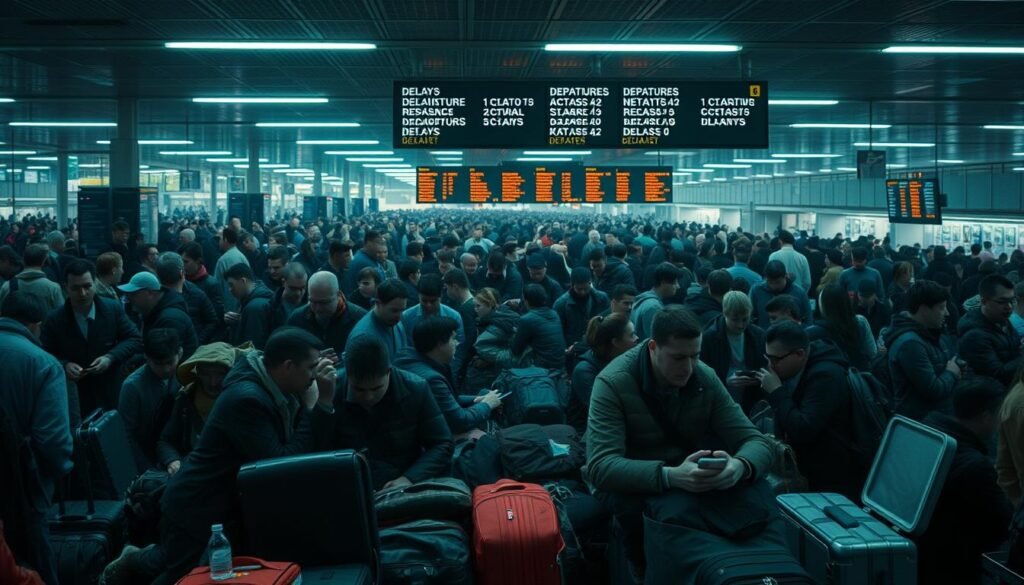
Passengers faced missed connections, long waits, and confusion about refunds or rebooking options. Airports saw crowding as flight boards fell out of sync with real operations.
What’s the case context from Aeroflot’s mass outage and its impact on subsidiaries and routes?
The Aeroflot event canceled more than 100 flights and clogged Moscow Sheremetyevo, illustrating scale when a major company’s systems go down.
Subsidiaries Rossiya and Pobeda suffered shared disruptions because they rely on common platforms. Some international routes to Belarus, Armenia, and Uzbekistan were canceled or delayed, showing how local failures reach the wider world.
- Shared systems: create common points of failure for multiple carriers and services.
- Timing: peak travel amplifies backlog and stretches customer support for days.
- Recovery: integrity checks and credential resets prolong visible effects even after systems restart.
| Date | Effect | Primary impact |
|---|---|---|
| Mass outage (Aeroflot) | 100+ cancellations | Hub congestion at Sheremetyevo; subsidiary disruptions |
| Shared systems | Service spread to Rossiya/Pobeda | Domestic and nearby international route cancellations |
| Post-outage recovery | Service restoration tasks | Extended passenger delays; rebooking and support backlog |
Practical note: follow official company news and airport alerts for verified information on accommodations and timelines. Clear communication from operators helps passengers plan alternate travel and avoid unnecessary waits.
Data exposure, investigations, and what remains unknown: What information was exposed and where are inquiries heading?
Public disclosures so far map a narrow set of records, but forensic teams warn that full results can take weeks. Investigations aim to confirm access paths, preserved logs, and the exact scope of affected systems.
Qantas reported up to 6 million customer records in a contact‑center environment. The company said that system did not hold credit card numbers, passports, frequent‑flyer credentials, or other protected financial artifacts.
How do investigators proceed? Teams first contain the threat and preserve evidence. Then they validate which files were accessed and whether backups or partner systems were touched.
- Why statements change: early statements are cautious; forensic results can take weeks to mature.
- Regulatory factors: materiality and jurisdiction decide who must disclose and when.
- Practical advice: monitor official channels and sign up for a security newsletter or account alerts for timely updates.
Experts note the ongoing threat landscape means normal operations do not equal full certainty. For businesses, classify data and limit sensitive information in peripheral systems to reduce downstream risk in the connected transportation world.

How are airlines and customers responding—what defenses, statements, and practical steps matter now?
Short answer: companies moved quickly to harden access and share clear status updates so passengers can plan.
What carriers and vendors are doing now:
- Stricter identity checks: help desks require extra verification and tighter password reset workflows.
- Authentication hardening: multi‑factor authentication (MFA) rules tightened and SIM‑swap monitoring increased.
- Vendor controls: audits of third‑party access and segmented networks to limit lateral movement.
What can customers do today?
Practical steps: enable account alerts, set a strong unique password, and watch for unexpected reset emails.
Consider a credit freeze with Equifax, Experian, and TransUnion — it is free, reversible, and blocks new accounts from being opened in your name.
“Clear, timely status pages and direct messaging reduce confusion and phishing risk for travelers,” said security leads advising the sector.
| Action | Who | Why it matters |
|---|---|---|
| Password resets & MFA | Companies | Stops credential abuse and reduces hacker success |
| Vendor audits & segmentation | Business / IT teams | Limits network blast radius from third‑party access |
| Credit freeze & alerts | Passengers | Helps prevent identity theft after data exposure |
Insurance can cover investigation and recovery costs for a company and some consumer protections may come through cardholder benefits. Subscribe to a trusted security newsletter or the company status website for verified updates and avoid clicking links in unsolicited messages.
Conclusion
Quick summary:Recent disclosures show how a single compromised help‑desk or vendor link can disrupt travel services, strain airport operations, and test public confidence. Stay calm and follow verified updates.
What matters now: companies must keep hardening identity checks, segment networks, and rehearse recovery plans. Customers should use strong, unique passwords, enable alerts, and consider a credit freeze when appropriate.
Sector cooperation helps. Sharing indicators between vendors, security teams, and regulators speeds response and reduces damage. Insurance can aid recovery, and subscribing to a trusted June WestJet cyber attack analysis newsletter keeps you current without chasing every headline.
Bottom line: informed, measured steps protect operational and personal health as groups refine tactics across borders and contexts.
