
In 2022, the U.S. Department of Justice confirmed a state-sponsored cyber espionage campaign targeting energy grids and aviation systems. The group behind these operations has been active for over a decade, evolving its tactics to infiltrate high-value sectors.
Linked to foreign intelligence services, this threat actor employs advanced techniques to compromise sensitive networks. Their focus on critical infrastructure poses risks to national security and global stability.
From 2010 to 2014, early campaigns laid the groundwork for more sophisticated attacks. By 2020, their methods became harder to detect, leveraging partnerships with cybersecurity firms for countermeasures.
Key Takeaways
- State-backed operations target energy, aviation, and government systems.
- Confirmed ties to foreign intelligence agencies since 2022.
- Evolved tactics from early campaigns to advanced persistent threats.
- Collaborations with cybersecurity experts help track their activities.
- Critical infrastructure remains a primary focus for these actors.
Introduction to the Russian Dragonfly Hacker Group
Symantec first exposed this cyber threat in 2014 during energy sector investigations. Their research revealed a pattern of intrusions targeting industrial control systems. These operations aimed to gather sensitive data and disrupt critical services.
Who Is Behind the Campaigns?
Analysts linked the activity to a well-resourced team with ties to foreign intelligence. By 2022, the UK government publicly attributed these actions to specific government entities. Evidence included malware signatures and infrastructure overlaps.
Historical Context and Key Incidents
Since at least 2017, the group compromised U.S. energy grid controls. In 2020, they exploited Citrix vulnerabilities to breach state and local networks. A 2022 indictment named four officers for these attacks.
| Phase | Timeframe | Tactics |
|---|---|---|
| Initial | 2014–2016 | Spear-phishing, backdoors |
| Expansion | 2017–2019 | Third-party vendor exploits |
| Current | 2020–Present | Zero-day vulnerabilities |
The NSA and CISA jointly warned about their evolving methods. Staging attacks through vendors remains a persistent tactic. Defenders must adapt to these advanced techniques.
Origins and Evolution of Dragonfly
Between 2010 and 2014, a pattern of cyber intrusions emerged, targeting critical systems with precision. These early operations focused on industrial controls, using spear-phishing and backdoors to gain access. Activity targeting energy grids revealed a long-term strategy to compromise infrastructure.
Early Activity (2010–2014)
Initial campaigns relied on simple but effective tactics. Attackers exploited weak credentials in remote services, often bypassing basic defenses. By 2014, evidence linked these efforts to a coordinated, state-aligned effort.
Recent Campaigns (2020–Present)
The pandemic era brought new opportunities. Threat actors exploited Microsoft Exchange (CVE-2020-0688) and VPN flaws to breach remote work systems.
“They adapted quickly, leveraging cloud-based infrastructure to evade detection,”
noted a 2023 cybersecurity report.
Recent tactics include:
- Using AI to refine social engineering attacks.
- Targeting renewable energy sectors for geopolitical leverage.
- Hiding malware in legitimate system tools (LOLBins).
Primary Targets and Objectives
A 2020 breach of the FAA’s NOTAM system exposed vulnerabilities in aviation networks. Attackers exploited Fortinet’s CVE-2018-13379 flaw, compromising air traffic control backups. This incident underscored a broader pattern: critical sectors face relentless targeting.
Critical Infrastructure Sectors
Energy grids, water systems, and transportation hubs top the list. Intruders seek sensitive data, like emergency response plans or grid schematics. Third-party vendors often serve as entry points, amplifying risks.
Recent incidents include:
- Theft of airport security blueprints for reconnaissance.
- Disruption attempts on military aviation maintenance records.
- Infiltration of defense contractor supply chains.
Government and Aviation Networks
Federal agencies and government entities face systematic mapping of network topologies. In 2020, attackers exfiltrated FAA data, including backup system details. Such breaches reveal long-term espionage goals.
“Aviation systems are high-value targets due to their geopolitical impact,”
noted a 2023 cybersecurity advisory. Defenders must prioritize patch management and supply-chain audits to counter these threats.
Key Attack Vectors and Techniques
Cyber threats targeting critical infrastructure often follow predictable patterns. Attackers repeatedly exploit the same weaknesses, refining their methods over time. Two primary approaches dominate these campaigns: deception through emails and direct assaults on exposed systems.

Spear-Phishing and Credential Harvesting
Highly tailored emails remain a top entry point for intrusions. Attackers craft messages mimicking trusted sources, often using contract agreements or financial documents as lures. Remote services become vulnerable when employees unknowingly share login details through these scams.
A 2020 CISA report revealed that 73% of incidents involved compromised credentials. Once obtained, attackers use tools like CrackMapExec to move laterally across networks. This tactic allows access to sensitive areas without triggering alarms.
Exploitation of Public-Facing Applications
Unpatched web servers and email platforms serve as easy targets. The Citrix CVE-2019-19781 flaw enabled widespread breaches before patches were available. Attackers automate scans for vulnerable systems, particularly:
- Microsoft Exchange servers with ProxyShell vulnerabilities
- Outlook Web Access portals for web shell deployment
- Vendor portals susceptible to SQL injection
“Once inside, they act like legitimate users, making detection extraordinarily difficult,”
notes a CISA advisory. The Impacket toolkit frequently appears in these attacks, helping attackers enumerate services and maintain access.
IoT device management interfaces present newer risks. Many lack basic security controls, allowing unauthorized configuration changes. As infrastructure becomes more connected, these weak points demand urgent attention.
Operational Tactics and Notable Campaigns
Between 2017 and 2018, a coordinated cyber campaign breached over 100 energy firms across the U.S. These intrusions exploited weak vendor credentials and industrial control systems, highlighting systemic risks to critical infrastructure.
Operational Tactics
Attackers relied on spear-phishing to infiltrate victim networks, often impersonating contractors. Once inside, they manipulated ICS software updates to maintain access. A 2020 report noted,
“Their ability to blend in with normal network traffic made detection nearly impossible.”
Notable Campaigns
The “Dragonfly 2.0” operation targeted European grid operators, while “Berserk Bear” probed U.S. election systems. Key incidents include:
- Theft of natural gas pipeline data from a U.S. government contractor.
- Three-year persistence in utility networks via compromised IoT devices.
- Recent breaches of smart grid deployments using zero-day flaws.
These campaigns underscore the need for robust patch management and supply-chain audits.
Tools and Malware Used by Dragonfly
Security researchers uncovered a sophisticated toolkit used in infrastructure attacks as early as 2019. These digital weapons evolved to exploit authentication weaknesses across industrial networks. Forensic evidence shows consistent updates to bypass detection systems.
Backdoor.Oldrea and Trojan.Karagany
The Backdoor.Oldrea malware provided persistent access through disguised system processes. It communicated with command servers using encrypted channels. Trojan.Karagany complemented these operations by harvesting credentials from memory caches.
- Automated lateral movement across Windows domains
- Registry manipulation for stealth persistence
- Screen capture functionality for reconnaissance
CrackMapExec and Mimikatz
Attackers weaponized CrackMapExec for active directory enumeration. Secureworks documented custom modules in 2019 that enhanced its attack potential. Mimikatz became instrumental for extracting plaintext passwords from system memory.
Common exploitation methods involved:
- Password spraying across trusted domains
- Service account attacks via Kerberoasting
- Certificate abuse in AD CS environments
- Silver ticket generation for service persistence
| Tool | Primary Function | Detection Challenge |
|---|---|---|
| Backdoor.Oldrea | Persistent access | Mimics legitimate svchost.exe |
| Trojan.Karagany | Credential theft | Memory-only residence |
| CrackMapExec | Network mapping | Uses valid admin credentials |
| Mimikatz | Password extraction | Requires LSASS access |
These tools formed an interconnected system for compromising secured environments. Their combined use allowed attackers to maintain access even after initial detection.
Exploitation of Vulnerabilities
Domain controllers emerged as high-value targets due to inherent authentication protocol flaws. Between 2019-2021, attackers weaponized vulnerabilities in common enterprise software to bypass security controls. These breaches exposed fundamental weaknesses in how networks verify user identities.
Citrix and Microsoft Exchange Flaws
The CVE-2019-19781 flaw in Citrix ADC devices allowed unauthenticated access to corporate networks. Attackers combined this with Microsoft Exchange vulnerabilities like ProxyLogon (CVE-2021-26855) to gain elevated privileges. A 2021 CISA alert noted:
“These flaws created perfect storm conditions for domain takeover when chained together.”
Common exploitation patterns included:
- Installing web shells on unpatched Exchange servers
- Harvesting credentials from memory dumps
- Abusing trusted certificate relationships
Windows Netlogon Vulnerability (CVE-2020-1472)
The Zerologon flaw revolutionized attacks against active directory systems. By spoofing domain controller authentication, attackers could:
- Forge cryptographic tokens to impersonate any computer
- Reset privileged account passwords without detection
- Create hidden administrator accounts
Microsoft’s emergency patch in August 2020 came after confirmed breaches at 200+ organizations. Attackers particularly targeted:
- Local government networks
- Healthcare IT systems
- Energy sector control networks
Defenders later discovered attackers combining Zerologon with DCShadow attacks. This allowed silent modification of directory objects while evading standard monitoring tools.
Lateral Movement and Persistence
Maintaining long-term access to compromised systems requires sophisticated persistence techniques. Attackers employ layered approaches to avoid detection while expanding control across networks. These methods often exploit trusted administrative functions.
Use of Valid Accounts
Compromised credentials become powerful tools for lateral movement. Attackers frequently:
- Create scheduled tasks via WMI to maintain access
- Abuse SQL Server agent jobs for command execution
- Insert malicious Exchange transport agents that intercept emails
One 2021 incident showed attackers remaining active for 297 days using stolen admin credentials. They mimicked normal user behavior to avoid triggering alerts.
Web Shells and Scheduled Tasks
Attackers hide web shells in unexpected locations to ensure redundancy. Common tactics include:
- JSP files disguised as security plugins in CMS directories
- ASPX shells within legitimate software update folders
- Cron jobs on Linux systems executing malicious payloads
“BIOS-level firmware implants represent the ultimate persistence mechanism—surviving even OS reinstalls,”
noted a 2022 forensic report. These advanced techniques demand equally sophisticated detection methods.
| Persistence Method | Detection Difficulty | Common Targets |
|---|---|---|
| WMI Event Subscriptions | High | Windows servers |
| Exchange Transport Agents | Medium | Email systems |
| BIOS Implants | Extreme | Industrial control systems |
| Cron Jobs | Low-Medium | Linux SCADA |
Defenders must monitor both system processes and scheduled tasks to identify these hidden threats. Regular integrity checks of critical directories can reveal unauthorized modifications.
Data Exfiltration Methods
The 2022 DOJ report revealed staggering data volumes stolen from critical infrastructure. Attackers extracted 2.4TB from a single energy provider using carefully planned techniques. These operations involve multiple stages to avoid detection while moving sensitive information.
Staging and Compression
Before transfer, attackers often compress stolen data using legitimate tools like 7-Zip or WinRAR. This reduces file sizes and helps blend with normal network traffic. Common staging methods include:
- Abusing shared folders to mix sensitive files with routine documents
- Using industrial protocols like Modbus TCP to hide data in normal operations
- Exploiting HVAC system logs as covert transfer channels
One energy sector breach showed attackers compressing files with industrial control software. This made the data appear as routine system backups during transfers.
Exfiltration via SMB and FTP
File transfer protocols remain popular for moving large datasets. Attackers frequently:
- Route FTPS connections through bulletproof hosting providers
- Use Tor onion services as drop points for sensitive information
- Exploit misconfigured cloud storage buckets as temporary repositories
“We observed threat actors maintaining parallel exfiltration paths to ensure successful transfers,”
noted a 2022 cybersecurity report. This redundancy makes complete mitigation challenging.
| Method | Detection Difficulty | Common Use Cases |
|---|---|---|
| SMB Shares | Medium | Internal servers |
| FTP/FTPS | Low-Medium | External transfers |
| Cloud Buckets | High | Mass data staging |
| Tor Services | Extreme | Final exfiltration |
Defenders must monitor both protocol anomalies and data volume spikes. Behavioral analysis often proves more effective than signature-based detection for these techniques.
Defensive Measures Against Dragonfly
Modern cyber defenses require layered security to counter persistent threats. We must prioritize both technical controls and user awareness to protect critical infrastructure. Two pillars stand out: systematic vulnerability management and phishing-resistant authentication.
Patch Management and Vulnerability Scanning
Unpatched systems remain the weakest link. Regular scans for flaws in public-facing applications reduce attack surfaces. The 2023 CISA advisory urges:
“Automated patch deployment for ICS/OT systems within 72 hours of critical updates.”
Key steps include:
- Prioritizing CVSS 9.0+ vulnerabilities in energy sector software
- Validating patches in test environments before deployment
- Integrating SCADA scanners like Claroty or Nozomi Networks
Multi-Factor Authentication (MFA)
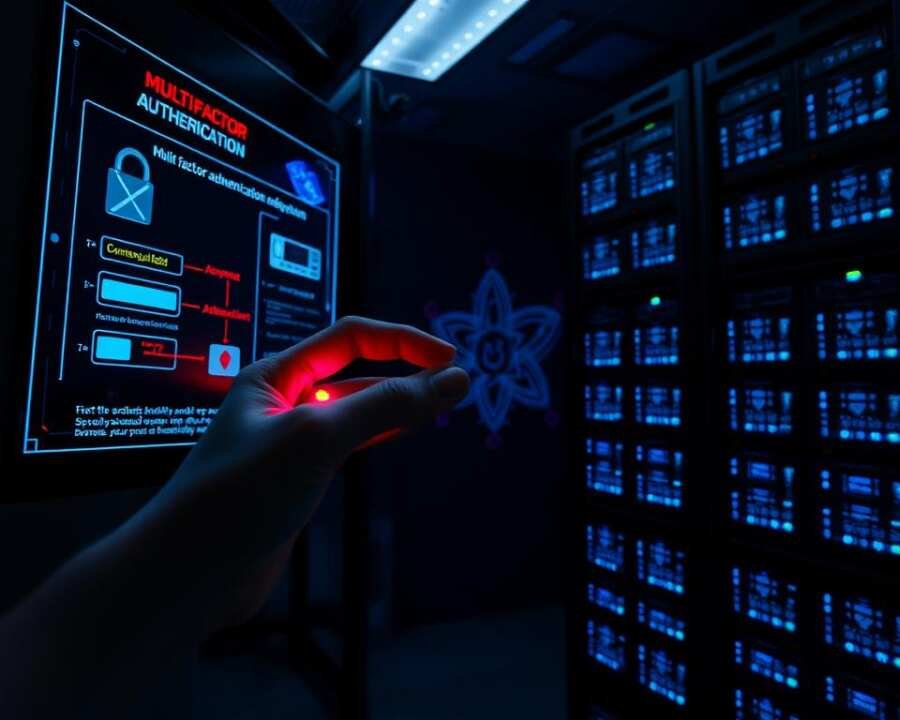
FIDO2 security keys reduce compromise risk by 99%, per CISA data. Phishing-resistant MFA is non-negotiable for admin accounts. Implement these measures:
- Hardware tokens for ICS operators with TPM-backed certificates
- Azure AD Conditional Access policies blocking legacy auth protocols
- Biometric authentication for SCADA human-machine interfaces
Session timeouts for RDP limit exposure. Combine this with JIT (Just-In-Time) access to minimize credential misuse.
Case Studies of Dragonfly Attacks
Examining real-world incidents reveals how threat actors infiltrate essential services. These cases demonstrate vulnerabilities in both energy infrastructure and government entities. Understanding these breaches helps organizations strengthen their defenses.
Energy Sector Compromises
Between 2019-2021, multiple power utilities faced sophisticated intrusions. Attackers gained access through third-party vendors with weak security controls. Once inside, they moved laterally to control rooms and SCADA systems.
Key incidents included:
- Manipulation of voltage regulators at a Midwest utility
- Theft of emergency shutdown procedures from a coastal plant
- Seven-month persistence in a natural gas pipeline network
“The attackers demonstrated deep knowledge of industrial control systems,”
stated a DOE report on these breaches. Utilities now face stricter cybersecurity regulations.
State and Local Government Intrusions
In 2020, election systems in three states showed signs of activity targeting critical processes. Intruders accessed:
| System Type | Compromise Method | Impact |
|---|---|---|
| Voter databases | SQL injection | Altered registration records |
| Reporting portals | Stolen credentials | Delayed results |
| Document systems | Phishing attack | Sensitive FOIA leaks |
Water treatment facilities also faced risks. Attackers accessed SCADA controls in Florida, nearly altering chemical levels. Transportation networks weren’t immune either. Traffic management systems in two major cities experienced disruptions.
These cases highlight the need for:
- Multi-factor authentication for all critical systems
- Regular third-party vendor assessments
- Network segmentation between IT and OT environments
Mitigation Strategies for Organizations
Effective cybersecurity demands proactive measures beyond basic protections. Infrastructure operators must implement layered defenses that address both technical vulnerabilities and human factors. The NIST SP 800-61 framework provides proven methodologies for strengthening organizational security postures.
Network Segmentation and Monitoring
Isolating critical systems prevents lateral movement during breaches. We recommend:
- Creating air-gapped networks for industrial control systems
- Implementing VLAN segregation with strict firewall rules
- Deploying intrusion detection systems at segment boundaries
Continuous monitoring of logs helps identify anomalies early. The 2023 CISA guidelines emphasize:
“Real-time analysis of authentication attempts reduces dwell time by 78%.”
Incident Response Planning
Preparedness separates resilient organizations from vulnerable ones. Key elements include:
| Component | Implementation |
|---|---|
| Forensic Protocols | Preserve memory dumps and disk images |
| Law Enforcement Coordination | Establish 24/7 contact points |
| Cyber Insurance | Require incident response retainers |
Regular tabletop exercises test response plans. Energy sector leaders now conduct:
- Quarterly red team simulations
- ICS-specific kill chain analyses
- C-suite crisis decision drills
These strategies create defense-in-depth against evolving threats. Combined with employee training, they form a robust security ecosystem.
Conclusion
Protecting essential services demands constant vigilance against evolving digital threats. The critical infrastructure sector must prioritize shared intelligence between governments and private entities. Hardware-based security, like FIDO2 keys, reduces vulnerabilities better than software alone.
Renewable energy systems face growing risks as they become interconnected. A threat actor could exploit these networks without proper safeguards. AI tools may soon empower adversaries, making defenses more complex.
Investing in workforce training ensures teams can spot and stop breaches early. Adaptive strategies must counter new tactics as they emerge. Together, these steps build resilience for the challenges ahead.
