
Ever felt like your digital life is one hack away from disaster? 😱 You’re not alone. In 2021, a whopping 5.4 million Twitter users got pwned through vulnerabilities in their API. And let’s not forget Facebook’s infamous 50 million token leak. Yikes, right?
These incidents aren’t just headlines—they’re wake-up calls. APIs are the backbone of modern apps, but they’re also a prime attack surface for cybercriminals. If you’re not protecting yours, you’re basically rolling out the red carpet for hackers. 🚨
But don’t sweat it. We’ve got your back. From OAuth ninja moves to JWTs done right, we’ll show you how to armor up your API game. Because let’s face it: security by obscurity is a trash fire. Real protection takes strategy—and we’re here to guide you every step of the way.
Key Takeaways
- APIs are a major target for cyberattacks—don’t ignore their security.
- Shocking stats like Twitter’s 5.4M breach highlight the risks.
- Facebook’s 50M token leak proves API security isn’t optional.
- OWASP ranks BOLA attacks as the #1 API threat in 2023.
- Effective protection requires more than just obscurity—follow proven steps.
Introduction to API Security Risks
APIs are everywhere, but so are the risks they bring. 🌐 They’re the unsung heroes of the internet, powering everything from your favorite apps to critical business systems. But here’s the kicker: 83% of web traffic flows through them, making them a prime target for cyberattacks.
Remember the Twitter breach in 2021? Over 5.4 million user records were exposed. Facebook’s 50 million token leak? Another glaring example of what happens when security takes a backseat. These aren’t just isolated incidents—they’re wake-up calls.

Shadow APIs are another headache. Half of companies discover undocumented endpoints during audits. These hidden gateways can leave your data wide open to exploitation. And let’s not forget compliance nightmares. GDPR fines can hit €20M for leaked personal info through API gaps. 😱
Here’s the scary part: API attacks surged by 681% last year. Whether it’s leaked health records or drained crypto wallets, the stakes have never been higher. It’s time to get serious about api security.
| Risk | Impact |
|---|---|
| Shadow APIs | Undocumented endpoints exposing sensitive data |
| Compliance Violations | Hefty fines for leaked personal information |
| Surge in Attacks | 681% increase in API-related breaches |
APIs are the new front door to your digital world. But without proper security, they’re also an open invitation to hackers. Don’t let your system become the next headline.
Why API Endpoints Are Vulnerable to Attacks
Ever wondered why hackers love APIs so much? Spoiler: They’re like digital candy. 🍬 Their default open nature makes them the perfect breach points for cyberattacks. Whether it’s exposed debug endpoints or forgotten test APIs, these gaps are a goldmine for attackers.
Here’s the kicker: 60% of API vulnerabilities come from misconfigurations, not code flaws. That’s right—your setup might be the weak link, not your code. 🛠️ And with microservices architecture, the attack surface only gets bigger. More endpoints mean more opportunities for exploitation.

Legacy systems combined with rapid deployment create security gaps you could drive a truck through. 🚛 It’s the perfect storm for breaches. According to the OWASP API Security Top 10 2023, issues like Broken Object Level Authorization (BOLA) and Broken Authentication are still top threats.
Here’s what you’re up against:
- Exposed debug endpoints that should’ve been disabled.
- Forgotten test APIs lurking in the shadows.
- Zombie endpoints that no one even remembers.
- Complexity from microservices leading to a bigger attack surface.
- Misconfigurations causing 60% of vulnerabilities.
Don’t let your system become the next headline. Understanding these risks is the first step toward better security. 🛡️
How to Secure Exposed API Endpoints
When it comes to digital safety, your API endpoints are the frontline defense. 🛡️ They’re the gatekeepers of your app’s functionality, but if left unprotected, they can become a hacker’s playground. Let’s dive into two powerful strategies to keep your endpoints safe and sound.

Use API Gateways for Centralized Traffic Control
Think of an API gateway as your digital bouncer. 🚪 It handles everything from rate limiting to threat detection, all in one package. By centralizing traffic control, you can block sketchy user agents, rewrite paths, and add security headers automatically. Tools like Kong, Amazon API Gateway, or Apigee are battle-tested warriors in this space.
Here’s the kicker: 90% of token leaks happen through poor key management. A gateway ensures your authentication processes are airtight, keeping your data safe from prying eyes.
Implement OAuth for Secure Token Management
OAuth is your best friend when it comes to secure token management. 🔑 But here’s a pro tip: never let your gateway issue tokens. Keep that process separate, like your ex’s stuff. Centralized OAuth servers ensure tokens are issued and managed securely, reducing the risk of leaks.
With OAuth, you can control who accesses your endpoints and what they can do. It’s a powerful way to add an extra layer of security to your app’s architecture.
By combining API gateways with OAuth, you’re not just protecting your endpoints—you’re building a fortress around your digital kingdom. 🏰
Best Practices for Authentication and Authorization
Let’s talk about keeping your digital doors locked tight. 🔒 When it comes to authentication and authorization, the right strategies can make all the difference. Here’s how to ensure your system stays safe without turning into a privacy nightmare.

Use JSON Web Tokens (JWTs) Internally
JWTs are like the secret handshake of the digital world. 🤝 They’re great for internal use, but exposing them to third parties? Big no-no. Why? Because decoded JWTs can reveal sensitive info, turning your security into a privacy disaster.
Here’s a pro tip: use the phantom token approach. Opaque external tokens transform into internal JWTs at the gateway. This keeps your data safe while maintaining smooth access control.
Apply Token Exchange for Secure Token Sharing
Token exchange is your go-to for fresh, secure tokens every time. ♻️ Get new tokens for each service call to avoid permission creep. Services should never handle raw client tokens—that’s a recipe for disaster.
Another smart move? Rotate signing keys monthly using JWKS endpoints. This ensures smooth transitions and keeps your security tight.
| Practice | Benefit |
|---|---|
| Phantom Tokens | Transforms opaque tokens into internal JWTs |
| Token Exchange | Ensures fresh tokens for each service call |
| Key Rotation | Monthly rotation using JWKS endpoints |
By following these best practices, you’re not just protecting your system—you’re building a fortress of security around it. 🏰
Rate Limiting and Traffic Monitoring
Rate limiting is like your API’s speed bump—essential for safety. 🚦 It’s the emergency brake that stops brute force attacks cold. Without it, your system could be overwhelmed by too many requests, leaving you vulnerable to exploitation.
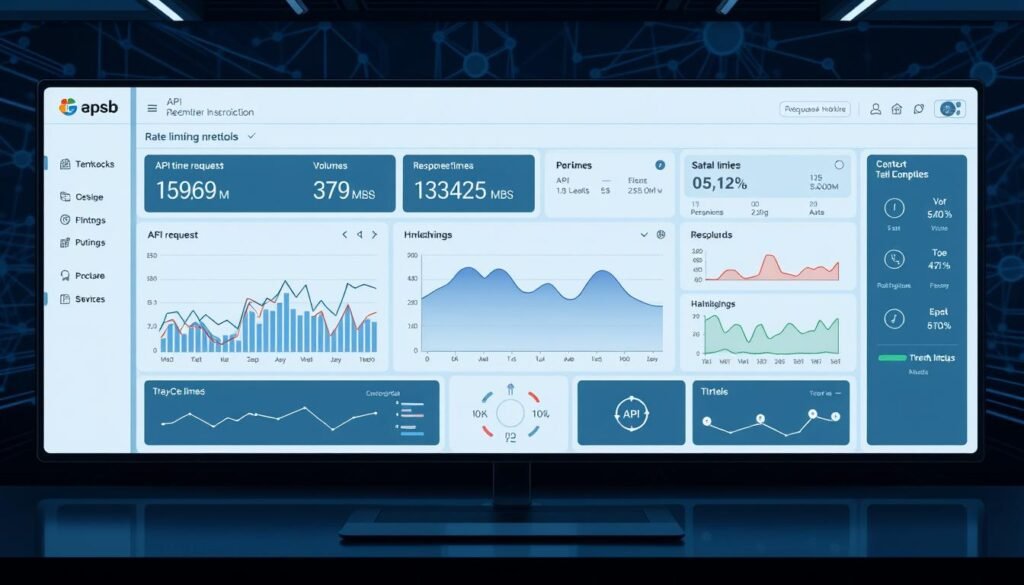
Smart throttling is another game-changer. 🎯 Set different limits for authenticated vs. anonymous users. This way, you can prioritize trusted traffic while keeping suspicious activity in check. It’s like playing favorites, but safely.
Traffic forensics helps you spot abuse patterns. 🕵️♂️ Look for red flags like ID iteration or header manipulation. These are telltale signs of malicious intent. By analyzing traffic, you can stay one step ahead of potential attacks.
AI-powered defense takes it up a notch. 🤖 Automatically block IPs attempting 1000+ requests per minute. It’s bot warfare made easy, ensuring your system stays resilient against automated threats.
Finally, use traffic metrics for capacity planning. 📈 Right-size your infrastructure to avoid crashes and downtime. This proactive approach keeps your API running smoothly, even under heavy load.
- Rate limits: Your API’s emergency brake against brute force attacks.
- Smart throttling: Prioritize trusted users while limiting suspicious activity.
- Traffic forensics: Spot abuse patterns like ID iteration or header manipulation.
- AI-powered defense: Auto-block IPs with excessive requests.
- Capacity planning: Use metrics to optimize infrastructure and prevent crashes.
By implementing these strategies, you’re not just protecting your API—you’re building a fortress of security around it. 🏰
Input Validation and Data Sanitization
Input validation is the unsung hero of API security. 🛡️ It’s your system’s immune system, filtering out malicious payloads before they wreak havoc. Without it, your data is a sitting duck for attacks.

Here’s the deal: validation ensures only clean, trustworthy data gets through. Think of it as a bouncer for your API—no shady characters allowed. 🚫 And sanitization? That’s the cleanup crew, scrubbing inputs to remove anything harmful.
Pro tip: Escape ALL user inputs, even from “trusted” sources. 🧼 Why? Because attackers love exploiting blind spots. Block requests with SQL keywords in params to shut down injection attacks before they start.
- Schema validation: Use JSON Schema to validate structure before processing. 📝 It’s like a blueprint for clean data.
- Regular updates: Keep your validation rules fresh. 🔄 New vulnerabilities pop up daily, so stay ahead of the curve.
For a deeper dive, check out this guide on how to prevent web attacks using input sanitization. It’s packed with actionable tips to keep your API safe.
By combining validation and sanitization, you’re not just protecting your system—you’re building a fortress of security around it. 🏰
Encrypting Sensitive Data in Transit and at Rest
Think of your data as a treasure chest—without encryption, it’s just sitting there waiting to be looted. 🏴☠️ Whether it’s traveling across the web or stored in your database, protecting it is non-negotiable. Let’s break down the essentials to keep your sensitive data safe from prying eyes.

First up, TLS 1.3 or bust. Anything less is like sending postcards through the mail—totally exposed. 🚫 This protocol ensures your data is encrypted during transit, making it unreadable to hackers. It’s the digital equivalent of a bulletproof vest for your information.
For data at rest, AES-256 encryption is the gold standard. 🗄️ It’s like putting your treasure chest in a vault with a lock so complex, even the most determined thieves will give up. This level of security ensures your stored data stays safe, even if someone breaches your system.
Key management is another critical piece. 🔑 Use Hardware Security Modules (HSMs) or cloud Key Management Systems (KMS) to store your keys securely. No more leaving them in config files—that’s like handing over the keys to your house. 🏠
Here’s a compliance hack: encrypt everything. 📜 GDPR and HIPAA auditors will love you for it. Not only does this keep your data safe, but it also ensures you’re meeting regulatory requirements without breaking a sweat.
Finally, watch out for mixed content. 🚨 An HTTPS API with HTTP endpoints is a facepalm moment waiting to happen. Always ensure all connections are secure to avoid glaring vulnerabilities.
- TLS 1.3: The only protocol you should be using for secure transit.
- AES-256: The encryption standard for data at rest.
- Key management: Use HSMs or cloud KMS—no shortcuts.
- Compliance: Encrypt everything to keep auditors happy.
- Mixed content: Avoid HTTPS API with HTTP endpoints.
By following these steps, you’re not just protecting your data—you’re building a fortress of security around it. 🏰
Securing Internal and Partner APIs
Partner APIs are like the VIP section of your digital club—exclusive but risky. 🎟️ They need robust security to keep the bad actors out. Custom scopes per client? That’s your least privilege superpower. 🦸♂️ Give each partner only the access control they need, nothing more.

Internal APIs might feel safe behind the firewall, but don’t be fooled. 🏰 Disgruntled employees or overlooked shadow endpoints can turn your environment into a hacker’s playground. Every organization must audit its APIs—yes, even Dave’s test endpoint from 2018. 🔍
Automation tools like Pynt are your secret weapon. 🤖 They auto-discover shadow APIs, ensuring no hidden gaps in your security. And when it comes to partner integrations, SLAs with security requirements are non-negotiable. 📜 Contracts should spell out exactly what’s expected to keep your environment safe.
- 🤝 Custom scopes: Limit partner access to only what’s necessary.
- 🏰 Internal API myth: Firewalls aren’t foolproof—audit regularly.
- 🔍 Inventory audit: Map all APIs, even the forgotten ones.
- 🤖 Automation: Use tools like Pynt to uncover shadow APIs.
- 📜 SLAs: Include security requirements in partner contracts.
By taking these steps, your organization can build a resilient environment for both internal and partner APIs. 🛡️ Don’t let blind spots turn into breaches—stay proactive and keep your digital club secure.
Regular Security Audits and Testing
Security audits are like your system’s annual check-up—essential for staying healthy. 🩺 They’re the best way to uncover hidden risks and keep your environment safe. Without them, you’re flying blind, and that’s a recipe for disaster. 🚨

Start with the holy trinity of audits: pentests, code reviews, and config scans. 🔍 These tools help you spot vulnerabilities before they become full-blown breaches. It’s like having a crystal ball for your security.
Pro tip: Run automated scans in your CI/CD pipeline. 🧪 Catch issues before deployment, saving your team time and headaches. Tools like Pynt make this process a breeze, giving you peace of mind with every release.
Want to take it up a notch? Hire ethical hackers for a red team exercise. 🕵️♀️ Let them try to “pwn” your system—it’s therapy for your infrastructure. You’ll uncover weaknesses you didn’t even know existed.
Don’t forget to schedule audits regularly. 📅 Quarterly is the minimum, but for high-risk industries, monthly is the way to go. Consistency is key to staying ahead of threats.
Finally, track metrics like MTTD (Mean Time to Detect) and MTTR (Mean Time to Respond). 📊 These numbers prove your security ROI to the C-suite and show your team’s effectiveness.
- 🔍 Audit checklist: Pentests, code reviews, and config scans.
- 🧪 Testing pro move: Run automated scans in CI/CD.
- 🕵️♀️ Red team exercise: Hire ethical hackers to test your system.
- 📅 Calendar alert: Quarterly audits minimum, monthly for high-risk industries.
- 📊 Metrics that matter: Track MTTD/MTTR to prove ROI.
By making audits and testing a priority, you’re not just protecting your system—you’re building a fortress of security around it. 🏰
Conclusion: Building a Secure API Environment
Building a fortress around your digital assets starts with the right mindset. 🏰 From gateways to OAuth and JWTs, these tools are your security starter pack. But tools alone aren’t enough—adopting a zero-trust approach is key. Assume every request is hostile until proven otherwise. 🔒
Teamwork makes the dream work. 🤝 A DevSecOps culture ensures everyone is on the same page, turning security into a shared responsibility. Tools are great, but people are your ultimate defense.
Stay ahead by following OWASP updates. 📚 The digital landscape evolves fast, and so should your best practices. Continuous learning is the only way to stay one step ahead of risk.
Ready to take action? 🚀 Audit your APIs today—tomorrow might be too late. A secure environment isn’t built overnight, but every step counts. Start now, and keep your digital kingdom safe. 🛡️
