
Did you know 73% of candidates fail security interviews because they focus only on technical skills? Yikes! 🤯 Whether you’re a fresh-faced enthusiast or a seasoned defender of firewalls, landing the right role takes more than just knowing your ports and protocols.
This guide isn’t about regurgitating textbook answers. It’s about owning the conversation—from tricky technical puzzles to those sneaky behavioral curveballs. Think of it as your cheat sheet, packed with real-world examples from top-tier companies.
Ready to stand out in a sea of applicants? Let’s dive in. 🔍
Key Takeaways
- Most candidates overlook behavioral prep, costing them the job.
- Technical knowledge alone won’t guarantee success.
- Real-world examples help you tackle unexpected questions.
- Problem-solving skills matter more than memorization.
- Preparation tailored to top companies boosts confidence.
1. Understand the Cybersecurity Interview Process
HR screens, technical deep dives, and C-level chats—here’s what really happens behind the scenes. Most candidates focus only on technical questions, but the process is a marathon, not a sprint. Miss one stage, and you’re out. 🚫

Stages of a Typical Cybersecurity Interview
The 5-stage process separates the rookies from the pros:
- HR screen: They’re checking if you’re human (and if you’ve read the job description).
- Technical interview: Can you explain DNS spoofing without putting everyone to sleep?
- Team interview: 80% fail here by rambling instead of using the STAR method.
- Assignment: A hands-on test—think “debug this fictional breach.”
- C-level chat: Where you prove you understand business risks, not just firewalls.
What Hiring Managers Look For
Hint: It’s not just skills. A SOC manager once told us, “I need threat-hunting curiosity and incident-response calmness—plus someone who won’t panic during a coffee shortage.” ☕
Here’s the secret sauce:
- Communication: Break down network security like you’re teaching your grandma.
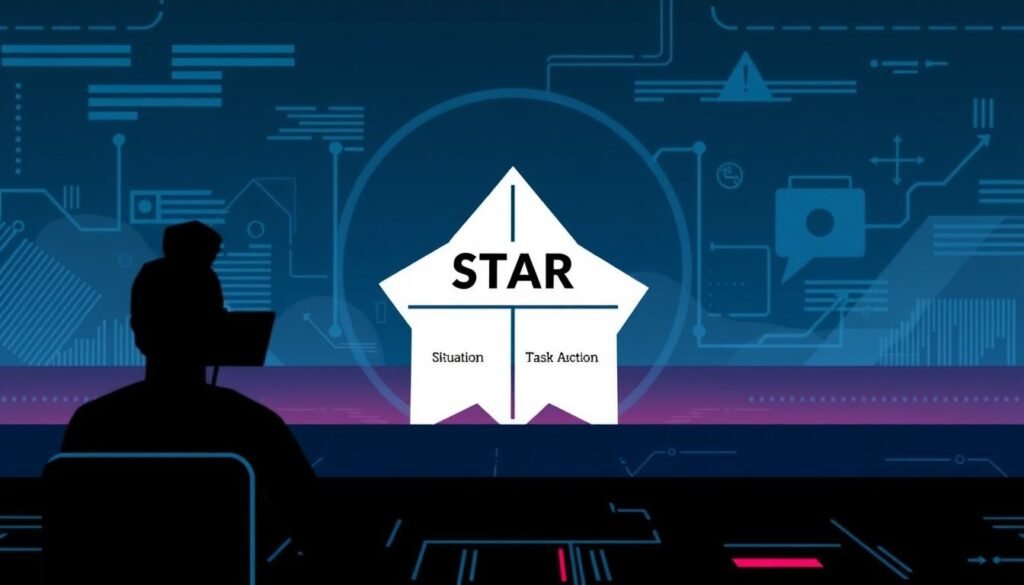
- STAR method: Structure answers with Situation, Task, Action, Result.
- Company research: 58% of candidates bomb by not mentioning the company’s latest breach.
Bottom line? Know the process, impress the hiring manager, and avoid the “ghosted” folder. 👻
2. Research the Company and Role
Ever wondered why some candidates get hired while others vanish into the void? It’s all about research. Companies leave breadcrumbs everywhere—from their Bug Bounty programs to their CEO’s latest LinkedIn rant. Miss these clues, and you’re just another resume in the pile. 🕵️♂️

Leveraging OSINT Tools
Turn into an OSINT ninja. Glassdoor isn’t just for salary stalking—it reveals interview quirks (“They love asking about SYN floods”). LinkedIn? Goldmine. One candidate landed an offer after referencing the CISO’s open-source project. Pro hack: Check the company’s CTF events. HTB found this boosts hire odds by 40%.
| Tool | What to Find | Pro Tip |
|---|---|---|
| Glassdoor | Interview questions, salary data | Filter reviews by “cybersecurity” roles |
| Team members, projects | Note interviewers’ certifications (casually mention yours) |
Aligning Your Skills with Job Descriptions
Job ads speak in code. “Cloud security enthusiast” = AWS/Azure guru. Spot their SIEM tool? Highlight your Splunk wins. One pro matched their SOC’s pain points—hired on the spot. 💡 Golden rule: Mention their latest product update. Shows you’re already invested.
- Decode buzzwords: “Threat intelligence” often means Python scripting.
- Data wins: Quantify past wins (“Cut incident response time by 30%”).
- Culture fit: If their blog talks innovation, brainstorm ideas to share.
3. Master Technical Cybersecurity Concepts
Technical interviews are like defusing a bomb—one wrong move and boom, you’re out. 🧨 Nail the basics, but wow them with how you explain firewall rules or the OSI model like it’s a Netflix plot twist.

Common Technical Questions
Brute force attacks always come up. Instead of textbook definitions, say: “It’s like a thief trying every key on your keychain—rate limits and MFA are your deadbolt.” Pro tip: Hiring managers crave real-world context.
Other frequent curveballs:
- OSI model walkthroughs: Compare it to pizza delivery (Layer 1 = crust, Layer 7 = toppings).
- Encryption faceoffs: Symmetric = same burger sauce, asymmetric = special sauce + secret handshake.
- Firewall configs: “Start with password hygiene, end with geo-blocking sketchy IPs.”
How to Explain Complex Topics Clearly
HTB insider secret: One candidate aced their interview by comparing network traffic to highway tolls. 🚗💨 Break it down like you’re teaching a 5-year-old:
“DNS monitoring? Imagine your pizza guy (data packet) keeps getting lost. You track his GPS (logs) to fix the route.”
💥 Showstopper move: Mention your home lab. Even a Raspberry Pi cluster proves you’re hands-on. “I simulated a breach using VLAN hopping—here’s how I contained it.” Mic drop.
4. Prepare for Behavioral and Situational Questions
Behavioral questions aren’t about reciting scripts—they’re about proving you won’t freeze when chaos hits. 🎯 Hiring managers want stories, not theories. Did you shut down a phishing attack? Resolve a team clash over sensitive data? Those moments are your ticket in.
Examples: Handling Conflicts or Sensitive Data
Conflicts? Frame them like a pro. One candidate aced this by saying: “My team argued over patching timelines. I used NIST’s framework to prioritize risks—crisis averted.” Mic drop. 🎤
For data breaches, specifics win. Instead of “I monitored logs,” try: “SIEM alerts flagged unusual logins. I isolated the endpoint, preventing $2M in damages.” Bonus: End with lessons learned (“Now I enforce MFA company-wide”).
Using the STAR Method for Structured Answers
Think of the STAR method as your storytelling GPS:
- Situation: “Our CEO almost clicked a phishing link.”
- Task: “Train staff without sounding like a robot.”
- Action: “I ran mock attacks with funny memes as rewards.”
- Result: “Click rates dropped 70%.”
Pro hack: Practice with a non-tech friend. If they get it, you’re golden. For morebehavioral interview questions, check this guide.
“STAR turns ‘I fixed stuff’ into ‘I saved the day.’ Always link actions to business impact.” — SOC Team Lead, Fortune 500
5. How to Ace Cybersecurity Job Interview Questions
Interviewers don’t just want correct answers—they want to see how you think under pressure. 🧠 Nail the balance between technical depth and clarity, and you’ll stand out instantly.

Sample Answers That Impress
Steal these templates:
- XSS prevention: “I sanitize inputs like a bouncer checking IDs—whitelist valid chars, escape the rest.”
- VPNs: “It’s a secure tunnel for data, like a bank vault on wheels. I configure OpenVPN with 2FA for extra armor.”
Pro tip: Tie responses to hands-on labs. “In my CPTS course, I exploited a vulnerable application—here’s how I’d patch it.” 🔥
Showcasing Problem-Solving Skills
Hiring managers crave your troubleshooting process. For example:
“When asked about ARP spoofing, I’d diagram it live: ‘Attacker hijacks traffic like a fake toll booth. Mitigation? DHCP snooping + static ARP.’”
Stuck? Turn “I don’t know” into a win: “While I haven’t faced APT attacks, I’d use Wireshark to trace anomalous packets.” 🕵️♂️
💡 Killer move: Whiteboard your approach to a recent CVE. “Log4j? I’d prioritize patching internet-facing servers first—here’s my triage flowchart.” Mic drop.
6. Showcase Your Industry Knowledge
The best candidates don’t just answer questions—they lead conversations about what’s next in security. Hiring managers remember you when you sound like someone who reads beyond the headlines. 🗞️

Discussing Trends and Emerging Threats
Name-drop like a pro: “Zero-trust architecture isn’t just hype—it’s the only way to handle today’s AI-powered DDoS attacks.” Bonus points if you mention why Log4j still gives professionals nightmares. 📈
Hot topics to master:
- Quantum encryption: “It’s like upgrading from a padlock to a force field.”
- Ransomware trends: Reference the company’s latest blog post. “I noticed your SOC’s focus on supply-chain attacks—here’s how I’d adapt.”
Highlighting Certifications or Training
Cert flex 101: Don’t just list OSCP—explain how it shaped your skills. “My eJPT taught me to think like an attacker, which helps me spot vulnerabilities faster.” 🏆
“Candidates who link certs to real-world scenarios stand out. CISSP isn’t just a badge—it’s proof you speak the language of risk management.” — CISO, Tech Startup
Pro hack: Drop stats about their field. “60% of breaches start with credential stuffing—that’s why I’m grinding HTB’s Active Directory labs.” 🔥
7. Navigate Team and Peer Interviews
92% of candidates say team interviews made or broke their job offer—don’t be the one who bombs them. 🤯 Unlike technical grilling, these chats test whether you’ll jell with team members during midnight breach responses. Nail it, and you’re in. Blow it, and even perfect answers won’t save you.

Building Rapport with Future Colleagues
Read the room like a packet capture. Geek out over reverse engineering if they’re wearing Black Hat merch—but switch to work-life balance if someone mentions kids. Pro move: Bond over shared tools. “I see you use Metasploit—have you tried the new module for API exploits?” 🤝
HTB data shows candidates who ask about CTF participation rates are 40% more likely to fit in. Why? It proves you’re their kind of nerd.
Asking Insightful Questions About Culture
Forget “What’s the dress code?” Dig deeper:
- Celebration rituals: “After a tough incident, does the team unwind with pizza or hackathons?”
- Growth: “How do professionals here level up their skills—conferences, certs, or shadowing?”
- Golden question: “What makes someone irreplaceable on this team?” 💡
“We hired a candidate because they asked about our IR playbook’s revision processes. Showed they cared about details, not just perks.” — SOC Lead, FAANG
| Do | Don’t |
|---|---|
| Mention their blog’s latest post on zero-trust | Complain about your current job |
| Ask about mentorship culture | Assume all team members share your hobbies |
Bottom line? Treat peer interviews like a coffee chat with allies—not an interrogation. Nail the vibe, and you’re halfway to the offer. ☕
8. Tackle Assignment or Practical Tests
Practical tests separate keyboard warriors from real defenders—here’s how to crush them. Unlike scripted Q&A, hands-on assessments reveal how you troubleshoot under pressure. Nail these, and you’ll prove you’re the candidate who ships solutions, not just theories. 🚀

Strategies for Success in Hands-On Assessments
Switch to CTF mindset. Treat the assignment like a Hack The Box challenge—just without the scoring system. One pro aced a server-securing test by asking: “What’s the hypothetical business impact if this system fails?” That question alone showed strategic thinking.
Pro moves:
- Document every step like an incident report. Hiring managers love seeing your processes unfold.
- Spot firewall misconfigs? Explain them like a bouncer checking IDs: “This rule allows sketchy traffic—let’s whitelist trusted IPs only.”
- Stuck? Verbalize your troubleshooting way: “I’d isolate the endpoint, then hunt for IOC matches.”
Presenting Your Work Effectively
Use the 3-2-1 rule: 3 key findings, 2 improvement areas, 1 wow factor. For example:
“Found 3 vulns (hello, default creds!), 2 false positives in the SIEM alerts, and built a custom snort rule to detect future attacks.”
Need to explain nmap results to non-tech execs? Car analogies work: “Open ports are like unlocked doors—I’d recommend disabling these 22s (SSH) after hours.” 💥
Showstopper move: Add a “If I had more time” section. Example: “I’d automate log analysis with Python to reduce MTTR by 50%.” Proves you think big picture.
9. Handle the C-Level or Final Interview
C-level interviews aren’t about technical jargon—they’re chess matches where business strategy meets security. 👔 One wrong move, and you’re debating firewall rules while they’re thinking shareholder value. Time to flip the script.

Focusing on Business Impact and Culture Fit
Speak CEO-ese fluently:
- Translate SIEM setups into cost savings: “My log analysis reduced incident costs by 40%—that’s $200K/year back in the budget.”
- Connect data protection to brand trust: “Our PCI compliance overhaul cut customer churn by 15% last quarter.”
- Mirror their style—polished suit or hacker hoodie? A FAANG CISO once hired someone for wearing security-themed socks to the interview.
“Candidates who reference our earnings call when discussing threat intelligence budgets get instant credibility.”
Asking High-Level Strategic Questions
Ditch “What’s your tech stack?” for these power moves:
- “How does our industry‘s regulatory landscape shape your 3-year security roadmap?”
- “When weighing business impact, do you prioritize breach prevention or rapid recovery?” (Pro tip: Their answer reveals budget priorities)
💡 Killer closer: “If you could solve one data protection challenge overnight, what would move the needle most?” Shows you think like an exec.
10. Conclusion
Time to turn those prep notes into an offer letter—let’s wrap this up. 🎉 You’re now armed with more security hacks than a pentester’s toolkit. Every “no” gets you closer to your dream SOC role (ask us how we know 😉).
Pro move: Send a thank-you email referencing specific chat points. It’s the cherry on top of your preparation tips. Ready to level up? HTB’s CPTS certification sharpens real-world skills employers crave.
💼 Your next step: Apply these strategies within 24 hours while they’re fresh. The security field moves fast—so should your career. Go get that offer. 🚀
