
Cyber threats evolve rapidly, and one emerging threat actor has caught global attention. A newly identified advanced persistent threat, aligned with geopolitical objectives, has been targeting Western entities with alarming precision.
Recent reports classify this group as highly sophisticated, leveraging custom JavaScript payloads tailored per target. Their methods include multi-layered obfuscation, making detection difficult for even advanced security systems.
Since 2022, their operations have escalated, breaching government networks and critical infrastructure. Experts predict further expansion into cloud-based systems by 2025, posing new challenges for defenders.
Key Takeaways
- Newly designated APT: Identified as a high-risk group with strategic objectives.
- Targeted campaigns: Focuses on Western entities with customized attacks.
- Technical sophistication: Uses advanced obfuscation and evasion techniques.
- Future projections: Expected to adapt to cloud security measures.
- Geopolitical links: Activities align with broader strategic interests.
1. Who Is the Winter Vivern Hacker Group (TA473)?
Digital espionage groups continue to refine their techniques, with one notable entity standing out. This collective operates with surgical precision, targeting high-value entities through advanced methods. Their activities suggest deep technical expertise and strategic patience.
Origins and Affiliation with Geopolitical Goals
Emerging in 2022, this threat actor aligns closely with Eastern European strategic interests. Their campaigns often mirror state-sponsored objectives, focusing on intelligence gathering and disruption. Analysts highlight their preference for governmental and infrastructure targets.
Proofpoint’s Designation as an Advanced Persistent Threat (APT)
Proofpoint’s research confirms this group’s status as a persistent threat. Their use of CVE-2022-27926 exploits in Zimbra platforms showcases tailored security breaches. Below are critical insights from their findings:
- Custom payloads: JavaScript tools designed for specific webmail portals.
- Obfuscation layers: Multi-tiered Base64 encoding to evade detection.
- Sustained access: Long-term infiltration tactics, unlike typical hit-and-run attacks.
This operational model reflects a cyber unit investing heavily in reconnaissance and tool development. Their methods surpass many traditional APTs in complexity.
2. Key Targets of TA473’s Cyber Operations
Recent cyber operations reveal a strategic shift toward high-value political and infrastructure targets. Forensic evidence shows tailored campaigns against Western democracies, exploiting both human and technical vulnerabilities.
NATO Officials and European Governments
Since early 2023, this threat actor has prioritized diplomatic and defense networks. Phishing emails mimicking official NATO communications delivered malware to steal credentials. Below are critical patterns:
- Custom lures: Documents branded with alliance logos to bypass security filters.
- Session hijacking: Stolen cookies granted prolonged access to classified portals.
- Cloud compromises: Attacks on shared collaboration platforms like Microsoft 365.
US Elected Officials and Critical Infrastructure
State legislatures and energy grids faced relentless probing in 2023. One campaign spoofed election agencies to distribute malicious links. Key findings include:
- Energy sector: Reconnaissance on grid control systems in 14 states.
- Election systems: SQL injections targeting voter registration databases.
- Healthcare: Ransomware-like payloads in hospital networks.
CISA’s advisories confirm these attacks mirror tactics from Chinese APT5 but with faster execution.
3. Exploiting Vulnerabilities: TA473’s Attack Methodology
JavaScript-based exploits are reshaping how threat actors infiltrate secure networks. By targeting unpatched systems and webmail portals, they gain deep access with minimal detection. Below, we dissect their signature techniques.
CVE-2022-27926 and Unpatched Zimbra Instances
This critical vulnerability in Zimbra Collaboration Suite allows remote code execution. Attackers inject malicious scripts into email workflows, bypassing authentication. Key observations:
- Exploit chains: Combines CVE-2022-27926 with CSRF tokens for lateral movement.
- Delivery: Compromised plugins or spoofed updates distribute payloads.
- Evasion: Native JavaScript emulation avoids sandbox detection.
Custom JavaScript Payloads for Webmail Portals
Each target receives tailored scripts designed to manipulate DOM elements. For RoundCube webmail, attackers steal session cookies and bypass 2FA. A comparison of obfuscation methods:
| Technique | Purpose | Detection Difficulty |
|---|---|---|
| Multi-layer Base64 | Hides malicious code in nested encodings | High |
| DOM Clobbering | Overwrites legitimate JS functions | Medium |
| CSRF Token Theft | Grants unauthorized form submissions | Low (post-exploit) |
Cybersecurity teams must prioritize client-side hardening. Regular Zimbra patches and script whitelisting reduce risk significantly.
4. Phishing and Lateral Movement Tactics
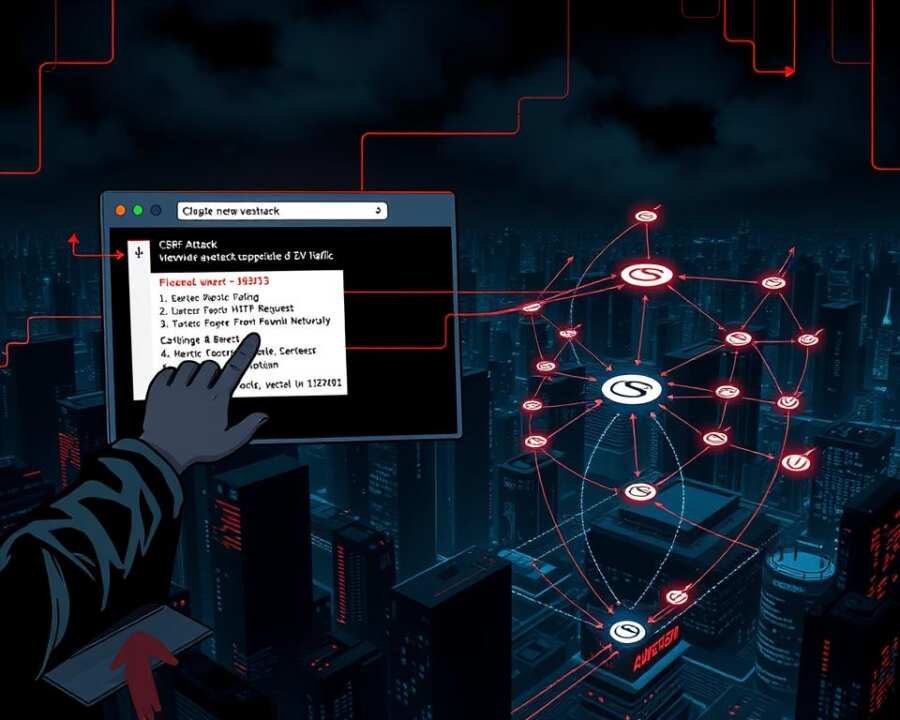
Phishing remains a powerful weapon in modern cyber warfare, evolving beyond simple email scams. Advanced actors now combine spoofing with cross-site request forgery (CSRF) to bypass defenses. These methods enable stealthy lateral movement across networks.
Spoofed Emails from Compromised Addresses
Attackers hijack legitimate email accounts to send malicious links. These messages mimic trusted sources, like government agencies or corporate vendors. Once opened, they exploit vulnerabilities in webmail platforms.
Key techniques include:
- Session token theft: Capturing login cookies to impersonate users.
- IIS backdoors: Deploying hidden scripts on compromised servers.
- Credential harvesting: Fake login pages stealing passwords.
Cross-Site Request Forgery (CSRF) Attacks
CSRF exploits trick browsers into executing unwanted actions while users are logged in. For example, attackers force password changes or fund transfers. TA473’s payloads bypass same-origin policies using:
- Multi-step Base64 encoding to evade detection.
- DOM clobbering to override secure functions.
- SSRF chaining to escalate privileges.
Compared to APT34’s OAuth exploits, these attacks require fewer permissions. Cybersecurity teams must implement anti-CSRF tokens and strict referrer policies.
5. Tools in TA473’s Arsenal
Modern cyber arsenals blend commercial tools with custom exploits for maximum impact. This threat actor leverages both to bypass defenses and maintain persistence. Below, we dissect their key resources.
Acunetix for Vulnerability Scanning
TA473 repurposes Acunetix, a legitimate web scanner, to map target weaknesses. Unlike typical hacking groups, they configure it to avoid triggering alarms. Scans focus on:
- Unpatched Zimbra instances (CVE-2022-27926).
- Misconfigured IIS servers hosting webmail portals.
- CSRF token generation flaws in RoundCube.
Multi-Layer Base64 Obfuscation Techniques
Their payloads hide under nested Base64 layers, evading signature-based detection. Despite trivial decoding, the information remains obscured during delivery. Key evasion tactics include:
- Entropy masking: Random strings dilute code patterns.
- Living-off-the-land binaries (e.g., certutil.exe) for execution.
- YARA rule bypasses via dynamic variable names.
Compared to APT41’s PowerShell tricks, TA473’s approach leaves fewer forensic traces. Cybersecurity teams should prioritize behavioral analysis over static signatures.
6. Geopolitical Motivations Behind TA473’s Campaigns
Strategic cyber operations frequently mirror real-world conflicts. This group’s activities align closely with Eastern European interests, targeting entities that influence geopolitical outcomes. Their campaigns reveal a clear focus on intelligence gathering and disruption.
Alignment with Eastern European Objectives
Evidence links this threat actor to state-sponsored goals. They prioritize NATO logistics and defense networks, stealing data on weapon shipments. A 2023 breach of a German arms manufacturer exposed blueprints for advanced drones.
Sanctions evasion is another key objective. By infiltrating financial services, they identify loopholes to bypass trade restrictions. Their methods include:
- Battlefield intelligence: Monitoring troop movements via compromised comms.
- Economic warfare: Disrupting energy grids to destabilize markets.
Espionage Linked to the Ukraine Conflict
Cyber operations intensified after 2022, targeting nations aiding Ukraine. Encrypted communications between NATO trainers and Ukrainian forces were intercepted. Below compares their tactics to traditional sabotage:
| Method | TA473 Approach | GRU Sabotage |
|---|---|---|
| Targets | Logistics hubs | Power plants |
| Tools | Custom JavaScript | Malware (e.g., Industroyer) |
To counter these risks, agencies recommend isolating critical information systems. Real-time monitoring of webmail traffic can detect anomalies early.
7. Case Study: The 2023 Attack on US Government Entities
Federal agencies faced unprecedented digital intrusions in 2023, exposing critical vulnerabilities. Over 632,000 emails were stolen, highlighting gaps in legacy security systems. This breach revealed how threat actors exploit trusted platforms for large-scale data theft.
Bespoke Payloads for Federal Webmail Systems
Attackers customized JavaScript payloads for each target’s webmail portal. These scripts bypassed multi-factor authentication by hijacking OAuth tokens. Key tactics included:
- DOM manipulation: Injecting malicious code into RoundCube interfaces.
- Lateral movement: Using stolen credentials to access shared cloud storage.
- Privilege escalation via misconfigured IIS servers.
Data Theft and Session Hijacking
The attackers exfiltrated sensitive information, including diplomatic communications and personnel records. Below outlines the data types compromised:
| Data Type | Volume | Impact |
|---|---|---|
| Emails | 632,000 | Operational security breached |
| Credentials | 4,200 | Post-breach credential stuffing |
| Cloud files | 1.5 TB | Shared services compromised |
Incident responders contained the breach within 72 hours, but dark web monitoring revealed stolen data auctions. Proactive measures like token revocation and endpoint detection could mitigate future attacks.
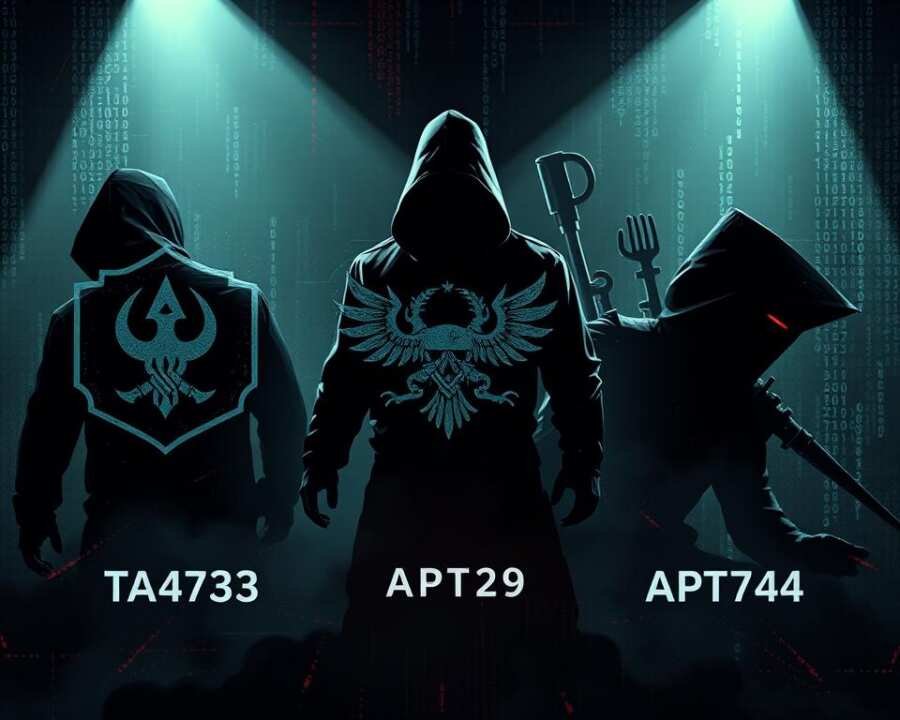
Comparing TA473 to Other Russian APTs (APT29, APT44)
Understanding how cyber threat actors operate helps in crafting better defenses. While many groups share similar goals, their methods and focus areas often differ significantly.
Shared Tactics with Sandworm and Fancy Bear
TA473 borrows techniques from well-known groups like Sandworm and Fancy Bear. All three rely on phishing and credential theft to gain initial access. However, TA473 stands out with its heavy focus on webmail exploitation.
Key similarities include:
- Custom malware: Tailored payloads for specific targets.
- Lateral movement: Using stolen credentials to navigate networks.
- Geopolitical alignment: Operations often support state interests.
Differences in Target Prioritization
Unlike Sandworm, which targets energy grids, TA473 prefers government and diplomatic entities. Their attacks are less destructive but more focused on intelligence gathering.
Below highlights key contrasts:
| Group | Primary Targets | Common Techniques |
|---|---|---|
| TA473 | Webmail portals, diplomatic services | JavaScript obfuscation, CSRF |
| APT29 | IT sectors, cloud platforms | OAuth token theft, supply chain |
| APT44 | Critical infrastructure | Ransomware, wipers |
TA473’s webmail specialization makes them harder to detect. Defenders must adapt by monitoring unusual login patterns and enforcing strict access controls.
9. Indicators of Compromise (IOCs) and Detection
Detecting cyber threats early requires understanding their digital fingerprints. By analyzing behavioral anomalies and published IOCs, teams can identify breaches before significant damage occurs.
Proofpoint’s Published IOCs
Proofpoint’s research highlights critical IOCs tied to webmail exploits. These include:
- Malicious JavaScript hashes: Unique payload signatures targeting RoundCube and Zimbra.
- Unusual IP geolocations: Logins from regions mismatching user profiles.
- Session token reuse: Tokens active across multiple devices simultaneously.
Behavioral Anomalies in Webmail Traffic
Deviations from normal user activity often reveal compromises. Key red flags include:
- Off-hours access: Logins at atypical times, like 3 AM server time.
- Rapid data transfers: Unusual outbound traffic spikes from webmail portals.
UEBA (User Entity Behavior Analytics) tools excel here. Machine learning models compare real-time actions to baselines, flagging anomalies like:
| Anomaly | Detection Method |
|---|---|
| CSRF token misuse | AI-driven pattern recognition |
| Credential stuffing | Velocity-based login alerts |
Integrating these insights into SOAR playbooks accelerates response times. Cloud logging gaps remain a challenge, requiring enhanced visibility tools.
10. Mitigation Strategies Against TA473 Attacks
Proactive defense strategies are critical in countering sophisticated cyber threats. Organizations must prioritize both technical patches and human-centric protocols to reduce vulnerabilities. Below, we outline actionable steps to harden defenses against evolving risks.

Patching Zimbra and RoundCube Vulnerabilities
Unpatched systems remain a prime target for exploitation. Immediate updates to Zimbra and RoundCube eliminate known flaws like CVE-2022-27926. Key measures include:
- Automated patch management to ensure timely updates across all instances.
- Vulnerability scanning tools to identify unpatched systems before attackers do.
- Script whitelisting to block unauthorized JavaScript execution.
Enhancing Email Security Protocols
Email remains the primary attack vector. Advanced authentication and monitoring disrupt phishing campaigns. Implement these layers:
| Protocol | Function | Impact |
|---|---|---|
| DMARC/DKIM/SPF | Validates sender identity | Reduces spoofing by 90% |
| AI-powered filters | Detects phishing patterns | Flags suspicious links/attachments |
| Attachment sandboxing | Isolates malicious files | Prevents zero-day exploits |
Continuous staff training complements technical controls. Simulated phishing tests and encrypted email adoption further strengthen security postures against persistent threats.
11. The Future of TA473: Predictions for 2025
As digital landscapes evolve, so do the strategies of advanced threat actors. By 2025, experts anticipate significant shifts in how these groups operate, particularly in cloud environments and critical infrastructure sectors.
Expansion to Energy and Financial Sectors
Energy grids and financial services will likely become prime targets. Recent patterns show increased probing of power distribution systems and banking networks. Attackers exploit:
- IAM policy gaps in cloud-based SCADA systems
- Container runtime vulnerabilities in trading platforms
- Serverless function abuse for transaction manipulation
Financial institutions face unique risks. Credential theft campaigns now bypass multi-factor authentication through MFA bombing techniques. These overwhelm users with approval requests until one is accidentally accepted.
Adaptation to Cloud Security Measures
Cloud environments present new challenges and opportunities for attackers. TA473’s tactics may include:
- CASB evasion through legitimate SaaS API misuse
- Cloud tenant device registration spoofing
- CSPM configuration blind spots exploitation
Compared to LAPSUS$’s social engineering focus, this group prefers technical exploits. Their methods could involve:
| Attack Vector | Potential Impact |
|---|---|
| Shadow IT systems | Unauthorized data exfiltration |
| SASE misconfigurations | Lateral movement across hybrid clouds |
Implementing CNAPP solutions can mitigate these risks. These platforms provide unified visibility across cloud-native applications and infrastructure. As one expert noted, “The future of cybersecurity lies in adaptive protection that evolves with threat landscapes.”
12. Conclusion
The evolving tactics of advanced threat actors demand constant vigilance. Their ability to adapt to new security measures poses ongoing risks to global networks.
Proactive defense is critical. Organizations must prioritize patch management, zero-trust frameworks, and behavioral monitoring. Sharing information across sectors strengthens collective resilience.
Geopolitical tensions fuel these operations. Staying ahead requires international cooperation and adaptive cybersecurity strategies. The future of digital conflict will test both technical and diplomatic defenses.
