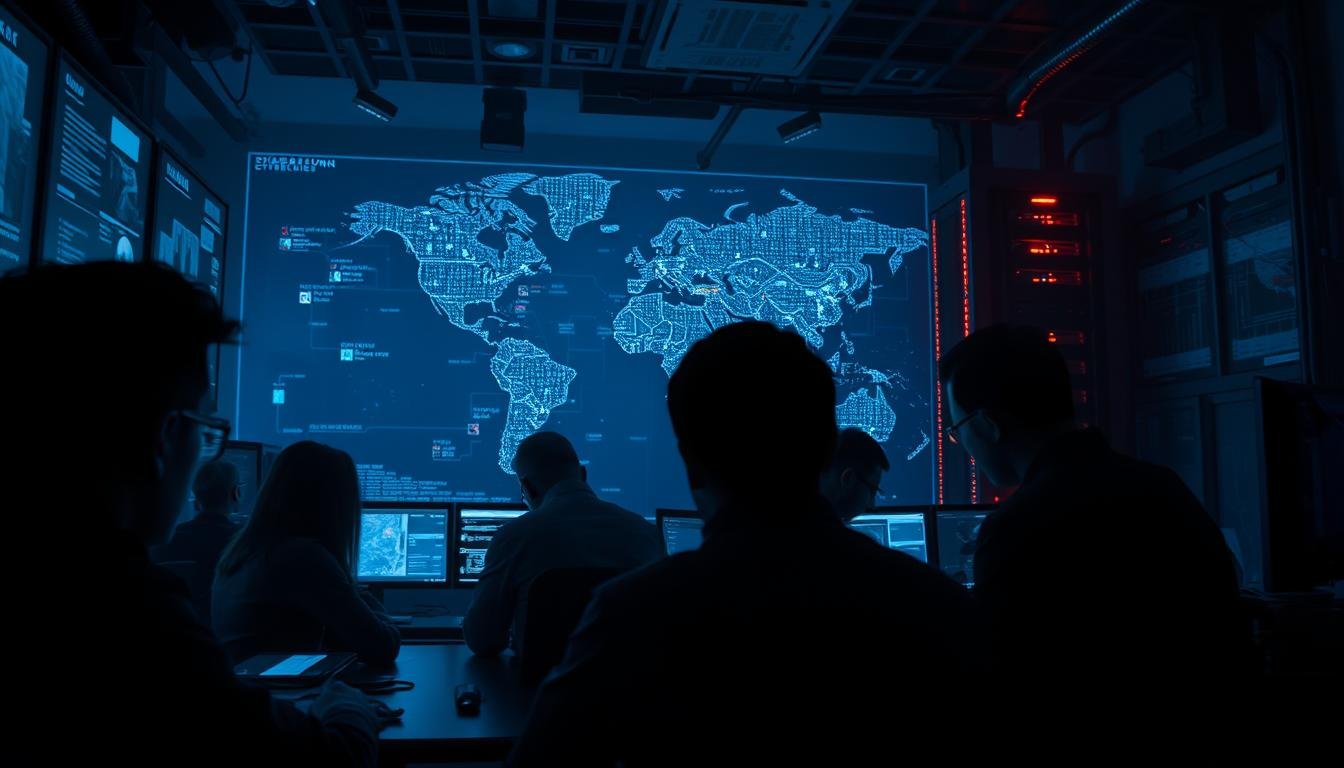
Nearly $1 trillion was the estimated global loss from digital theft in one recent year — a scale that rivals national economies and shows how fast this threat grew.
I joined a cross-border team formed to plan a complex operation against a coordinated criminal group. The task force combined public agencies, private incident responders, and legal counsel to act fast.
You’ll learn how a typical international cybercrime investigation is staged, what phases to expect, and how your organization can engage with law enforcement from first notice to coordinated enforcement.
Digital evidence is fleeting. Response windows for imaging and log preservation are measured in hours. We focused on clear roles, rapid information sharing, and pre-authorized preservation to keep momentum.
Practical steps matter: build logging, keep an incident binder, and establish points of contact for legal and technical support. Early, precise reporting is what turns disruption into seizure and arrest.
Key Takeaways
- Cross-border operations need clear scopes and fast action.
- Human behavior is often the weakest link and a key investigative lead.
- Time-sensitive steps — preserve logs and images within hours.
- Pre-established contacts speed engagement with law and enforcement partners.
- Coordinated deconfliction boosts impact and reduces evidence loss.
- Read more about recent ransomware arrests in a detailed report here.
Why is international cooperation the backbone of today’s cybercrime response?
Cross-border coordination lets agencies and companies act fast to preserve evidence, disrupt infrastructure, and support legal process across countries.
Stopping today’s coordinated online threats requires authorities and companies to act together. Multi-country actors hide tools and servers in different jurisdictions. That makes single-country action ineffective.
U.S. organizations should prepare a concise incident summary for law enforcement with clear indicators. Include timestamps (with time zones), IPs, domains, wallet addresses, and hashes. That level of detail speeds lawful requests abroad.
“Timely, precise information is the currency of cross-border response; it enables partners to move before volatile data disappears.”

Why timing matters: logs rotate and cloud instances deprovision. Preservation first, formal legal steps second. Plan for iterative exchanges and maintain chain of custody.
- Translate complexity: different laws govern subscriber, content, and traffic records.
- Map the flow: preservation, mutual legal assistance, and synchronized takedowns reduce gaps.
- Train people: tabletop exercises cut handling errors and speed response tempo.
| Challenge | Practical Step | Benefit |
|---|---|---|
| Volatile evidence | Immediate preservation and concise incident packet | Protects key artifacts for foreign partners |
| Different legal rules | Use targeted, lawful requests routed via proper channels | Faster access to provider data |
| Distributed infrastructure | Coordinate timing of disruption across countries | Maximizes impact and reduces relocation |
| Human errors | Run cross‑sector exercises and clear SOPs | Improves evidence integrity and response speed |
Inside an international cybercrime investigation: how does a task force operate across countries?
Quick, coordinated steps protect fleeting data and let teams move from triage to enforcement without losing momentum. This section explains how technical teams, counsel, and agencies hand off artifacts, legal requests, and takedown timing in a single synchronized operation.
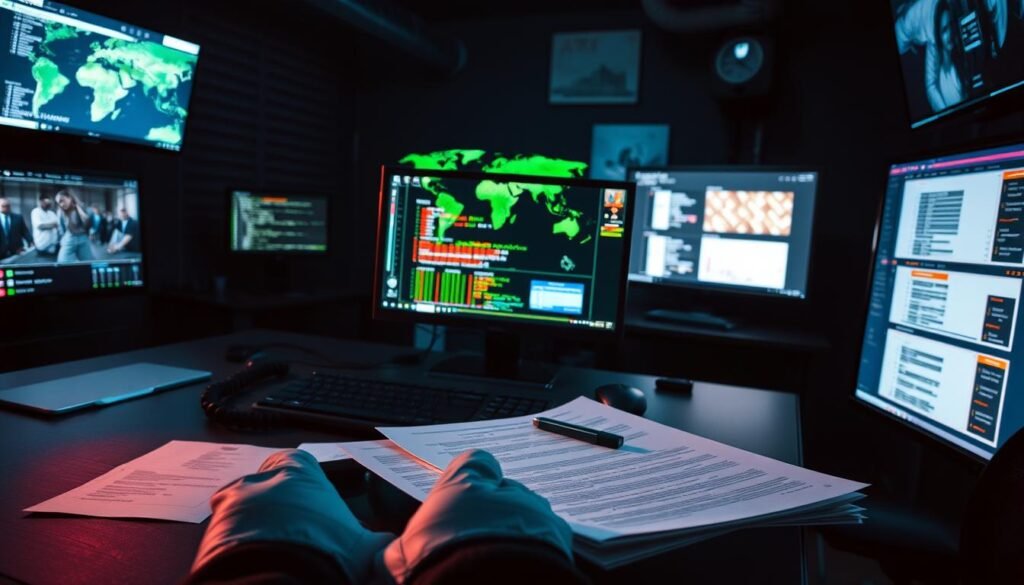
How do teams perform rapid triage and secure volatile evidence?
Start fast. Isolate affected hosts, capture memory and live logs, and copy timestamps. Preserve with service providers immediately while counsel vets scope under applicable law.
Document everything. Time-stamped hashes, chain-of-custody notes, and verified handlers make evidence admissible across borders.
How are authorities coordinated and deconflicted?
Designate a lead agency and a single source of truth. Deconfliction rules prevent parallel actions that could tip off suspects or corrupt evidence.
Use structured templates for indicators and timelines so private partners and law enforcement share high-signal information without overload.
What legal steps and mutual assistance pathways are used?
File preservation requests first, then route formal process through mutual legal assistance where needed. Follow domestic law and respect privacy safeguards.
How are disruption and attribution handled?
Plan sinkholes, seizures, or freezes to a synchronized enforcement window to limit adversary recovery. Corroborate technical leads with business records and communications to avoid misattribution.
“Synchronized action wins windows; careful attribution preserves credibility.”
- Measure outcomes: track dwell time, containment speed, and victims helped.
- Expect anonymity: combine OSINT, blockchain analysis, and financial traces to peel back obfuscation.
Law, policy, and evidence sharing: which frameworks make international cooperation work?
Treaties and protocols give practitioners predictable paths to collect and share digital proof. They balance rapid access to data with procedural safeguards so that action stays lawful and defensible.

What matters now: the United Nations Convention against Cybercrime (UNGA resolution 79/243) frames cross‑border data exchange and human rights protections.
The convention was adopted on December 24, 2024, and opens for signature in Hanoi on October 25–26, 2025, with signatures continuing in New York through December 31, 2026. It enters into force 90 days after forty ratifications.
How do institutions and rules affect practice?
UNODC serves as secretariat and will run the Conference of the States Parties. Its Global Programme offers training and technical support to raise capacity across countries.
Standardized channels speed lawful requests from U.S. counsel and help law enforcement coordinate takedowns, preservation, and transfer of electronic evidence while guarding rights.
- Practical step: consult the UN Convention text when updating retention, notice, and escalation procedures.
- Tip: align internal playbooks with expected treaty mechanisms and IACP guidance to smooth cross‑sector cooperation.
“Clear law and shared processes turn friction into predictable case progress.”
What tools, tradecraft, and human factors shape modern cybercrime—and how do we counter them?
Attack tools have become plug‑and‑play, and that changes how defenders must prioritize people, process, and technology.
Attacker enablement: Commercial exploit kits, phishing kits, and ransomware‑as‑a‑service lower barriers and scale attacks quickly. These offerings let less skilled actors run complex operations with few resources.
People remain the pivot. Social engineering, multi‑factor authentication (MFA) fatigue, and consent‑phishing often bypass technical controls. Targeted training and resilient workflows reduce successful manipulation.
Layered defense works: Deploy phishing‑resistant MFA, least‑privilege access, endpoint detection with behavioral rules, strong email authentication (SPF/DKIM/DMARC), and tested immutable backups.
Share high‑fidelity information—vetted indicators, timelines, and TTPs—with trusted partners and law enforcement to speed collective response and cut repeat victimization.
- Practice incident playbooks and pre‑stage approvals to act in minutes.
- Collect memory, endpoint telemetry, cloud audit logs, and identity events to support cross-border investigations.
- Align security projects to shrink dwell time: centralized logging, automated containment, and attack surface checks.
“Measure mean time to detect, contain, and recover; then iterate controls where results lag.”
What should you do next to prepare for an international investigation?
Prepare today so you can act in minutes, not days, when crucial data begins to decay. Early organization and clear roles make cooperation with partners and authorities effective.
Start with a first‑call list: maintain 24/7 contacts for internal leads, outside counsel, incident responders, and a designated law enforcement point of contact. Pre‑approve evidence workflows so teams know what logs and volatile data to collect and how to preserve them under legal review.
Exercise and refine: run tabletops that simulate cross‑border enforcement timing and deconfliction. Package reports with synchronized timestamps, hashes, and short narratives to speed triage.
For strategy and capacity guidance, consult the INTERPOL strategy guidebook.
FAQ
Why is cross-border cooperation essential for responding to large-scale digital attacks?
Effective response to transnational attacks depends on coordinated legal authority, rapid information exchange, and shared operational resources. Threat actors often use servers, payment rails, and personnel across multiple countries, so single-jurisdiction efforts miss key evidence and containment opportunities. Multilateral channels and trusted law enforcement–private sector partnerships shorten response times and improve attribution and disruption outcomes.
How do task forces handle rapid triage and preserve volatile digital evidence?
Teams prioritize containment, forensic imaging, and chain-of-custody procedures within hours. Rapid triage identifies affected systems and evidence at greatest risk of loss. Investigators use standardized imaging tools, audited logs, and preservation requests to hosting providers to secure volatile memory, cloud artifacts, and network captures before they are altered or deleted.
What does coordinating deconfliction between agencies and private partners look like in practice?
Deconfliction means sharing case priorities and operational windows while avoiding counterproductive actions. It uses liaison officers, secure communication channels, and pre-negotiated operational roles. Private partners provide telemetry and access; law enforcement handles warrants and legal process. Regular briefings and a single incident lead maintain clarity and reduce duplication.
Which legal tools support evidence preservation and cross-border requests?
Investigators rely on mutual legal assistance treaties (MLATs), preservation and preservation-plus-production letters, and expedited preservation orders under national laws. Increasingly, multinational data-sharing mechanisms and direct cooperation agreements with major cloud providers speed access. Proper legal certification and documented chain-of-custody are critical for admissibility in court.
What frameworks and organizations govern multinational evidence sharing and safeguards?
Global cooperation is shaped by treaties and multilateral bodies that set standards and oversight. The UN Office on Drugs and Crime (UNODC), regional police networks, and conventions guide procedures. Human-rights safeguards and judicial oversight ensure lawful process, proportionality, and privacy protections during cross-border exchanges.
What practical steps should U.S. organizations take to support cross-border law enforcement efforts?
Maintain detailed logging and retention policies, enable forensic-ready configurations, and document incident timelines. Establish relationships with legal counsel experienced in cross-border process, designate a law enforcement liaison, and use encrypted channels for sensitive disclosures. Quick, transparent cooperation improves outcomes and helps protect customers.
How are disruption and synchronized enforcement actions planned and executed?
Planning aligns legal windows, operational capabilities, and intelligence sharing among partner countries. Synchronized takedowns require agreed timelines, technical playbooks for seizing infrastructure, and contingency plans for collateral effects. Successful operations balance speed with legal compliance to preserve prosecutable evidence.
What role do human factors play in both attacks and defenses?
People remain the most exploited and the most defensible element. Social engineering, credential reuse, and misconfiguration drive many breaches. Training, strong authentication, least-privilege access, and clear incident reporting channels reduce risk. Behavioral monitoring and incident drills help translate policy into practiced response.
How do off-the-shelf attack kits and evolving threats change investigative tradecraft?
Commodity malware and automated exploit kits standardize attacker methods, making attribution harder but detection more scalable. Investigators adapt by focusing on infrastructure patterns, monetization trails, and operational security mistakes. Threat intelligence sharing and automated analytics speed identification of reuse and cluster attribution.
What international legal developments should practitioners watch for that affect cross-border cooperation?
Watch for new multilateral conventions, updates to evidence-sharing protocols, and jurisdictional rulings affecting data access. Evolving frameworks aim to streamline preservation and production while strengthening procedural safeguards. Staying current with policy changes ensures quicker, lawful cooperation with foreign partners.
If my organization faces a crime spanning multiple countries, what immediate actions should we take?
Preserve all logs and images, isolate affected systems to prevent spread, and notify internal incident responders and legal counsel. Contact relevant law enforcement—local FBI field offices in the U.S. handle transnational cyber matters—and prepare a concise incident timeline and evidence package. Avoid unilateral takedown attempts that could compromise investigations.
How can small businesses contribute useful evidence without compromising operations?
Small firms should collect system snapshots, export relevant logs, and take controlled forensic captures when feasible. Work with a trusted digital forensics vendor or law enforcement to ensure captures are admissible. Limit access to preserved data, maintain documentation of all actions, and coordinate disclosures through counsel or a designated incident lead.
