NASA’s James Webb Space Telescope has given astronomers a remarkable opportunity to look deeper into the universe’s past. By observing a massive region of space known as Pandora’s Cluster, Webb revealed distant galaxies, distorted cosmic structures, and clues about how the earliest galaxies developed.
On February 15, 2023, NASA released a detailed infrared image of the region containing approximately 50,000 sources of light. What makes this achievement particularly interesting is that Webb used the gravity of enormous galaxy clusters as a natural extension of its own optical capabilities.
Subsequent research, including findings announced in June 2025, has made this region even more scientifically valuable. From studying ancient galaxies to investigating how the early universe became transparent, Pandora’s Cluster demonstrates what happens when advanced telescope technology meets the extraordinary physics of space.

Key Takeaways
- NASA’s James Webb Space Telescope revealed approximately 50,000 infrared light sources in its panoramic image of Pandora’s Cluster.
- Pandora’s Cluster, officially known as Abell 2744, is located approximately four billion light-years away.
- Gravitational lensing allows Webb to observe distant galaxies that would otherwise be difficult to detect.
- Webb’s infrared cameras and spectroscopic instruments help astronomers investigate the formation and composition of early galaxies.
- Research published in 2025 suggests that small, rapidly star-forming galaxies may have played a major role in transforming the early universe.
Helpful Products at a Glance
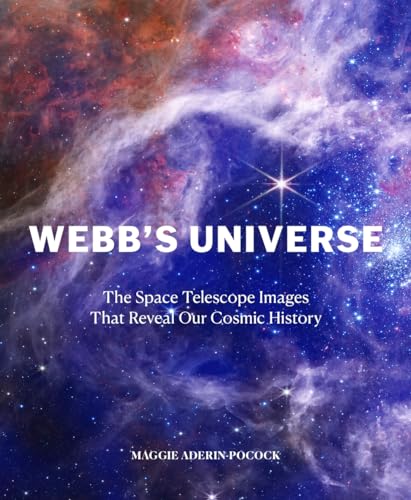
For readers interested in exploring the science behind Webb’s remarkable space images, the following illustrated astronomy book offers an accessible introduction.
What Is Pandora’s Cluster?
Pandora’s Cluster, also called Abell 2744, is an enormous collection of galaxies located in the southern constellation Sculptor. It is an active region where several massive galaxy clusters are merging into an even larger cosmic structure.
Galaxy clusters are among the largest structures held together by gravity in the universe. Pandora’s Cluster contains galaxies, extremely hot gas, and enormous quantities of dark matter.
The interaction between these components makes Abell 2744 particularly interesting to astronomers. Unlike an isolated galaxy, this region provides opportunities to investigate cosmic collisions, dark matter distribution, and the development of large-scale structures.
However, its greatest advantage for Webb is its enormous gravitational influence. The cluster can bend light traveling from galaxies located far behind it, making those otherwise faint objects easier to observe.
What Did the James Webb Telescope Discover in Pandora’s Cluster?
Webb’s observations provided a much broader and more detailed view of Pandora’s Cluster than earlier observations of its central region.
According to NASA’s original discovery announcement, astronomers combined four separate Webb observations into a panoramic image representing approximately 50,000 sources of near-infrared light.
Several important discoveries and research opportunities emerged from the observations:
- Previously difficult-to-detect galaxies: Webb revealed numerous faint background galaxies whose light had been amplified by the cluster.
- Additional gravitational lensing regions: Astronomers gained a more detailed view of areas outside the previously studied central core.
- Distorted galaxy structures: Numerous background galaxies appeared as curved or elongated features because gravity had altered the paths of their light.
- Early galaxy formation: The observations provided researchers with new opportunities to investigate galaxies that existed during the universe’s early history.
- Improved cosmic mapping: The abundance of visible background objects helped researchers develop more detailed models of the cluster’s gravitational influence.
Importantly, the figure of 50,000 refers to detected light sources, not necessarily 50,000 unique, newly discovered galaxies. Some sources may represent foreground objects or multiple gravitationally lensed images of the same galaxy.
How Does Gravitational Lensing Help Webb See Deeper Into Space?
Imagine trying to read something printed in extremely small letters. A magnifying glass bends light, making the letters appear larger and easier to see. A massive galaxy cluster can produce a somewhat similar effect, although the underlying physics is different.
According to Einstein’s general theory of relativity, massive objects curve the space and time around them. Light traveling through this curved region follows a different path than it would through empty space.
Pandora’s Cluster acts as a natural cosmic lens, magnifying the light from some galaxies positioned behind it. Webb can take advantage of this effect to study objects that might otherwise remain beyond its detection limits.

The process works broadly as follows:
- A distant galaxy emits light that travels across the universe.
- The light passes near the massive Pandora’s Cluster.
- The cluster’s gravity changes the path of the traveling light.
- Webb detects the resulting magnified or distorted image.
- Astronomers use mathematical models to estimate the original properties of the distant galaxy.
Gravitational lensing is not a perfect magnifying system. It can stretch galaxies, change their apparent brightness, and produce multiple images of a single object.
These effects must be accounted for before researchers can reliably estimate a galaxy’s size, brightness, or stellar mass.
What Technology Makes the James Webb Telescope So Powerful?
Gravitational lensing is only part of the explanation. Webb’s enormous mirror, infrared sensitivity, specialized detectors, and advanced cooling systems make it particularly effective at investigating the distant universe.
1. A Massive Segmented Primary Mirror
Webb features a primary mirror approximately 6.5 meters in diameter, made from 18 hexagonal, gold-coated beryllium segments.
The large mirror collects light from extremely faint objects. Its gold coating is especially useful for reflecting the infrared wavelengths that Webb was designed to observe.
The individual mirror segments can be precisely adjusted so that they function together as a single optical system.

2. Near-Infrared Camera (NIRCam)
NIRCam is one of Webb’s primary imaging instruments. It captures near-infrared light, including radiation from distant galaxies that has been stretched to longer wavelengths as the universe expands.
For the Pandora’s Cluster observations, researchers accumulated approximately 30 hours of observing time to build the detailed infrared mosaic.
Long exposures allow more photons from faint objects to reach the detectors, helping astronomers distinguish signals that would otherwise be difficult to separate from background noise.
3. Near-Infrared Spectrograph (NIRSpec)
Capturing an image tells astronomers where an object appears and how bright it is through different filters. However, understanding its physical properties often requires more detailed measurements.
NIRSpec separates incoming light into different wavelengths. By studying the resulting spectrum, astronomers can investigate a galaxy’s chemical composition, redshift, and other characteristics.
Its multi-object capabilities also allow researchers to collect spectra from numerous selected targets during an observation.
4. Advanced Thermal Protection
Infrared astronomy requires careful temperature control because warm objects emit infrared radiation themselves. Excess heat from the telescope could interfere with its ability to detect faint cosmic signals.
Webb uses a five-layer sunshield to protect its sensitive optical systems from heat originating from the Sun, Earth, and Moon. Its operating environment near the second Sun-Earth Lagrange point, known as L2, supports this thermal design.
NASA provides additional information about these technologies in its James Webb telescope overview and scientific instruments guide.
James Webb vs. Hubble: Why Are Webb’s Images Different?
The Hubble Space Telescope has already provided valuable observations of Pandora’s Cluster. Webb builds upon that foundation rather than making Hubble’s scientific contributions irrelevant.
The two observatories have different optical designs and wavelength capabilities, making them useful for complementary scientific investigations.
| Feature | James Webb Space Telescope | Hubble Space Telescope |
|---|---|---|
| Primary mirror diameter | 6.5 meters | 2.4 meters |
| Primary observation wavelengths | Near-infrared and mid-infrared | Ultraviolet, visible, and near-infrared |
| Operating location | Near Sun-Earth L2 | Low Earth orbit |
| Early universe observations | Particularly suited to highly redshifted galaxies | Important observations across visible and near-infrared wavelengths |
| Thermal protection | Large five-layer sunshield and specialized cooling systems | Thermal control designed for Earth-orbit operations |
| Pandora’s Cluster research | Deep infrared imaging and spectroscopy across multiple lensing regions | Earlier detailed observations that established an important research foundation |
Webb’s biggest advantage for studying the earliest galaxies is its ability to detect faint infrared light. Hubble remains particularly valuable for ultraviolet and visible-light observations that Webb cannot perform across the same wavelength ranges.
Combining observations from both telescopes can give researchers a more complete understanding of galaxies than relying on either observatory alone.
How Webb Reveals Galaxies From the Early Universe
Looking into deep space also means looking backward in time. Because light travels at a finite speed, astronomers observe distant objects as they existed when their light began traveling toward us.
As the universe expands, the wavelengths of traveling light stretch. Astronomers call this effect cosmological redshift.
Light originally emitted at visible or ultraviolet wavelengths by an ancient galaxy can eventually reach Webb as infrared radiation. This is one reason infrared instruments are so important for studying the earliest periods of cosmic history.
In November 2023, a study published in The Astrophysical Journal Letters presented observations of two exceptionally distant galaxy candidates identified through the UNCOVER survey.
Researchers reported a robust redshift measurement of approximately 12.39 for one galaxy and a plausible measurement of approximately 13.08 for the other. Their analysis suggested that these systems were young, actively forming stars, and relatively low in heavier chemical elements.
These observations help scientists investigate how galaxies assembled during the first few hundred million years of cosmic history. They also demonstrate why spectroscopy is essential: a promising image alone does not always establish a galaxy’s distance with sufficient confidence.
Pandora’s Cluster and the Mystery of Dark Matter
Dark matter does not emit, absorb, or reflect light in the ordinary way that stars and visible cosmic material do. Astronomers instead investigate its presence through its gravitational effects.
Galaxy clusters provide particularly useful environments for this research because they contain enormous amounts of matter, much of which cannot be directly observed through emitted light.
By analyzing the positions and shapes of gravitationally lensed background galaxies, researchers can estimate how mass is distributed throughout Pandora’s Cluster.
This approach helps astronomers investigate:
- How dark matter is distributed within merging galaxy clusters.
- How visible galaxies relate to the cluster’s overall mass distribution.
- How gravitational structures develop over cosmic time.
- How well existing models explain the observed gravitational distortions.
Webb does not directly photograph dark matter. Instead, its detailed observations provide evidence of how the cluster’s total mass influences surrounding space and passing light.

What Did NASA Discover About Pandora’s Cluster in 2025?
The scientific value of Pandora’s Cluster extended well beyond the original 2023 image release.
On June 11, 2025, NASA announced further findings from the UNCOVER program involving small galaxies that may have helped transform the early universe.
Researchers identified 83 small, intensely star-forming galaxies seen as they existed when the universe was approximately 800 million years old. Twenty were selected for more detailed spectroscopic investigation.
How Small Galaxies May Have Changed the Universe
During an early period of cosmic history, large amounts of neutral hydrogen gas filled the universe. This gas absorbed certain wavelengths of radiation, limiting how far that light could travel.
Over time, energetic radiation removed electrons from hydrogen atoms, transforming much of the surrounding gas into an ionized state. Astronomers call this transition cosmic reionization.
Scientists have long investigated which objects produced enough radiation to drive this process. Large galaxies, smaller galaxies, and actively feeding black holes have all been considered possible contributors.
Webb’s Pandora’s Cluster observations strengthen the possibility that small galaxies experiencing intense bursts of star formation played a substantial role.
These galaxies may have generated enough ultraviolet radiation to contribute significantly to reionization, provided a sufficient proportion of that radiation escaped into surrounding space.
The amount of escaping radiation remains an important uncertainty. The findings offer compelling evidence for the role of small galaxies, rather than definitive proof that they were the only objects responsible.
What Is the UNCOVER Research Program?
UNCOVER stands for Ultradeep NIRSpec and NIRCam ObserVations before the Epoch of Reionization. It is a scientific observing program designed to investigate distant galaxies using Webb’s infrared capabilities.
Pandora’s Cluster is particularly suitable for the program because its gravitational lensing provides access to faint background galaxies across a valuable area of the sky.
Researchers combine imaging, spectroscopy, gravitational lens models, and observations from other telescopes to investigate how galaxies formed and evolved.
The program also makes scientific data available to the wider research community. Astronomers can access catalogs, imaging products, lens models, and other resources through the official JWST UNCOVER project website.
This collaborative approach allows researchers to develop new investigations without requiring an entirely separate telescope observation for every scientific question.
Has the James Webb Telescope Overturned Our Understanding of the Universe?
Webb has certainly challenged some expectations about how quickly galaxies developed during the early universe. Its observations have revealed surprisingly mature structures, bright distant galaxies, and a greater variety of early galactic environments than some models predicted.
However, these discoveries should not be confused with evidence that the Big Bang never happened or that established physics has been completely disproven.
Unexpected observations are an important part of scientific progress. They allow researchers to identify weaknesses in existing models, improve their assumptions, and develop explanations that better match the available evidence.
Pandora’s Cluster is valuable because it provides new observations against which scientists can test theories of galaxy formation, dark matter, star formation, and cosmic evolution.
How Can You Explore James Webb’s Discoveries Yourself?
You do not need to purchase an expensive telescope or specialized astronomy equipment to explore Webb’s discoveries. NASA provides publicly accessible scientific images, mission explanations, and educational resources online.
The official James Webb Space Telescope mission website is a useful starting point for exploring images, scientific announcements, and explanations of the observatory’s technology.
If you prefer learning through illustrated books, a dedicated guide can help connect the spectacular images with the science behind them.
Webb’s Universe by Maggie Aderin-Pocock
Webb’s Universe: The Space Telescope Images That Reveal Our Cosmic History is an illustrated astronomy book by space scientist and science communicator Maggie Aderin-Pocock.
According to its official publisher, the hardcover edition contains 224 pages and 100 full-color illustrations. It explores Webb’s observations and explains the astronomical concepts behind its remarkable images.
It is particularly suitable for readers who want to understand distant galaxies, stellar evolution, nebulae, and the broader scientific achievements of the Webb mission without relying entirely on technical research papers.
The main limitation is that the book was published in October 2024, so it cannot cover subsequent discoveries such as NASA’s June 2025 Pandora’s Cluster findings. Current Amazon availability and listing images are unconfirmed, so check the product listing before ordering.
For ongoing developments, NASA’s free mission resources remain an important companion to any printed astronomy guide.
Frequently Asked Questions
Why is Abell 2744 called Pandora’s Cluster?
Its nickname reflects the complex and unexpected scientific phenomena associated with the region. Like the story of Pandora opening a container of unknown contents, studying this massive galaxy cluster has revealed numerous surprises and new scientific questions.
Can a normal home telescope see Pandora’s Cluster?
Pandora’s Cluster is an extremely challenging target for amateur astronomy because of its distance and faintness. Ordinary home telescopes cannot reproduce Webb’s deep infrared observations or reveal the same level of detail in distant background galaxies.
Are James Webb’s images artificially colored?
Webb detects infrared wavelengths that human eyes cannot see directly. Scientists assign visible colors to observations collected through different infrared filters, creating images that allow people to distinguish structures and wavelength-dependent features. The colors are processed representations of genuine astronomical measurements.
Can the James Webb Space Telescope see the Big Bang?
No. Webb can investigate galaxies and other objects that existed relatively early in cosmic history, but it cannot directly observe the Big Bang itself. Studying much earlier periods requires other observational methods, including measurements of the cosmic microwave background.
Does every curved object in Pandora’s Cluster represent a separate galaxy?
Not necessarily. Gravitational lensing can create several apparent images of the same distant galaxy. Astronomers compare their properties and use gravitational lens models to determine whether the observed features belong to separate objects or repeated images.
Conclusion
NASA’s James Webb Space Telescope has transformed Pandora’s Cluster into an extraordinary window into cosmic history. Its powerful infrared instruments, combined with the cluster’s natural gravitational lensing, allow astronomers to investigate galaxies and processes that were previously much harder to study.
The original 2023 image revealed approximately 50,000 infrared light sources, while subsequent investigations provided valuable clues about early galaxy development and the possible role of small galaxies in cosmic reionization.
Webb’s greatest achievement in Pandora’s Cluster is not simply producing a spectacular image. It is giving scientists the measurements they need to investigate how the universe developed into the complex cosmic environment we observe today.
