

A campground electrical hookup may look perfectly normal, but that doesn’t mean the electricity coming from it is safe. Low voltage, damaged wiring, power surges, and loose electrical connections can put your RV’s air conditioner, refrigerator, converter, and other expensive electronics at risk.
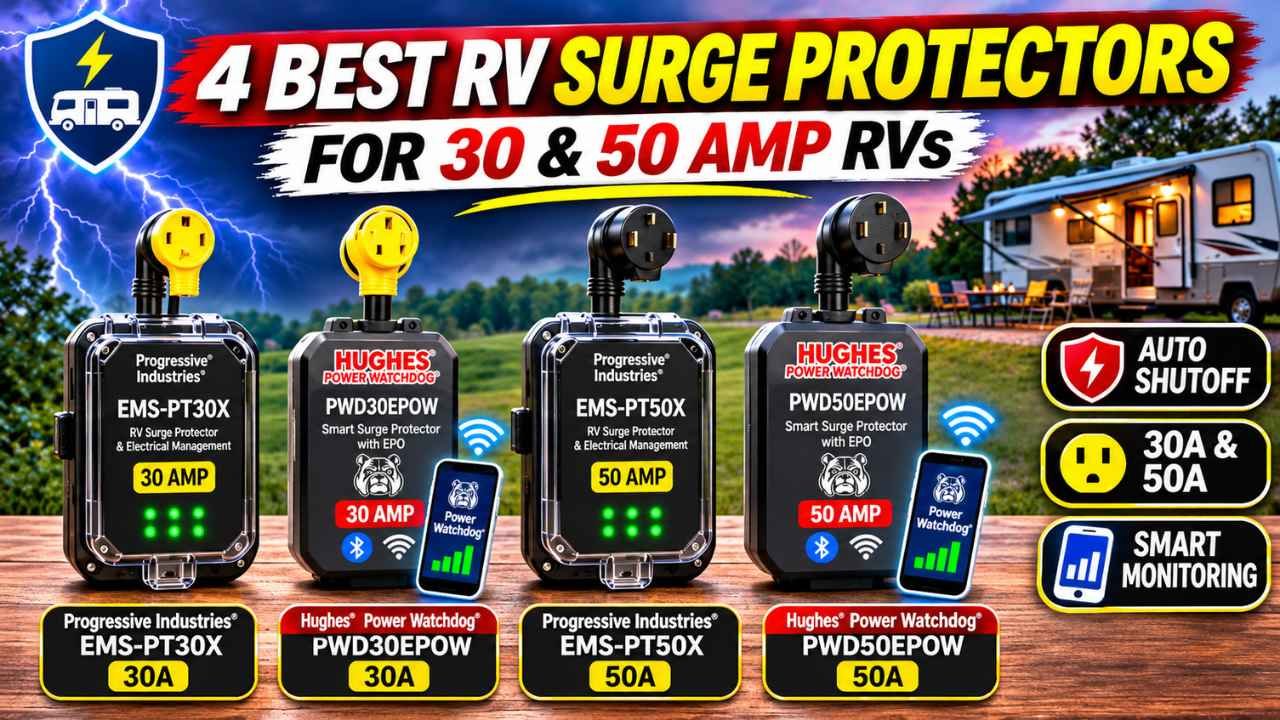
The best RV surge protector for most owners is a full electrical management system (EMS) with automatic power shutoff, rather than a basic surge protector. Models such as the Progressive Industries EMS-PT30X and Hughes Power Watchdog Gen II offer protection against a wider range of electrical problems.
However, choosing the right model depends on whether your RV uses 30-amp or 50-amp service, how frequently you travel, and whether you want smartphone monitoring. This guide compares four portable models using their documented specifications, protection capabilities, and practical differences rather than hands-on test results. Current Amazon stock and pricing may vary.

Key Takeaways
- A full RV electrical management system offers broader protection than a basic surge protector, including automatic disconnection during specified voltage and wiring faults.
- Choose a 30-amp or 50-amp surge protector based on your RV’s electrical service, not simply the campground outlet.
- Progressive Industries EMS models are excellent choices for owners who prefer straightforward digital displays without smartphone apps.
- Hughes Power Watchdog Gen II EPO models offer Wi-Fi, Bluetooth, energy monitoring, and replaceable surge modules.
- No surge protector guarantees complete protection against lightning, electrical fires, or every possible wiring problem.
Helpful Products at a Glance
Best Overall for 30-Amp RVs: Progressive Industries EMS-PT30X, a straightforward electrical management system with automatic shutoff and a built-in digital display.
- ELECTRONIC SAFETY MAINTAINED: Protects RV electronics from voltage fluctuations and power surges; includes built-in electrical management system for safe operation; supports 30 Amp systems
- SURGE PROTECTION FOR RV: Rated for 30 Amp and 120 V with 3,600 W capacity; absorbs surges up to 1,790 joules; helps prevent damage to RV appliances and equipment

Best Smart 30-Amp RV Surge Protector: Hughes Power Watchdog Gen II PWD30EPOW, ideal for owners who want smartphone monitoring and a replaceable surge module.
- Enhanced Safety Alerts: Stay ahead of electrical issues by receiving timely wireless fault alerts, ensuring your camper is always protected from unexpected power anomalies.
- Stay Connected Anywhere: Wifi enabled monitoring keeps you informed of your camper essentials with voltage meter data anytime, anywhere-perfect for the modern camper must haves in RV accessories.

Best Overall for 50-Amp RVs: Progressive Industries EMS-PT50X, designed for larger campers and motorhomes that need comprehensive shore power monitoring.
- ELECTRONIC SAFETY MAINTAINED: Shields RV electronics from voltage fluctuations and power surges; helps protect appliances during travel; supports safe and reliable power management for 50 Amp systems
- HIGH SURGE PROTECTION: Rated for 50 Amp and 120-240 V with 12,000 W capacity; absorbs surges up to 3,580 joules; helps protect RV electronics from costly damage

Best Premium Smart 50-Amp RV Surge Protector: Hughes Power Watchdog Gen II PWD50EPOW, offering advanced monitoring, automatic disconnection, and remote connectivity.
- Enhanced Safety Alerts: Stay ahead of electrical issues by receiving timely wireless fault alerts, ensuring your camper is always protected from unexpected power anomalies.
- Stay Connected Anywhere: Wifi enabled monitoring keeps you informed of your camper essentials with voltage meter data anytime, anywhere-perfect for the modern camper must haves in RV accessories.

What Does an RV Surge Protector Actually Do?
An RV surge protector connects between your recreational vehicle and an external electricity supply, commonly called shore power. Its purpose is to reduce the risk of electrical damage caused by problems originating outside your RV.
A basic surge protector absorbs or redirects short voltage spikes. More advanced devices monitor the incoming electricity continuously and disconnect the RV when certain dangerous conditions occur.
Depending on the model, an RV electrical protection device may help protect against:
- Power surges: Brief increases in voltage that can damage sensitive electronic components.
- Low voltage: Insufficient electrical voltage that may cause certain appliances and motors to overheat or operate poorly.
- High voltage: Sustained excessive voltage that can damage electrical equipment.
- Reverse polarity: A wiring problem in which electrical conductors are incorrectly connected.
- Open ground: A missing or interrupted protective grounding connection.
- Open neutral: A potentially dangerous interruption of the neutral conductor, especially on 50-amp RV connections.
- Abnormal electrical frequency: Electricity operating outside the frequency range supported by certain protection devices.
Not every product marketed as an RV surge protector provides all these protections. Some inexpensive models only offer surge suppression and basic wiring indicators. Understanding that difference is more important than choosing the product with the largest advertised joule rating.
RV Surge Protector vs. Electrical Management System: Which Is Better?
Although manufacturers and retailers sometimes use the terms interchangeably, a basic surge protector and a full electrical management system perform different jobs.
Imagine arriving at a campground during a summer heat wave. Numerous RVs are running their air conditioners, and the electrical voltage at your campsite begins dropping. A basic surge protector may do nothing because a voltage drop is not a power surge. An appropriately equipped EMS can detect sustained low voltage and disconnect your RV.
| Protection or Feature | Basic Surge Protector | Full RV EMS |
|---|---|---|
| Power surge protection | Yes | Yes |
| Low-voltage shutoff | Usually no | Typically yes |
| High-voltage shutoff | Usually no | Typically yes |
| Wiring fault detection | Varies by model | Typically more comprehensive |
| Continuous voltage monitoring | Limited or unavailable | Typically yes |
| Automatic power restoration | Usually unavailable | Available on many models |
| Purchase cost | Generally lower | Generally higher |
| Best use | Basic electrical protection | Broader shore power protection |
The Family RV Association’s guide to RV power protection explains why voltage abnormalities and wiring faults deserve particular attention when connecting an RV to campground electricity.
For most RV owners, the additional functions of an EMS justify considering the higher purchase cost. A surge-only device is better than having no surge protection, but it should not be mistaken for comprehensive electrical monitoring.
Do You Need a 30-Amp or 50-Amp RV Surge Protector?
Before comparing brands, check your RV’s shore power cord and electrical specifications. The amperage determines which type of protection device you should purchase.
30-Amp RV Electrical Service
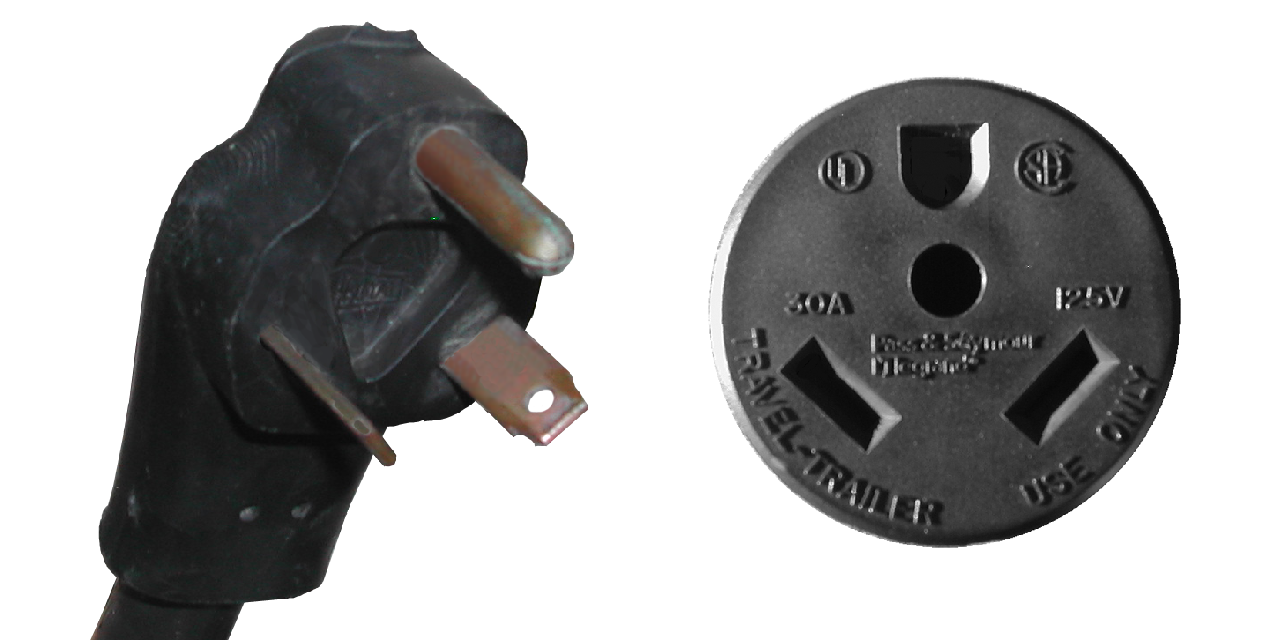
A standard American 30-amp RV connection uses a three-prong TT-30 plug and supplies approximately 120 volts. Its nominal maximum power capacity is 3,600 watts.
This type of connection is commonly found on travel trailers, smaller motorhomes, and campers with more modest electrical demands. Running several high-power appliances at the same time can exceed the available electrical capacity.
50-Amp RV Electrical Service
A standard 50-amp RV connection uses a four-prong plug and normally provides two 120-volt supply legs. Together, they offer a nominal maximum power capacity of 12,000 watts.
Larger fifth wheels and motorhomes commonly use this arrangement to support multiple air conditioners, residential-style appliances, and other electrical equipment.
| Specification | 30-Amp RV | 50-Amp RV |
|---|---|---|
| Typical plug | Three prongs | Four prongs |
| Nominal supply voltage | 120V | 120/240V |
| Nominal power capacity | 3,600 watts | 12,000 watts |
| Common RV types | Travel trailers and smaller campers | Large motorhomes and fifth wheels |
| Recommended protector | 30-amp RV EMS | 50-amp RV EMS |
Never connect a standard 120-volt, 30-amp RV to a 240-volt outlet simply because the outlets appear similar. An incorrect connection can severely damage the RV’s electrical system. If you are unsure about an outlet, have it checked by a qualified electrician.
Best RV Surge Protectors Compared
The following four models combine surge suppression with automatic electrical fault protection. They cover both common American RV service types and offer a choice between traditional digital monitoring and connected smart features.
| RV Surge Protector | Amperage | Automatic Shutoff | Smartphone Monitoring | Best For |
|---|---|---|---|---|
| Progressive Industries EMS-PT30X | 30A | Yes | No | Most 30-amp RV owners |
| Hughes Power Watchdog PWD30EPOW | 30A | Yes | Wi-Fi and Bluetooth | Smart monitoring and frequent travel |
| Progressive Industries EMS-PT50X | 50A | Yes | No | Traditional 50-amp electrical protection |
| Hughes Power Watchdog PWD50EPOW | 50A | Yes | Wi-Fi and Bluetooth | Premium connected protection |
1. Progressive Industries EMS-PT30X — Best Overall 30-Amp RV Surge Protector
The Progressive Industries EMS-PT30X is a strong starting point for anyone who wants comprehensive electrical protection without dealing with smartphone apps, wireless connections, or complicated settings.
It is a portable 30-amp electrical management system that combines surge protection with continuous monitoring of incoming shore power. Its built-in digital display shows important electrical readings and fault information directly on the device.
According to the Progressive Industries EMS instruction manual, the EMS-PT30X has a surge protection rating of 1,790 joules and monitors high voltage, low voltage, reverse polarity, open ground, open neutral, and abnormal electrical frequency.
- ELECTRONIC SAFETY MAINTAINED: Protects RV electronics from voltage fluctuations and power surges; includes built-in electrical management system for safe operation; supports 30 Amp systems
- SURGE PROTECTION FOR RV: Rated for 30 Amp and 120 V with 3,600 W capacity; absorbs surges up to 1,790 joules; helps prevent damage to RV appliances and equipment
- POWERFUL FAULT DETECTION: Guards against over and under voltage, open ground and neutral, reverse polarity, miswired pedestal, accidental 240 V, surge failure, and AC frequency issues; supports 30 Amp RV systems
- OUTDOOR DURABILITY: Withstands harsh conditions using all weather shield assembly and thermal protection; includes tough Lexan housing; integrated display ensures usability in low light
Why Choose the Progressive Industries EMS-PT30X?
Its main advantage is simplicity. You can inspect electrical readings directly at the campground pedestal without pairing a phone or relying on an internet connection.
The system also incorporates a 136-second power restoration delay. This helps avoid restarting an air conditioning compressor immediately after an electrical interruption.
For an owner who simply wants dependable, automatic electrical monitoring without connected features, this model offers a sensible balance of capability and usability.
Pros
- Automatic disconnection during specified electrical faults.
- Built-in digital display with electrical readings and error codes.
- Delayed power restoration to help protect air conditioning compressors.
- Weather-resistant housing designed for outdoor use.
- Portable design with no permanent RV installation required.
Cons
- No Bluetooth or Wi-Fi monitoring.
- Power restoration delay may feel lengthy when connecting to a campsite.
- Does not offer the same convenient replaceable surge module design as the Power Watchdog Gen II.
Who should buy it? Owners of 30-amp travel trailers, campers, and smaller motorhomes who prioritize automatic electrical protection over smartphone features.
2. Hughes Power Watchdog Gen II PWD30EPOW — Best Smart 30-Amp RV Surge Protector
The Hughes Power Watchdog Gen II PWD30EPOW is a more feature-rich alternative for RV owners who want to monitor their electrical system without repeatedly walking outside to inspect the power pedestal.
It supports both Bluetooth and Wi-Fi connectivity, allowing users to monitor electrical readings through a compatible smartphone app. Bluetooth provides local connectivity, while Wi-Fi enables remote monitoring when the necessary network and internet connections are available.
The important feature is Emergency Power Off, or EPO. This allows the device to disconnect the RV automatically during supported electrical faults rather than simply displaying a warning.
- Enhanced Safety Alerts: Stay ahead of electrical issues by receiving timely wireless fault alerts, ensuring your camper is always protected from unexpected power anomalies.
- Stay Connected Anywhere: Wifi enabled monitoring keeps you informed of your camper essentials with voltage meter data anytime, anywhere-perfect for the modern camper must haves in RV accessories.
- Replaceable Surge Module for Lasting Value: Save time and money by simply swapping out the surge module after a spike; this innovation means no need to replace the entire power surge protector. A sustainable, cost-effective choice in power management.
- Unmatched Weather Resistance: Built with IP65 water-resistant heavy-duty construction, this smart surge protector stands resilient against harsh weather, giving outdoor enthusiasts peace of mind during adventures, wherever nature's challenges lead you.
What Makes the Power Watchdog Gen II Different?
According to the official Power Watchdog Gen II 30-amp product specifications, this model disconnects power when voltage drops below 104 volts or rises above 132 volts. It can restore the electrical connection after acceptable conditions remain stable for 90 seconds.
Another useful feature is its replaceable surge module. If a surge damages the protective module without damaging other parts of the device, an appropriate replacement module may allow the unit to return to service without replacing the entire protector.
Its illuminated connection compartment also makes nighttime hookups easier. The enclosed receptacle design and locking provisions are useful additions for owners who frequently move between campgrounds.
Pros
- Bluetooth and Wi-Fi smartphone monitoring.
- Automatic electrical fault disconnection.
- Replaceable surge protection module.
- Electricity consumption monitoring.
- Illuminated, lockable connection compartment.
- Fault notifications through the companion app when connectivity permits.
Cons
- More expensive positioning than many conventional surge protectors.
- Remote monitoring depends on reliable network connectivity.
- Some advanced functions require familiarity with the smartphone app.
Who should buy it? Frequent travelers, long-term campers, and technology-focused 30-amp RV owners who value remote alerts, electrical monitoring, and replaceable surge protection components.
3. Progressive Industries EMS-PT50X — Best Overall 50-Amp RV Surge Protector
Larger RVs often contain more expensive electrical equipment and use two separate supply legs. That makes monitoring the incoming power particularly important, especially when staying at older campgrounds or unfamiliar RV parks.
The Progressive Industries EMS-PT50X is the 50-amp counterpart to the EMS-PT30X. It provides automatic electrical protection, displays electrical readings, and monitors faults without requiring an internet connection.
The manufacturer specifies a 3,580-joule surge protection rating. The system also monitors the electrical supply across both legs, providing information that is particularly useful when investigating electrical problems in a larger RV.
- ELECTRONIC SAFETY MAINTAINED: Shields RV electronics from voltage fluctuations and power surges; helps protect appliances during travel; supports safe and reliable power management for 50 Amp systems
- HIGH SURGE PROTECTION: Rated for 50 Amp and 120-240 V with 12,000 W capacity; absorbs surges up to 3,580 joules; helps protect RV electronics from costly damage
- ADVANCED FAULT DETECTION: Protects against over and under voltage, reverse polarity, and surge failure; helps maintain safe RV electrical operation
- BUILT FOR OUTDOOR USE: Features all weather shield assembly and thermal protection; includes durable Lexan housing for harsh conditions; integrated display and LED indicators support low visibility use
Why Is Open Neutral Protection Important?
An interrupted neutral connection can create a particularly serious problem on a standard 50-amp RV supply. Instead of maintaining the expected voltage across each 120-volt circuit, electrical loads may experience an uneven voltage distribution.
This can expose some equipment to dangerously high voltage while other equipment receives insufficient voltage.
The EMS-PT50X includes open neutral detection and other protective functions designed to prevent power from reaching the RV under specified unsafe conditions. Like its 30-amp counterpart, it also uses a 136-second restoration delay.
Pros
- Designed specifically for 50-amp RV electrical service.
- Monitors both incoming electrical supply legs.
- Automatic high-voltage and low-voltage protection.
- Built-in display with electrical readings and diagnostic codes.
- Portable installation without smartphone requirements.
Cons
- No remote smartphone notifications.
- Externally mounted equipment requires appropriate security and weather precautions.
- Less convenient for owners who want to monitor electricity consumption from inside their RV.
Who should buy it? Owners of 50-amp motorhomes and fifth wheels who prefer traditional electrical monitoring and comprehensive automatic fault protection.
4. Hughes Power Watchdog Gen II PWD50EPOW — Best Premium Smart 50-Amp RV Surge Protector
The Hughes Power Watchdog PWD50EPOW combines 50-amp shore power protection with the connected features of the second-generation Power Watchdog lineup.
It is particularly appealing for full-time RV owners who regularly connect to different electrical supplies and want convenient access to power consumption information and fault notifications.
The manufacturer’s 50-amp Gen II product page confirms its Emergency Power Off system, replaceable surge module, Wi-Fi connectivity, Bluetooth monitoring, and automatic restoration after acceptable electrical conditions remain stable.
- Enhanced Safety Alerts: Stay ahead of electrical issues by receiving timely wireless fault alerts, ensuring your camper is always protected from unexpected power anomalies.
- Stay Connected Anywhere: Wifi enabled monitoring keeps you informed of your camper essentials with voltage meter data anytime, anywhere-perfect for the modern camper must haves in RV accessories.
- Replaceable Surge Module for Lasting Value: Save time and money by simply swapping out the surge module after a spike; this innovation means no need to replace the entire power surge protector. A sustainable, cost-effective choice in power management.
- Unmatched Weather Resistance: Built with IP65 water-resistant heavy-duty construction, this smart surge protector stands resilient against harsh weather, giving outdoor enthusiasts peace of mind during adventures, wherever nature's challenges lead you.
Is the Premium Power Watchdog Worth It?
That depends on how you use your RV. If you spend several months each year traveling or staying at metered campsites, monitoring electricity consumption and receiving remote fault alerts can offer real practical value.
For example, if campground voltage falls outside the supported range while you are away, a connected notification can help you understand why your RV has lost shore power. This may be especially useful when monitoring appliances that need a continuous electricity supply.
However, remote alerts cannot guarantee that someone will be available to respond to a power interruption. They should never be your only safeguard when an uninterrupted electricity supply is critical.
Owners of RVs equipped with certain inverter and charger systems should also confirm compatibility with the manufacturer. Hughes identifies specific load-side neutral detection considerations for some inverter configurations. Consult the relevant manufacturers or a qualified RV technician rather than disabling protective functions without understanding the consequences.
Pros
- Full-featured 50-amp portable electrical protection.
- Wi-Fi and Bluetooth connectivity.
- Replaceable surge protection module.
- Remote electrical monitoring and supported fault notifications.
- Lockable receptacle compartment with illumination.
- Automatic power disconnection and restoration.
Cons
- Premium purchase cost.
- Remote features require suitable network connectivity.
- Some RV inverter configurations require additional compatibility checks.
Who should buy it? Full-time RV owners, larger motorhome owners, and frequent travelers who want connected monitoring alongside comprehensive electrical protection.
Progressive Industries vs. Hughes Power Watchdog: Which Brand Should You Choose?
Both brands offer compelling solutions, but they approach electrical monitoring differently. Progressive Industries focuses on conventional digital monitoring, while the Power Watchdog Gen II lineup adds smartphone connectivity and easier surge module replacement.
| Feature | Progressive Industries PTX Series | Power Watchdog Gen II EPO |
|---|---|---|
| 30A and 50A options | Yes | Yes |
| Automatic voltage protection | Yes | Yes |
| Documented voltage cutoffs | 104V and 132V | 104V and 132V |
| Power restoration delay | 136 seconds | 90 seconds |
| Local diagnostic information | Scrolling digital display | Fault codes and status indicators |
| Wi-Fi and Bluetooth | No | Yes |
| User-replaceable surge module design | No | Yes |
| Remote energy monitoring | No | Yes, with suitable connectivity |
| Best suited to | Simplicity-focused RV owners | Technology-focused RV owners |
The Progressive Industries models are the more straightforward choices if you prefer checking everything directly on the equipment. Hughes Power Watchdog Gen II models make more sense if remote monitoring and replaceable components are priorities.
When shopping for a Power Watchdog, pay particular attention to the exact model number. The standard surge protection versions and the EPO versions are not interchangeable in terms of automatic fault protection.
How to Choose the Best RV Surge Protector
Shopping for an RV surge protector becomes much easier once you know which features matter. Instead of comparing dozens of products based on advertised joule ratings or customer stars, start with the protection your electrical system actually needs.
1. Prioritize Automatic Electrical Shutoff
A warning light is useful when you are standing beside the power pedestal. It is less helpful when a voltage problem develops in the middle of the night while you are asleep.
Choose a device that automatically disconnects your RV during the electrical faults you want protection against. Check the manufacturer’s specifications rather than relying on terms such as smart protection or circuit analyzer.
2. Understand the Joule Rating
A joule rating describes the surge energy-handling capacity of a protection device under its specified rating conditions. Surge protection components can deteriorate after absorbing electrical transients.
Although a higher rating can be desirable, it does not automatically make one product safer than another. Protection modes, testing conditions, fault detection, safety certifications, and overall design also matter.
For example, a high-joule surge-only device may still leave your air conditioner exposed to prolonged low voltage if it lacks voltage monitoring and automatic disconnection.
3. Check the Weather Protection
Portable RV protectors spend much of their time outdoors. Rain, sunlight, condensation, and dirt can all affect electrical connections.
Look for suitable outdoor-rated construction and follow the manufacturer’s instructions regarding mounting direction, receptacle covers, drainage, and moisture exposure. Weather resistance does not mean the device is safe to submerge.

4. Look for Meaningful Safety Certification
Electrical protection equipment should be evaluated against applicable safety standards. Look for a genuine certification from a recognized testing organization and confirm that it applies to the exact model you intend to buy.
You can consult resources such as UL Product iQ when checking applicable UL certification records. A certification claim in an unfamiliar seller’s description is not enough on its own.
5. Consider Long-Term Maintenance
Surge protection components do not last forever. They can deteriorate gradually or become damaged by a significant electrical event.
Models with replaceable surge modules may reduce long-term replacement costs. For other designs, check the manufacturer’s repair options, warranty terms, and procedures for identifying depleted surge protection.
6. Decide Whether Smart Features Are Necessary
Smartphone monitoring is convenient, but it should not take priority over the core electrical protection functions. A well-equipped EMS without Bluetooth can still provide effective automatic protection against its supported faults.
If you prefer simplicity, a traditional display is sufficient. If you frequently leave your RV unattended or stay at campsites that charge for electricity consumption, smart features become more attractive.
Portable vs. Hardwired RV Surge Protectors
RV electrical management systems generally come in two installation styles. Each has advantages, depending on whether you value portability or permanent installation.
| Feature | Portable Protector | Hardwired Protector |
|---|---|---|
| Installation | External plug-in connection | Permanent electrical installation |
| Ease of moving between RVs | Easy | More difficult |
| Theft exposure | Higher | Lower |
| Weather exposure | Generally higher | Generally lower in suitable locations |
| Installation labor | Usually unnecessary | Professional installation may be needed |
| Best for | Most owners and occasional travelers | Permanent and long-term installations |
A portable RV surge protector is generally the easiest option for a first-time buyer. You can move it between compatible RVs, replace it without modifying the vehicle’s wiring, and inspect its status at the campsite.
A hardwired model may be a better long-term solution for an owner who does not want to remember to connect a separate device at every stop. It also reduces theft exposure. Installation must follow the manufacturer’s requirements and should be performed by a qualified professional when appropriate.
How to Use an RV Surge Protector Safely
Portable RV electrical protection devices are relatively simple to use, but safe handling matters. Always follow the instructions for your specific model, especially when using adapters or unusual power sources.

- Inspect the campsite outlet. Look for visible damage, melted plastic, burn marks, moisture inside the receptacle, or signs of loose connections. Do not use damaged electrical equipment.
- Turn off the pedestal circuit breaker. Avoid connecting or disconnecting equipment under electrical load.
- Connect the protector and RV power cord. Follow the connection order specified in your surge protector’s instruction manual.
- Switch on the pedestal breaker. Allow the device to check the incoming electrical supply.
- Check the diagnostic information. Confirm that the device indicates acceptable electrical conditions rather than an unsafe wiring or voltage fault.
- Wait for the power restoration delay. Some electrical management systems take more than two minutes before supplying power to the RV.
- Secure and position the device correctly. Use its locking provisions when appropriate and keep the electrical connections away from standing water.
When disconnecting, turn off major electrical loads and the pedestal breaker before removing the connections according to the manufacturer’s instructions.
If your EMS reports a wiring or voltage fault, do not bypass it simply to restore electricity. Contact campground management and request an inspection or another campsite with a suitable electrical supply.
Common RV Surge Protector Mistakes to Avoid
- Buying based only on joules: Check automatic voltage protection and wiring fault detection before comparing energy-handling ratings.
- Purchasing the wrong amperage: Match the device to your RV’s electrical service and follow approved adapter instructions when necessary.
- Ignoring fault codes: Repeated electrical warnings can indicate a problem requiring professional investigation.
- Assuming weather resistance means waterproof: Never allow electrical connections or protection equipment to sit in standing water.
- Ignoring depleted surge protection: A device that continues supplying electricity may not necessarily retain its original surge protection capability.
- Using damaged plugs or extension cords: An EMS cannot compensate for every dangerous physical connection.
- Using incompatible inverter outputs: Some protection devices have specific restrictions concerning generators, inverters, and neutral-ground arrangements.
Frequently Asked Questions
Can I Use a 50-Amp RV Surge Protector at a 30-Amp Campground Outlet?
Many 50-amp RV protection devices can operate from a 30-amp pedestal using a suitable RV adapter, provided the manufacturer permits that configuration.
However, the adapter does not increase the available electricity. Your RV will still be limited by the campground’s 30-amp supply, so you may need to reduce the number of appliances running simultaneously. The Southwire RV power FAQ provides additional information about RV electrical adapters and protection equipment.
Can an RV Surge Protector Protect Against Lightning?
Surge protection devices can help reduce damage from some lightning-induced electrical surges, but they cannot guarantee protection against a direct lightning strike or an exceptionally powerful surge.
If severe weather is approaching, disconnecting shore power before the storm arrives may reduce exposure to electrical surges traveling through the campground supply. Never handle outdoor electrical connections during an active thunderstorm.
How Long Does an RV Surge Protector Last?
There is no universal replacement interval. Its service life depends on the design, electrical conditions, frequency and severity of surges, environmental exposure, and condition of its components.
Inspect the device regularly and follow its diagnostic indicators. Replace or service it when the manufacturer indicates that its protective components have deteriorated or become damaged.
Will an RV Surge Protector Work With a Generator?
Some RV surge protectors and electrical management systems work with compatible generators. However, a generator with a floating neutral may trigger a wiring fault warning on certain devices.
Consult the generator, RV, and EMS manufacturers before using adapters or changing any grounding arrangements. Do not improvise neutral-to-ground connections or bypass the protection system to eliminate a warning.
Does an RV Surge Protector Reduce Electricity Consumption?
No. A surge protector does not inherently reduce the amount of electricity your appliances consume.
Smart models with energy monitoring can help you understand your electrical usage. That information may encourage more efficient habits, but any savings depend on how you manage your appliances.
Should I Leave My RV Surge Protector Connected All the Time?
Using suitable electrical protection whenever your RV is connected to shore power is generally a sensible practice, even when the campground is familiar.
Keep the device installed according to its operating instructions, inspect it periodically, and disconnect it when required for maintenance, unsafe electrical conditions, or storage.
Final Verdict: Which RV Surge Protector Is Best?
For most RV owners, a comprehensive electrical management system is a better investment than a basic surge-only protector. Automatic voltage monitoring and fault disconnection are particularly valuable when connecting expensive appliances and electronics to unfamiliar campground power supplies.
Choose according to your RV’s electrical service and the features you are most likely to use:
- Best Overall 30-Amp RV Surge Protector: Progressive Industries EMS-PT30X.
- Best Smart 30-Amp RV Surge Protector: Hughes Power Watchdog Gen II PWD30EPOW.
- Best Overall 50-Amp RV Surge Protector: Progressive Industries EMS-PT50X.
- Best Premium Smart 50-Amp RV Surge Protector: Hughes Power Watchdog Gen II PWD50EPOW.
Progressive Industries is the better fit for owners who value straightforward operation and local electrical diagnostics. Hughes Power Watchdog Gen II is worth considering if smartphone notifications, remote monitoring, and replaceable surge modules are important to you.
Whichever model you choose, prioritize correct amperage, automatic electrical fault protection, verified compatibility, and safe operation over flashy specifications. A properly selected RV electrical management system can help reduce the risk of costly electrical damage and make campground power hookups less stressful.